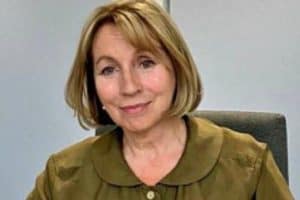
The new Archbishop of Canterbury, Dame Sarah Mullally, will travel to Rome on 25 April for four days — a trip to the Vatican that will include a meeting with Pope Leo XIV. Catherine Pepinster explains its importance
Is this Dame Sarah’s first visit abroad as archbishop?
Yes. She will then visit Africa in July. It will be noticed that her first visit is to the Roman Catholic Church and not part of the Anglican Communion, and it’s unlikely that the consequences of this were not considered. It makes a statement: while a few Anglicans in Britain (and substantially more in Africa) object to Dame Sarah being archbishop, because she is a woman, she will stand alongside the Pope, arguably the most significant spiritual leader across the globe.
Any other reason for going now?
Yes, Dame Sarah is following in the footsteps of several other Archbishops of Canterbury, and both the Roman Catholic Church and the Church of England view the meeting between Archbishop Michael Ramsey and Pope Paul VI as one of significant breakthrough for church relations. That encounter, which was the first official meeting since the CofE was created in the 16th century after the breakaway of the English church from Rome, took place on 23 March 1966 — so this year is its 60th anniversary.
What happened in 1966?
Archbishop Ramsey met Paul VI in the Sistine Chapel — the chapel where the election of popes take place. Paul described it as an occasion of friendship and introduction to union, although not yet a union. It was fiercely opposed by some Protestants, including the Northern Ireland politician Ian Paisley, who described it as an act of treachery. A common declaration was issued, committing the Roman Catholic Church and the Anglican Communion towards unity and the goal of complete communion.
Any other lasting moments?
Paul VI surprised everyone by giving Michael Ramsey his episcopal ring, which caused Ramsey to burst into tears. Ever since archbishops of Canterbury have worn this ring when they visit Rome.
Dame Sarah will do so?
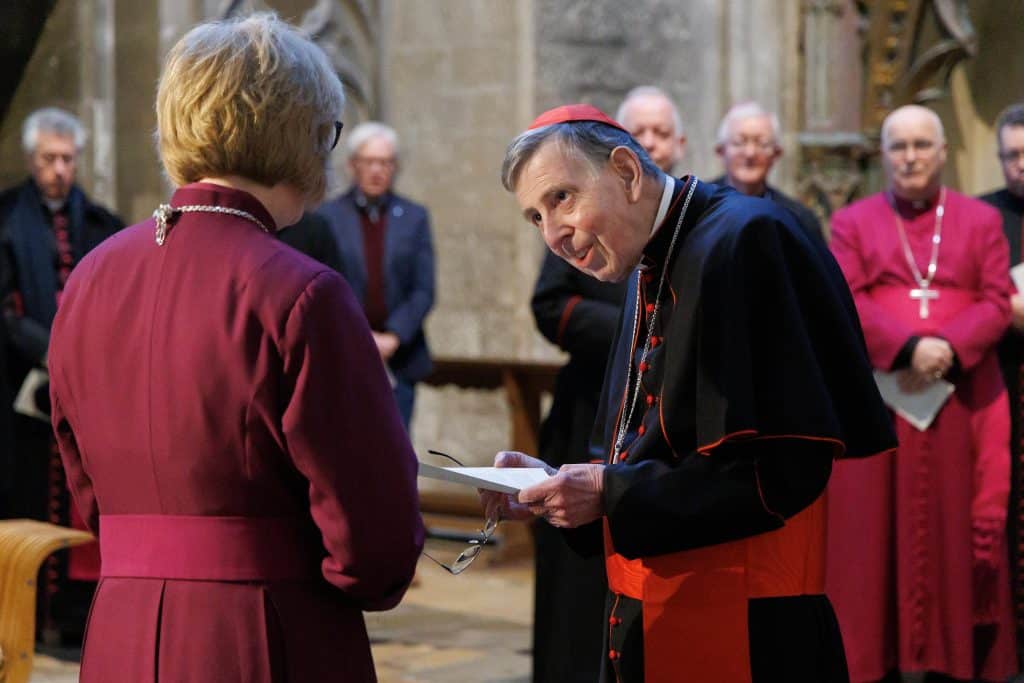
She went one further, having the ring — which contains a large square green stone divided by a gold cross and studded with four diamonds — altered for her finger and wore it at her installation. Just after her installation, she attended a special ecumenical service of prayer in Canterbury Cathedral with the Catholic delegation that attended her installation. She will wear the ring in Rome.
What other significant meetings have there been between popes and archbishops?
In 1977 Donald Coggan visited Paul VI and they signed another common declaration that recognised aspects of common faith including baptism, the Trinity, scripture and the creeds. Eucharistic “hospitality” was not included, so Catholics and Anglicans could not receive holy communion in one another’s churches.
In 1982, the Third Common Declaration was signed during Pope John Paul II’s visit to the UK, by the Pope and Archbishop Robert Runcie and recommitted the two churches to aiming for unity and to try to overcome outstanding hindrances to unity.
In 1989 John Paul II and Archbishop Runcie met again, this time in Rome. After worshipping together in St Peter’s Basilica and in the Church of St Gregory, from where St Augustine of Canterbury was sent by Pope St Gregory the Great to England, they issued another common declaration, again mentioning hope of unity but also mentioning obstacles, in particular: “The question and practice of the admission of women to the ministerial priesthood in some Provinces of the Anglican Communion prevents reconciliation between us even where there is otherwise progress towards agreement in faith on the meaning of the eucharist and the ordained ministry.”
In 2006 Pope Benedict XVI and Archbishop Rowan Williams met in Rome and signed another common declaration, affirming that the work of dialogue was irreversible, reaffirmed the desire for unity, but also mentioned that there were “serious obstacles”. Those obstacles included the appointment of women bishops in the Anglican Communion.
Just how historic is this visit?
Given that the obstacles mentioned in previous post-visit documents included women’s ordination and female bishops, it will be an extraordinary sight to see the first female Archbishop of Canterbury welcomed to Rome. Other female bishops from the Anglican Communion have visited Rome, and both Rowan Williams and Justin Welby were accompanied by female chaplains — but this is in a different league.
It will be an unprecedented occasion if Pope Leo, leader of a church with a male-only clergy, and the female Archbishop of Canterbury officiate at a service of prayer together.
But there is a definite warmth between the two churches?
Yes, but there seems to be more of a mutual respect and an understanding of difference between the two denominations, rather than any likelihood of full unity, which was what was aimed for in 1966.
Does Dame Sarah’s gender have any significance for the Catholic Church?
There are Roman Catholic women who look to Anglican female ordination as a “roadmap” for the Catholic church, but it still seems highly unlikely. A Vatican commission into female deacons reported in 2025 to Pope Leo and ruled out their ordination. Leo did not rule out further debate, though, and said he is open to increasing women’s role in church leadership. This suggests involving them more in running Vatican departments, rather than taking holy orders.
Have there been different styles of visit to Rome by different archbishops?
Very much so, Rowan Williams’s visit in 2006 to Pope Benedict lasted five days and included not only a private audience with the Pope and meetings with the Pontifical Council for Promoting Christian Unity, but also teaching sessions with student seminarians from the English College, giving a lecture and church services. He described his visit as akin to a pilgrimage.
Archbishop Welby’s visits were more fleeting, with the one in 2016 lasting less than 24 hours. Well-honoured Rome traditions, such as eating late, were abandoned for him, so that he could get to bed early for the “red eye” flight back to London. However, he was known to get on well with Pope Francis and the two met on several occasions.
Are all the meetings in Rome?
No. There have been two significant encounters in the UK. In 1982 John Paul II visited Britain for what was termed a pastoral visit, and prayed with Archbishop Runcie at the site of the martyrdom of Thomas Becket in Canterbury Cathedral.
In 2010, Pope Benedict XVI visited the UK for a state visit and held talks with Archbishop Williams at Lambeth Palace. The pair prayed together in Westminster Abbey at the tomb of St Edward the Confessor.
Archbishop Welby and Pope Francis also made a visit together to South Sudan in 2023, on a three-day pilgrimage of peace, urging leaders of the war-torn country to end conflict, combat poverty and honour peace accords.
Archbishops of Canterbury also visit Rome for special events or send their representatives. Rowan Williams attended the funeral of John Paul II, and the Archbishop of York, Stephen Cottrell, attended the funeral of Pope Francis last year. An Anglican delegation also attended the canonisation of John Henry Newman, the Roman Catholic cardinal and former Anglican priest, in 2019.
Any other historic encounters?
Visits by British monarchs also play a role in relations with Rome, given that the monarch is supreme governor of the Church of England. Elizabeth II visited Rome many times, her last being to Pope Francis in 2014.
King Charles visited Benedict XVI when Prince of Wales, saw Pope Francis briefly before he died in 2025, and then returned later that year for an historic service of prayer with Pope Leo XIV in the Sistine Chapel.
Where does the Archbishop of Canterbury stay on these visits to Rome?
The archbishop usually stays at the English College, the seminary for young Englishmen training for the priesthood in Rome. It’s the oldest English institution abroad and many of its students were martyred during the English Reformation soon after their ordination.
What language is spoken between the Archbishop and the Pope?
Most of the encounters have been conducted in Italian, the working language of the Vatican, with the help of interpreters. Benedict XVI and Rowan Williams, both talented linguists, were said to switch between several languages, including German, Russian, French and English. Leo XIV and Sarah Mullally share a common native tongue — English — which will no doubt be their preferred method of communication and may well make their talks much more easy-going without the need for interpreters.
Is the British government involved?
The Church of England is the established church and the Foreign Office therefore requires a report from the British ambassador to the Holy See about the visit. A dinner in honour of the archbishop is usually held at the ambassador’s residence, with guests including British residents engaged in relevant work in Rome. For example, the British cardinal, Arthur Roche, based in the Vatican as head of its office for divine worship, is likely to attend as well as Canon Anthony Ball, director of the Anglican Centre in Rome, which was founded after the 1966 meeting. The archbishop is also usually accompanied to Rome by the Roman Catholic Archbishop of Westminster. Dame Sarah attended the installation of the current holder of that office, Richard Moth, in February and he gave a reading at her installation at Canterbury in March.
What other issues remain outstanding between the two denominations?
Holy communion shared by both churches — that is still up for discussion. Allowing shared communion would have a significant impact on couples where one person is Anglican and the other Catholic and would be a strong sign of fellowship. But theological arguments remain over whether the eucharist is an act of remembrance or the real presence of Christ in the world, following consecration, as the Catholic church teaches.
How important is this for the world?
Popes and archbishops often speak of peace. Given Donald Trump’s vilification of the American-born Pope for daring to speak up about the need for peace in the Middle East, attention is also likely to be on what Pope Leo and Archbishop Mullally say together about the global situation.
Last week Dame Sarah issued a statement after Pope Leo was criticised by Trump. She said: “I stand with my brother in Christ, His Holiness Pope XIV, in his courageous call for a kingdom of peace.
“As innocent people are killed and displaced, families torn apart, and futures destroyed, the human cost of war is incalculable. It is the calling of every Christian — and of all people of faith and goodwill — to work and pray for peace. We must also urge all those entrusted with political authority to pursue every possible peaceful and just means of resolving conflict.”