
Lords condemn hate speech at Unite the Kingdom and Nakba Day marches
Members of the House of Lords voiced outrage over Islamophobia displayed at last weekend’s Unite the Kingdom march and questioned what action the government is taking. Lord Shaffaq Mohammed spoke of “profound fear and anger” among British Muslims after comments from the stage, including calls for Islam to be removed from Parliament. Baroness Meral Hussein-Ece asked why “disgraceful hate speech and Islamophobia” towards Muslims was tolerated when similar abuse aimed at other groups would provoke condemnation and prosecution. Baroness Sandip Verma pointed out that women of colour from all faiths face abuse. Several peers also raised concerns about antisemitism at the pro-Palestinian Nakba Day march, with Lord Byron Davies saying Nazi salutes and overt antisemitism had received little condemnation. Responding, Home Office minister Lord David Hanson said arrests had been made, stressing there was “no hierarchy of victims” and all hate crime was taken seriously.
New BBC DG: consumer drives choices and ‘we go where audiences are’
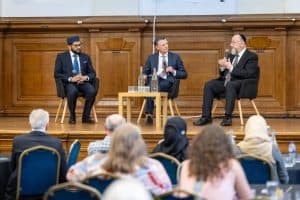
The new BBC Director General, Matt Brittin, has given a wide ranging interview to Radio 4’s The Media Show, saying there are difficult choices ahead about the size and shape of the BBC. He has come to the Corporation after 20 years at Google and spoke of the need for “a sense of the velocity of change” and moving closer to audiences in a simpler and faster way. He said content needs to be accessible, enjoyable and brilliant: “Ultimately, it’s the consumer that’s driving the choices here and it’s for us to go where the audiences are”. He believes the BBC is best placed to be funded directly but said there was a case for looking at a third public broadcast organisation, able to compete on advertising. He also floated the idea of using technology to identify potential bias, based on an analysis of words or phrases, to “keep an eye” on the vast amount of output. Interview is on BBC Sounds here.
£92 million fund launched to repair places of worship
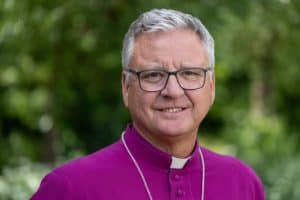
The Places of Worship Renewal Fund scheme, making £92 million available over four years for repairs and maintenance, has been officially launched. It replaces the Listed Places of Worship Grants Scheme and will be administered by Historic England. The Bishop of Lynn, Dr Jane Steen, the Church of England’s deputy lead bishop for buildings, said the majority of fundraising for the maintenance and repair of church buildings is done locally by thousands of volunteers, but the Fund “has a vital part to play alongside this local fundraising, and other funders who support churches”.
Christian Climate Action protest against developing Rosebank oilfield
Christian climate protestors staged a protest outside the Treasury in Whitehall, urging the government to reject work on the Rosebank oilfield west of the Shetland Islands. Members of Christian Climate Action lay covered in shrouds, pretending to be dead, to symbolise the millions of people they say could die from climate change caused by emissions linked to developing the oilfield, resulting in famine, floods and drought. Initial approval to develop the oilfield was overturned by the Scottish Court of Session in January and the government is expected to announce its decision on a new application this summer.
‘Trading Places’ documentary films three young men in the stillness of a Carmelite community
The Channel 5 documentary series “Trading Places” has filmed the experiences of three young men who joined a community of Carmelite friars in the Oxfordshire countryside. The Prior, Fr Alex Ezechukwu, said: “We were delighted to open our doors and share our way of life. The Carmelite tradition stretches back to the 12th century, but its message is as relevant today as it has ever been. In a world of noise and distraction, we offer a space of stillness, prayer, and genuine human encounter.” The Priory is set in 17 acres of woodland, and the community has launched the New Mount Carmel project to develop facilities for retreats and spiritual formation. The Carmelite episode is on Sunday 24 May at 9pm.
Hindu festival of chariots celebrated this weekend
The Hindu Rathayatra Festival of Chariots will be celebrated in London this Sunday, with three 40 foot high chariots carrying sacred deities, pulled on ropes by hand from Park Lane to Trafalgar Square. Large wooden representations of the three deities are revered – Jagannath, Lord of the Universe, a form of Krishna or Vishnu; Balarama, also called Balabhadra, Krishna’s elder brother associated with strength, farming and protection; and Subhadra, their sister. The procession is accompanied by dancing, music and devotees dressed in bright colours. When they reach their destination in Trafalgar Square, there will be a festival with stalls, music, dancing on stage and food. The festival dates back 5,000 years and was introduced to the West by Bhaktivedanta Swami Prabhupada, founder of the International Society for Krishna Consciousness. It has been held in London since 1969.
Fairtrade tea sales up as tea growers face financial uncertainty
Fairtrade tea sales in the UK rose by 35 per cent in 2025, equivalent to an extra 549 million cups of Fairtrade tea. The increase coincided with the Fairtrade Foundation’s “Brew it Fair” campaign, which calls for better conditions and pay for tea growers, and is announced today – International Tea Day. Research by the Fairtrade Foundation has found that one in five Kenyan tea growers earn enough to support their families and many face financial uncertainty because of the war in Iran, increasing costs and delaying shipments. Fairtrade was set up by Christian organisations in 1992 and is the product of choice for hundreds of churches across Britain.