Church ‘needs to rediscover apocalyptic language’ in the face of AI threat
The recently retired Bishop of Oxford, Stephen Croft, says the church needs to rediscover the apocalyptic language of heaven and hell, and death and judgment, as humanity faces a threat to its existence from Artificial Intelligence.
The bishop, who led on Artificial Intelligence issues, was interviewed on BBC Radio 4’s Sunday programme about the concerns expressed by people within the industry, that without effective safeguards, AI could become an existential threat to humanity. This could mean, for example, its creation of deadly diseases or the collapsing of essential infrastructure.
The bishop called for the government to take a lead in regulating AI and said the church needs to find its prophetic voice. He said that this week the College of Bishops will spend four days largely focussed on equipping every bishop to be conversant with the issues around AI, the existential risk and pastoral challenges. Interview is here.
Calls for improved palliative care as assisted dying bill is defeated
Catholic Archbishop John Sherrington has thanked those who contacted MPs to stop the Assisted Dying Bill. He expressed his gratitude to disability rights groups and legal and healthcare professionals for speaking out to uphold “the dignity and sanctity of every life”.
On Friday, MPs voted down the bill by a majority of 16. In a statement following the vote, the archbishop said “the most effective way to address suffering at the end of life is through greater access to excellent palliative and end-of-life care”, and he vowed to continue to promote these as priorities and to stand alongside those caring for the dying.
The Bishop of Newcastle, Dr Helen-Ann Hartley, said she recognised the deeply personal nature of this debate and acknowledged all those affected by its outcome. She said: “I hope that today’s decision now affords us space for reflection, but also for action: a clear and sustained commitment to improving palliative and end-of-life care, alongside the social care on which so many people and families depend.
The Ganga Aarti festival of light is brought to the Thames
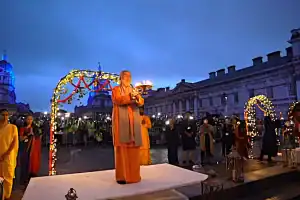
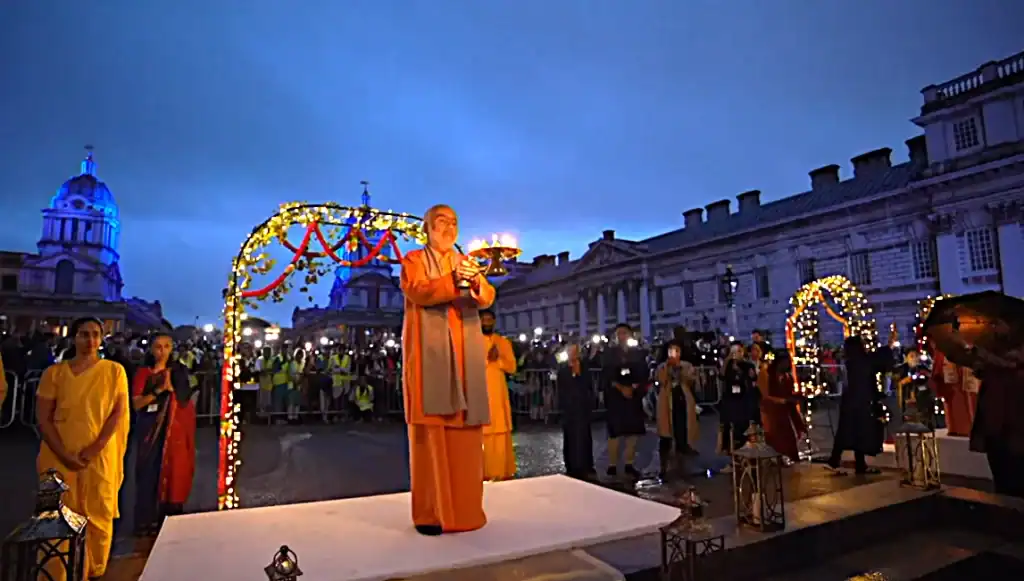
The Ganga Aarti, a Hindu ritual of offering light, fire, prayers and song to a river, took place beside the Thames at the Old Royal Naval College in Greenwich, last night. It was organised by Chinmaya Mission UK, a Hindu community and education organisation, which says it was one of the largest Ganga Aarti ceremonies ever staged in Europe. Traditionally it is performed beside the Ganges, but this was described as showing Hindu culture and values to the rest of the world. Film here.
JD Vance and the wooing of the religious right
US Vice-President JD Vance’s Catholic affiliation could be a stumbling block in his anticipated bid to be the next Republican presidential candidate, according to an article in the Guardian. He has strong family evangelical roots and converted to Catholicism in 2019, but commentators suggest that this dual identity could make it difficult to appeal both to evangelical Christian nationalists, a key part of Trump’s MAGA base, and Catholic voters.
His publicised fascination with “the end times”, signs of Jesus’ second coming, and his recent speech at the Republican midterm convention in Dallas, where he invoked St Paul and the Bible in praising Charlie Kirk, have been seen as an attempt to woo evangelicals for his 2028 Republican primary run. But his criticism of Pope Leo after he spoke out on Iran, and his views on St Augustine which Pope Francis took issue with, “risked upsetting Catholic voters”. Article is here
Former Buddhist abbot arrested for $2.8 million embezzlement
The former abbot of a Buddhist temple and a female accomplice have been arrested in Thailand on suspicion of embezzling $2.8m intended for a monastery. Phra Wachirayan Wi, 66, was arrested on charges including embezzlement and money laundering, allegedly taking donations given for the temple on more than 20 occasions over two years. A 47-year-old woman was accused of helping convert and conceal the money. Leaked CCTV footage of the pair having sex has been widely broadcast on Thai media. He was defrocked after his arrest and is yet to comment publicly.
Abbot of Ampleforth on building a future after troubled past
The Telegraph has interviewed the Abbot of Ampleforth Abbey, Dom Robert Igo, on his future vision for the Abbey and the way it has come through recent safeguarding scandals. Ampleforth was condemned by IICSA for decades of child sexual abuse and safeguarding failures.
The Abbot is quoted saying: “We are deeply sorry for what took place. People often ask, ‘you must have known…’ – No! You don’t sit and chat about it. Today, you go around with eyes and ears open in a way that before [the inquiry] you didn’t. You presumed goodness and that’s the pain – somebody that you had sat next to, ate meals with..”
The Abbey has 36 monks and 50 lay staff on a 1200 acre site and is a neighbour to the separate Ampleforth College. The Abbot describes the diverse business arm of the Abbey with a large orchard for producing cider, a visitors’ centre, exhibitions and retreats.
Rows over secular use of St Paul’s cathedral ‘a fuss about nothing’
The row over allowing a nightclub company to put on contemporary music concerts in St Paul’s Cathedral is “a fuss about nothing”, according to Diarmaid MacCulloch, emeritus professor of church history at the University of Oxford. Interviewed by Kaya Burgess in The Times, he said the plan was “a good deal more seemly than what happened in the nave of Old St Paul’s, which as ‘Paul’s Walk’ was backdrop to anything Londoners felt like doing there”. This was a time when the building hosted “eating and drinking, the selling of goods, meetings, legal proceedings, financial transactions, storage, and games”.
The article charts the history of rows over the use of churches and cathedrals for events other than worship and prayer, from “Rave in the Nave” at Canterbury and other cathedrals this year, to the 14th-century when an Archbishop of Canterbury bemoaned “sons of gluttony and drunkenness” feasting in churches “as if they were in a tavern”.
Festivities in church buildings were curbed by the increasing introduction of pews, with one observation that this robbed churches of a means of engaging with less pious people. The article is here.