
British Social Attitudes survey shows ‘no sign of a Quiet Revival‘
The National Centre for Social Research says the latest British Social Attitudes survey, published yesterday, shows no evidence of a Quiet Revival. Based on a survey of 4,656 people last autumn, it says the number of people who worship at least monthly has continued to decline and is below pre-pandemic levels. The Quiet Revival report by the Bible Society said that monthly church attendance had increased from 8 per cent to 12 per cent of the population between 2018-2024. It said that among 18–24 year-olds, there was a dramatic rise from 4 per cent to 16 per cent. But the BSA survey suggests monthly church attendance among all age groups has declined since 2018. The National Centre for Social Research (NatCen) says that those aged 18-34 are more likely than those over 55 to say they attend a service at least once a month, but “this pattern has been the same since well before the pandemic and does not represent a revival”. Statistics for weekly attendance show 5 per cent of British people attending a weekly church service in 2025, down from 8 per cent in 2018. Among people aged 70 plus, weekly attendance halved. Professor Sir John Curtice, Senior Research Fellow at NatCen and professor at the University of Strathclyde, said: “The evidence from the British Social Attitudes survey is clear: there has been no revival in Christian observance in Britain. Church attendance remains below pre-pandemic levels across all age groups, and the suggestion that younger people are leading a religious renewal is not borne out by the data.” In March, the Quiet Revival report was withdrawn after YouGov said the data was flawed. The survey will be repeated later this year. Times report here.
Anthropic co-founder joins Pope to launch encyclical on Artificial Intelligence
The Vatican has announced that the Pope will be joined by Christopher Olah, co-founder of Anthropic, to unveil his first encyclical, “Magnifica humanitas”, on preserving the human person in the age of artificial intelligence. It will be presented at an event in the Vatican on 25 May with several academics and Catholic theologians including Professor Anna Rowlands from Durham University. Pope Leo has made AI a priority and has already expressed concern at levels of safety and its use in warfare. Crux Now reports that Anthropic was formed after a disagreement at OpenAI on safety. It reports that a recent post on Anthropic’s website refers to the threats of the technology falling into the hands of authoritarian regimes, and warns that the US and democratic allies must continue to lead on AI development and impose rules and norms on its spread.
Three quarters of the Church of England’s 42 cathedrals are in deficit
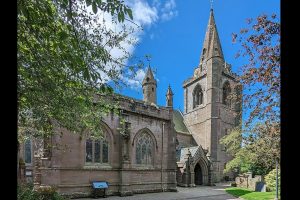
A report to the National Cathedrals Conference in Bristol this week, says three quarters of the Church of England’s’ 42 cathedrals operate in deficit, yet they continue to play “a vital role holding together worship, heritage, culture and community service, while adapting to a more secular, religiously diverse and spiritually curious society”. The stark situation is outlined in the report “Living Stones: English Cathedrals as Sacred Spaces in Changing Times”, compiled by the think tank Theos, and commissioned by the Association of English Cathedrals and the Church Commissioners. The conference chair, the Dean of St Albans Jo Kelly-Moore, said that with no government support and the fact that the Church Commissioners do not have the ability to fund fabric work, the structural funding gap for repairs and maintenance is becoming an ever-greater burden, which the conference will confront.
Archbishop: CofE ‘helps build bridges’ as community relations deteriorate
The Archbishop of Canterbury, Sarah Mullally, has spoken in the Lords about the importance of hope at a time of rising hate crime, intimidation and hostility. In response to the King’s Speech, she said: “The work of integration has never been more urgent. We have witnessed a deeply concerning deterioration in intercommunity relations. I therefore welcome the commitment in the Gracious Speech to do more to protect the Jewish communities following the recent appalling attacks and in doing so I wish to assure both Jewish and Muslim communities of my support as they face the unacceptable rise in hate crime, intimidation and hostility.” She said religious identity has been used to intimidate and divide, but the teaching of Jesus was to love without exception. She said: “The Church of England helps build communities where people know and care for one another. In doing so, it builds bridges and fosters relationships across lines of race, faith, class and more. In these acts of mutual care, the seeds of belonging are sown.”
Muslim Women’s Network condemns niqab stunt at Unite the Kingdom rally
The Muslim Women’s Network UK has strongly condemned “the provocative and disrespectful stunt” staged at the ‘Unite the Kingdom’ rally in London on 16 May 2026, where three women dressed in niqabs and burkas took to the stage before dramatically removing them amid chants of ‘take it off’ from the crowd. Its CEO, Baroness Shaista Gohir, said: “It was deliberate humiliation of Muslim women and a public display of anti-Muslim hostility aimed at dehumanising visibly Muslim women and reducing their religious dress to a source of ridicule and contempt.” The organisation is calling on the Home Secretary, government ministers, and media organisations, “to unequivocally condemn both this behaviour and the hateful anti-Muslim rhetoric promoted at the ‘Unite the Kingdom’ rally”. The young women were from the French anti-migrant and Islamophobic group “Collectif Nemesis”, which rejects migration into Europe specifically of Muslims, advocates for White nationalism and calls for the protection of a particular vision of European culture.
Research into the nature and extent of Christian nationalism in the UK
The think tank Theos has published an essay by Nick Spencer outlining initial findings of research into the phenomenon of Christian Nationalism in the UK. He says it is not straightforward to define Christian Nationalism, and it is “a slippery term” with some highly pejorative definitions intended as an insult. The findings indicate that 17 per cent of adults in the UK agree that you need to be Christian to be truly British, and just under half of them (8 per cent) strongly agree with this statement. Being Christian is considered to be the most important factor (from a list of 12) for being British by only one per cent of the population. The findings are from data collected by RED C Research and Marketing, based on an online questionnaire among 1765 UK adults. Nick Spencer says: “It is important to stress that these are initial and very approximate categorisations, which will be refined, supplemented (and no doubt) corrected by our on–going analysis of the data”.
Antisemitism ‘resurgent in US politics’
Axios, an American news website, is reporting that antisemitism in American politics has become increasingly open and aggressive, with Jewish politicians from both parties reporting a sharp rise in abuse, threats and hate speech. Axios reviewed dozensof voicemails, letters and emails sent tothe offices of Jewish House members — Democrats and Republicans. Members of Congress told Axios that antisemitic language is explicit and commonplace in emails, voicemails, social media posts and even campaign advertising. Jewish members have received violent and hateful messages and warn that antisemitism has now entered mainstream political discourse. Article with graphic details of language used is here.
Church of Scotland apologises for historic role in slavery
The Church of Scotland has issued a formal apology for its historical role in slavery, including theological justification of slavery, direct and indirect participation in slave dependent economies, and the material benefits derived from enslaved labour. The apology was adopted by the church’s general assembly which took place last weekend. A working group will be set up to consider actions of repentance, justice, and reconciliation, in pursuit of racial justice, accountability and repair. Congregations and clergy will be encouraged to continue in education, reflection, and local exploration of the legacy of past action. The apology says: “We repent, committing ourselves to changing course and bearing fruit worthy of repentance.”