
AI learns nature’s design rules and creates new virus
Artificial Intelligence has designed a new virus, using a DNA sequence never before seen in nature, that has killed bacteria in a petri dish. The AI model (Evo 1 and Evo 2) was trained up on millions of known viral genomes, especially viruses that infect bacteria, and then created a new sequence. Scientists assembled the viruses and found they killed bacteria. Chat GPT suggests this: “A useful analogy is architecture: The AI is the architect, producing the plans for a building; The scientists are the builders, constructing the building from those plans; The finished building is the new virus. Previous AI systems could suggest small genetic changes, but these models designed an entire working viral genome that functioned in real biological experiments”. The development has raised bio safety and security concerns – and questions, as genome language models have learned “design principles encoded by evolution”.
Boxer charged with murdering Christian refugee worker in Athens
Sharif Ahmadzai, aged 26, has been charged with the murder of Elisabeth Jane Ross, a Christian missionary from Edinburgh, who was in Greece helping refugees. Her body was discovered in a suitcase by a homeless man in a derelict building in the Kypseli area of Athens on 18 July. Ahmadzai, a refugee from Afghanistan, had become a champion boxer in Greece, converted to Christianity and was married to a US Christian woman. The BBC reports that she “is said to have given information to police, including location data, which placed her husband and Ross at the same apartment on 15 July, the day Ross is thought to have been killed”. Ahmadzai, also facing robbery and weapons offences, was remanded in custody until his trial, which could take up to 18 months.
Bishop says Kairos II document in synod motion was ‘unfortunate’
The Bishop of Edmonton, Lusa Nsenga-Ngoy, who is the CofE’s lead bishop for interfaith engagement, has given an interview to Jewish News saying it was unfortunate that the Kairos II document was included in the Synod motion on the plight of the Palestinian people. He said the document is problematic: “The Church wanted to express solidarity with Palestinian Christians, but I think [Kairos II] lends itself to the fostering of particular tropes towards Israel or Jewish identity that in certain ways could enable antisemitic rhetoric or antisemitic discourse.” He called for critical engagement with the issues, noting that the criticism and fallout gave an opportunity to test the understanding of antisemitism. He said: “the threads of antisemitism are never too far below the surface, and there’s something in our institutional muscle memory that needs to unlearn those patterns and constantly become alive to the seduction of those discourses and narratives, even when they are projected or advertised as a compulsion towards justice”. Full interview is here.
Call to sack senior CofE officials over safeguarding delays
An independent review into safeguarding in the Church of England has criticised “a small group of influential senior officers at the diocesan level and certain individuals within the national Church” who are resisting change. It says these people have a “readiness to hide behind exceptionalism, canon law, tradition, and procedural defensiveness”, and is evident in the pushback against the operational independence of safeguarding. The review says most senior clergy demonstrate a genuine desire for change. Much good practice was identified and there is a “maturing safeguarding environment”. But the criticism has led to a letter to the Archbishops, from 20 people, calling for the senior officers identified to be sacked. The review, published on 17 July, is by the external consultancy INEQE, commissioned and funded by the Church of England through the Archbishops’ Council and overseen by the National Safeguarding Team. The Church Times quotes the lead auditor and CEO of INEQE, Jim Gamble, responding to the letter on social media: “They know who they are, the C of E knows who they are, and I also believe the Charity Commission knows who they are. They are the few, with the potential to undermine the many. Every organisation has them. The people who find ways to maintain the status quo rather than grasping opportunities to adapt and change”.
Muslim education leaders welcome plans for RE to be part of national curriculum
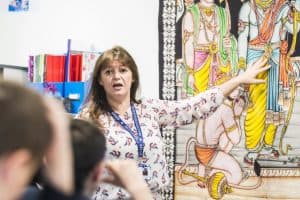
Hyphen Online reports that Muslim education leaders have welcomed government plans to make Religious Education part of England’s national curriculum. The government is expected to launch a consultation on the proposal in September. It quotes Sara Saigol, schools lead at the Islamic Society of Britain, saying that the reforms would finally give the subject the status it deserves. She is a member of Trafford’s local RE advisory group, the SACRE, and supports teachers through classroom workshops and mosque visits. She said many teachers acknowledge that they lack the confidence and knowledge to teach Islam. But better teaching of RE may bring a conscious effort to tackle anti-Muslim hate by dismantling tropes and teaching young people critical thinking.
Bishop of Rochester ‘deeply concerned’ at assisted dying bill proposed by his local MP
The Bishop of Rochester, Jonathan Gibbs, says he is deeply concerned that the Assisted Dying Bill is being brought back to Parliament. It’s a private members’ bill and is being proposed by Lauren Edwards, MP for the Bishop’s own constituency – Rochester and Strood. The bishop told ITV Meridien News that the measure risks causing a huge societal shift: “If this kind of system is introduced, will it not change the relationship between society and the elderly and the vulnerable? In particular, those who may face some form of coercion or feel they’re a burden on society? I think we need to weigh very, very carefully the implications of such a huge change.” The bill is identical to the bill put forward in the last session of parliament, which fell in the House of Lords. It is due to introduced again on 11 September.
Tribunal finds Rev Andrew Cornes failed to act on John Smyth abuse disclosure
A complaint against Canon Andrew Cornes over his handling of information with allegations against the serial abuser John Smyth, has concluded that he failed to take action. He has been given a 12 month conditional discharge for 12 months under the Clergy Discipline Measure 2003. This means there is no immediate penalty. The CofE website summarises the finding of the Bishop’s disciplinary tribunal in London. It says the tribunal “was satisfied that in 1982 Mr Cornes received a disclosure of abuse from a victim and survivor of John Smyth. The Tribunal found that Mr Cornes was under a duty, as part of his office as a priest in the Church of England, to take action to protect the young and vulnerable from harm by reporting the information he received, and that by failing to do so he was neglectful in the performance of his duties”. His is one of four complaints that have been referred to a tribunal or court for determination following the Makin review. Andrew Cornes was curate at All Soul’s Church, Langham Place in 1982. He went on to serve in Sussex and is retired. After the Makin review, his permission to officiate was withdrawn by Chichester Diocese and he stepped back from his roles on the General Synod and the Crown Nominations Commission, which was selecting the next Archbishop of Canterbury.
Clacton vicar tells the Church Times that the area is misunderstood
The Church Times has sent its reporter James MacIntyre, to Clacton, to see how the people are coping with an invasion of journalists and political campaigners, after Nigel Farage resigned and a by-election was called. He finds the local vicar of Clacton St James with Jaywick St Christopher, Father Matt Simpkins, ministering to a small congregation in Jaywick. He tells the reporter that the area is misunderstood: “The problems of unemployment, poverty, and neglect here are very real and profound — but they are not the defining characteristics of this place”. He explained that the population includes comfortable communities in Frinton-on-Sea, alongside Clacton and Jaywick, where many are not registered to vote Some constituents are said to be “simply sick of politics and reluctant to speak”, while others quietly offer their views. The reporter was lucky to speak to the vicar, who made an exception to his rule of not engaging with the media descended on the town, in order to speak to The Church Times. The report is here.