John Smyth’s wife says she is sorry and ashamed for failing to stop his abuse
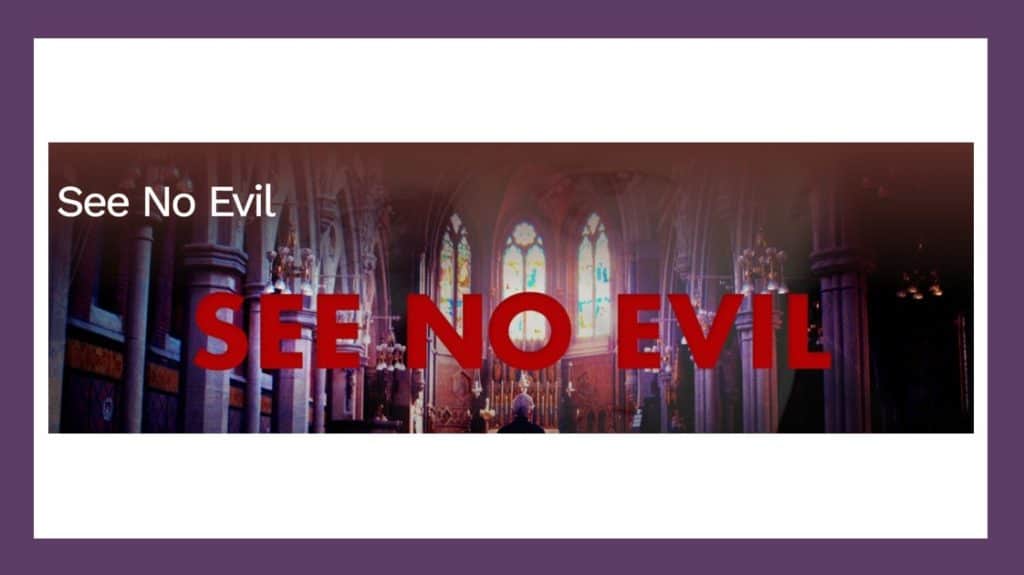
Anne Smyth, widow of serial abuser John Smyth, has spoken publicly for the first time in a Channel 4 documentary “See No Evil”. She says she hated her husband’s actions but felt unable to intervene, admitting that the full horror is clearer to her now. Though she stayed with him throughout his life, she describes feeling relief when he died and said: “I want with all my heart to say I am so sorry; I am ashamed of myself”. She described her husband as having two different sides and didn’t know how to “break into him”. She knew he was punishing boys in their garden shed and gave them cotton wool and ointment to deal with the blood from the beatings. The two part series broadcast last night and tonight also included interviews with his children, PJ, Fiona, and Caroline, who described a materially privileged childhood, but one in which they felt fearful about their father. Fiona said she wanted her father to be exposed, for there to be some kind of reckoning, and said her mother was Smyth’s first victim. Four survivors were also interviewed, going over their stories of what happened, including one attempted suicide, and the impact on their lives. In a message to survivors, Mrs Smyth said that she was “desperately sorry that I wasn’t strong enough to stand up to him and tell him to stop”. The series consultant, Andrew Graystone, once more drew attention to the Ruston report of 1982 which outlined multiple beatings, and the process afterwards to cover it up. Watch the documentary series here. Guardian review here
King Charles attends Advent service highlighting persecution of Christians
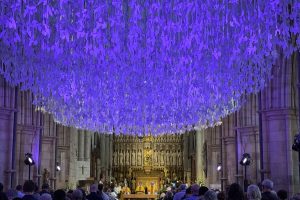
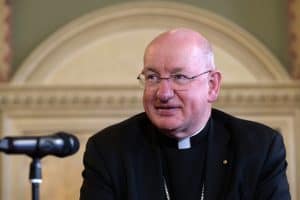
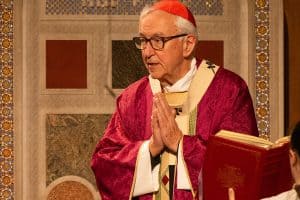
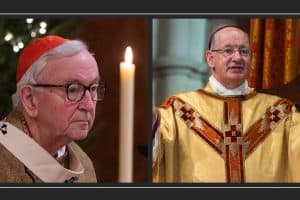
King Charles attended an Advent service at Westminster Abbey last night, which remembered Christians facing persecution around the world, in a service with church leaders from across Britain and the Middle East, and interfaith representatives. As well as music from the Coptic Orthodox Diocesan Choir and the Syriac Orthodox Church’s choir, a passage from St Luke’s Gospel recalling the annunciation was read in Greek, all emphasising Christianity’s global reach. The address was given by the Roman Catholic cardinal, Timothy Radcliffe, who spoke of “massive persecution of Christians” across the globe but he also referred to the “hideousness of antisemitisim” which has grown so much that “Jews no longer feel safe”. Each member of the congregation, including the King, lit a candle as they sang the hymn O Come, O Come Emmanuel. Catherine Pepinster reports that There was powerful testimony from a young Pakistani woman, Ribqa Nevash, who told the congregation that she and her family had fled Pakistan because they were persecuted for their faith. “We suffered for speaking up”, she said, recalling how students at her university tried to bribe her to convert to Islam and how she witnessed churches being burnt down. Girls as young as 12, she told the congregation, were abducted, forced to marry and often trapped in forced labour. She paid tribute to the charity, Aid to the Church in Need, which helped organise the service, for its help for Christians in Pakistan. The King has frequently supported the charity’s work behind the scenes as well as regularly attending its Advent services.
Pew Research Centre questions reports of a religious revival
Latest Pew Research Centre polling has found no evidence of a revival among young adults. In its latest survey, it found that the share of US adults who identify with Christianity, with another religion, or with no religion have all remained fairly stable over the past five years. The percentages of Americans who say they pray every day, that religion is very important in their lives, and that they regularly attend religious services also have held fairly steady since 2020. Pew says the recent stability is striking because it comes after a prolonged period of religious decline. It questions reports of a religious revival: “Some media reports have suggested there may be a religious revival taking place among young adults, especially young men, in the US, but our recent polls, along with other high-quality surveys we have analysed, show no clear evidence that this kind of nationwide religious resurgence is underway. On average, young adults remain much less religious than older Americans. Today’s young adults also are less religious than young people were a decade ago. And there is no indication that young men are converting to Christianity in large numbers.” Pew Centre research here
Bishops denounce use of Christian symbols in racist anti-immigrant rhetoric ahead of Christmas rally
In response to reports that far-right activist Tommy Robinson is to host a “Unite the Kingdom” Christmas event in central London on Saturday afternoon, the Bishops of the Diocese of Southwark have spoken out against the use of Christian symbols and language to justify racism and anti-migrant rhetoric. The Bishops of Southwark, Christopher Chessun; Croydon, Rosemarie Mallett; Kingston, Martin Gainsborough; and Woolwich, Alastair Cutting, have called for Christians to choose compassion and understanding over hostility and conflict. In a statement issued yesterday, they say: “Christ has always been at the heart of Christmas – and those who claim him, need to be serious about what he stands for…Any co-opting or corrupting of the Christian faith to exclude others is unacceptable, and we are gravely concerned about the use of Christian symbols and rhetoric to apparently justify racism and anti-migrant rhetoric.. We are proud of our nation and our communities – and we know that we are better than this. We call upon all Christians to commit themselves afresh to work with others in building a more United Kingdom, where the values of love, humility and compassion shine through in every community.” They urge anyone “swept up” in the movement “to think again, to consider what kind of world they want to be a part of – and to choose compassion and understanding over hostility and conflict”. Statement is here
CofE racial justice board laments cut in funding
The Church of England’s racial justice board has expressed “deep concern and disquiet” about the Archbishops’ Council’s decision to reduce funding from £20 million in 2023-25 to £7 million for 2026-29. In a letter to the Church Times, they say the lamentable decision was taken despite increasing racial tension and the impact of the Unite the Kingdom march. Past commitments have failed because they were not carried through and this decision undermines recent gains “frustrating the work of racial justice in the church”.
Bishop Sarah Mullaly faces complaint over handling of abuse allegation
The Times reports that a complaint against the next Archbishop of Canterbury, Dame Sarah Mullaly, over her handling of an abuse allegation in 2020, is being formally considered by Church of England officials. An allegation against the priest was fully dealt with, but Lambeth Palace acknowledge the complaint against the bishop was not followed up “due to administrative errors and an incorrect assumption about the individual’s wishes”. The article suggests the complaint could lead to a disciplinary tribunal. Dame Sarah told The Times: “I am seeking assurance that processes have been strengthened to ensure any complaint that comes into Lambeth Palace is responded to in a timely and satisfactory manner. The church’s processes have to change, both for complainants and for the clergy who are the subject of complaints. Today, I am one of those clergy. As Archbishop of Canterbury, I will do everything in my power to bring about much-needed and overdue reform. We must have trust in our systems, or else we cannot expect others to put their trust in us.” Report by Kaya Burgess is here
Peacebuilding conference in London for Israeli and Palestinian civil society leaders
The Foreign Office has announced that the UK is to host a “key peacebuilding conference” to improve relations between Israeli and Palestinian civil society leaders. The event in London on 12 March will focus on an “International Peace Fund for Israel and Palestine”, supporting peace building activities. Foreign Secretary Yvette Cooper said: “With the UK’s experience of the reconciliation process in Northern Ireland and our ongoing support for peacebuilding in Western Balkans, we are well placed to host and facilitate these talks, and the new International Peace Fund we are helping to create will provide the practical support to drive this work forward.”
Hanukkah rituals around the world
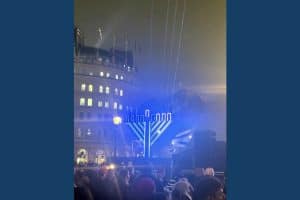
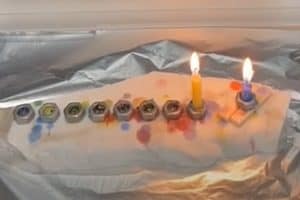
Hanukkah, the Jewish festival of lights, is celebrated from 14-22 December this year, and My Jewish Learning takes the opportunity to record various global traditions for the season. It says that Hanukkah’s core rituals are shared worldwide- lighting the menorah, eating fried foods and re-telling the story of the Maccabees’ victory for Jewish rights against Greek rulers in 2BCE. But many Jewish communities have developed unique local customs. Indian Jews make milk based dough balls drenched in syrup, instead of jelly filled donuts. North African Jews hang their menorahs beside the mezuzah door sign for protection. In Romania and parts of Central Europe, families carve potato menorahs. Aleppo Jews light an extra candle in gratitude for refuge. Jerusalem Jews created glass boxes to protect outdoor oil lamps, a practice now common in Israel. Across North Africa and the Middle East, communities celebrate Chag HaBanot, a festival of daughters, honouring Jewish heroines such as Judith. French Jews in Avignon hold neighbourhood wine tastings, while Moroccan children end the festival with a bonfire lit from leftover wicks. The story is here
Mary and Joseph nativity statues replaced with ‘ICE was here’
The Catholic church St Susanna, in Dedham, Massachusetts, has refused to take down its nativity scene, which has, instead of Mary and Joseph, a sign saying “ICE was here”. It’s in protest at the Immigration and Customs Enforcement raids detaining migrants, often targeting churchgoers. Below the message is a smaller sign that says: ‘The Holy Family is safe in our Church … If you see ICE please call LUCE at (phone number)’. The Archdiocese of Boston objected to the changed crib saying: “The people of God have the right to expect that, when they come to church, they will encounter genuine opportunities for prayer and Catholic worship-not divisive political messaging”. But parish priest Father Stephen Josoma, said the parish has no plans to take down the sign and he wanted to discuss the matter with the Archbishop. He told the Boston Globe: “You feed the hungry, you take care of the homeless, you clothe the naked, you take care of people and their needs,” “(ICE raids) are the complete antithesis of that on so many levels.” Report here