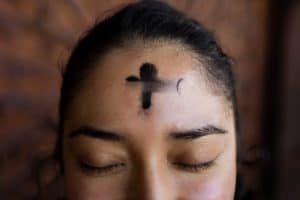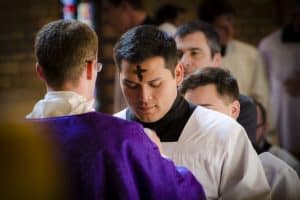
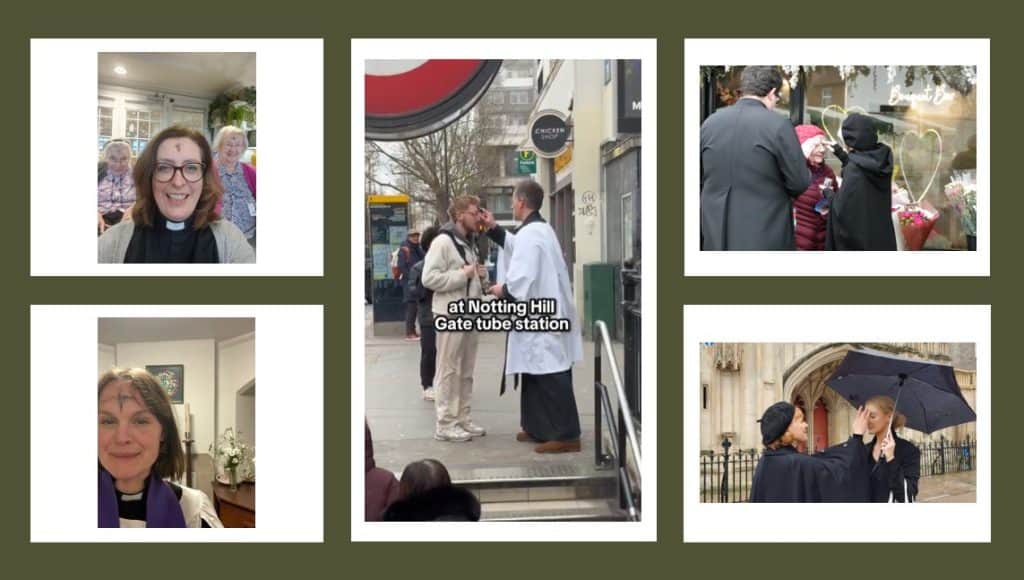
‘Ashes to Go’ – clergy mark shoppers with the sign of the cross on Ash Wednesday
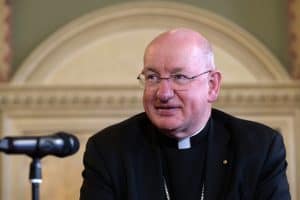
Clergy across Britain ventured into town centres, marking passers by with the sign of the cross on their forehead, for Ash Wednesday, the first day of Lent which leads to Easter. This is a custom going back to the Middle Ages, a reminder that we are dust, a sign of penitence and a symbol of turning to God. But the “Ashes to Go” trend, to go out into the streets offering this to the public, only began in Chicago in 2010.
English Cathedrals are putting on special events for reflection, contemplation, and shared worship during Lent. Chichester Cathedral has an exhibition of oil paintings by Alice Carter, Ashes to Fire, a meditation on key moments in the Easter story; Durham Cathedral has a series of speakers on “Encountering God through the Creative Arts”, looking at how film, literature, theatre, television, art and music “can open new pathways to spiritual insight”; At Newcastle Cathedral, people are invited to tune in to YouTube for live streaming of sermons from different Anglican cathedrals all over the world, every day during Lent. Portsmouth Cathedral has an art exhibition and talks exploring experiences of refugees. Salisbury Cathedral has a series of talks on “What is Truth”, looking at the media and perspectives on truth, fake news, internet algorithms and technological developments. This series starts on Monday 23 February at 7.30pm with a talk by Anna McNamee, executive director of the Sandford St Martin Trust, on “Chasing Truth: Fact, Fiction and the Media”.
Lent appeal to support charities helping homeless refugees
The Jesuit Refugee Service is issuing a Lent appeal for more support for charities helping refugees, after reports of rising homelessness among refugee households. It says: “many people who have fled conflict, persecution, and danger are now being pushed into life on the streets or trapped in unsafe, insecure accommodation”. It is asking Catholics to pray for people who are displaced, destitute, and at risk, and to volunteer or donate to local charities working with homeless refugees.
New Moon has been sighted over Britain and Ramadan has begun
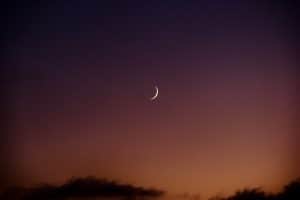
The new moon was sighted in Jersey last night, marking the start of Ramadan. The observation was logged by the New Crescent Society, which is working to establish a reliable, nationally recognised system for verifying moon sightings in Britain — with the aim of enabling Muslims across the country to begin Ramadan on a single, agreed date. The Society ran a live one hour online programme with the Royal Observatory in Greenwich, connecting with moon watchers across the UK, but the weather meant the moon was not visible. However, the Society encouraged people from the Orkney Islands to Cornwall, to contact them through the evening with news of sightings and Riyaz Anjam in Jersey sent in a film showing the crescent moon, soon followed by other watchers in the Channel Islands.
Muslim charitable giving ‘worth $600bn a year’ – four times G7 aid budget
Muslim charitable giving known as zakat, which peaks during the holy month of Ramadan, produces an estimated1 $550-600 billion in one year, around four times the combined international aid budget of the G7 countries USA, Germany, Japan, UK, France, Canada and Italy. The figure comes from a UN and Islamic Development Bank report and is quoted by Islamic Relief as it explains its charitable focus during Ramadan, to deliver food packs to 500,000 people in 34 countries, including Gaza and Sudan. Muslims fast from sunrise to sunset in Ramadan, so the food packs enable families to break the fast and the contents reflect local tastes – noodles and garlic for Myanmar, hummus and aubergine/eggplant dip for Lebanon, white cheese and cream for Albania, sardines for the Philippines, and coconut oil for Sri Lanka.
Muslims near Barrow pray in unfinished mosque during Ramadan
The Guardian reports on a history of protests and resistance to the building of a new mosque in Dalton-in-Furness, near Barrow, as the local Muslim community waits for it to be finished. The article by Sumaiya Motara, explains that Muslims in the area, mostly healthcare professionals, were renting out community halls for Friday prayers, as the nearest mosque was 50 miles away. The new building, the South Lakes Islamic Centre, attracted opposition from the far right, with people travelling into the area to protest, but there were also local counter demonstrations. Now despite the building not being ready, Muslims are gathering there among the bare walls, to pray during Ramadan, as there is nowhere else to meet. The story is here.
King Charles supports Jewish backed refugee jobs fair
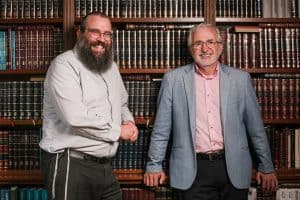
King Charles has supported a refugee jobs fair at St James’s Palace, which was organised by the Refugee Employment Network and supported by World Jewish Relief, of which he is patron. More than 500 highly qualified refugee professionals from engineering, healthcare, finance and technology, met major employers including management consultancies, NHS England and BBC Studio, receiving advice and hearing of opportunities. Jewish News reports data suggesting there are persistent labour shortages across key UK sectors, but 67 percent of refugees in the UK are underemployed despite holding qualifications for skilled roles. People who have been granted refugee status by the UK Home Office have the right to work. World Jewish Relief runs a “STEP” programme and is one of the largest providers of refugee employment in the UK. Jenny Walton, chief executive of the Refugee Employment Network, said the issue is both moral and economic, with a highly skilled and qualified global talent pool waiting for work: “Refugee employment is a win-win for business, people, and community.” Jewish News report here.
All Nations Christian College moving out of Gothic estate in Hertfordshire
Easneye, the Victorian Grade II listed Gothic estate near Ware in Hertfordshire, which has been home to the All Nations Christian College, training missionaries for 60 years, has been put up for sale for £5 million. The college says it is looking to provide degree level courses online and near to places where missionaries work, so that people can access training without leaving their communities. Over the next six years, it aims to triple student numbers to over 200 per year, with more than 50 per cent from outside the UK, and is appealing for funds to develop new courses. The building was once home to the Buxton family, devout Christians who played a pivotal role in the Abolition of Slavery Bill, and several family members dedicated themselves to missionary work in Africa and Japan. In 1971, three missionary training colleges combined to create the college, which has sent missionaries to Africa, Asia, Europe and the Americas. The estate is being sold by Fisher German, which is inviting interest from education, healthcare, corporate, retreat and leisure operators.
David Tudor banned from ministry for the second time
A Church of England tribunal has issued a second lifetime ban from ministry on former priest David Tudor, after saying it was “more likely than not” that he had sexual intercourse with a girl identified as “Z” when she was 15. She attended St Bede’s school in Redhill in the 1980s where Tudor was chaplain and an RE teacher, and attended his church. He was acquitted of having sex with “Z” when she was under 15, in a court case in 1988. This is the second time he has been banned for life, after earlier admitting sexually abusing two girls between 1982 and 1989. Report here. CofE statement here.
Improved pensions and retirement housing for Church of England clergy
The Church of England Pensions Board has published its 2025 Annual Review, reporting returns of 9.5 per cent on assets invested for growth. It stewards £3.5bn in mostly defined benefit pension savings on behalf of members and this year marks 100 years of providing pensions and retirement services to those who work for the church. The church has agreed improvements in clergy pensions and has given money towards providing new homes for retired clergy, new services to support clergy with retirement planning, and increased home energy efficiency. The Board has also unveiled a set of new responsible investment priorities that include a focus on peacebuilding and human rights, as well as a ten-year vision for a responsible mining sector.
Anglicans urged to stop injustice for global marginalised communities
Anglicans around the world are being urged to review how their church’s investments, landholdings, partnerships and teaching resources are “entangled” with injustice for marginalised people. At the end of a United Society Partners in the Gospel meeting in Manila, 40 Anglican leaders from 31 countries invited the church to visit and learn from “indigenous, Afro-descendant, migrant and other marginalised communities”, who “struggle for land, language and life”. They said the chain of injustice and oppression must be broken and concerns should be integrated into worship and prayers.
Singapore ‘most religiously diverse country’ in the world
Singapore is the world’s most religiously diverse country as of 2020, according to a new Pew Research Centre study. Buddhists are Singapore’s largest religious group, at 31 per cent of the population, with substantial numbers in other groups, such as Christian, Muslim, Hindu, and non-religious. The analysis divides the world’s population into seven categories – Christians, Muslims, Hindus, Buddhists, Jews, adherents of all other religions and people with no religious affiliation – and measures how evenly these groups are represented within each country or territory. Surinameranks second in religious diversity, and the list includes Australia and France. The UK is twelfth. The least diverse countries are majority Muslim Yemen, Afghanistan and Somalia. Report is here