Bishop of Lincoln suspended and arrested
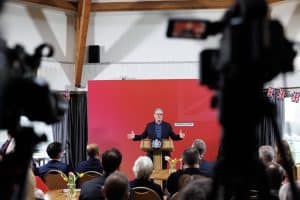
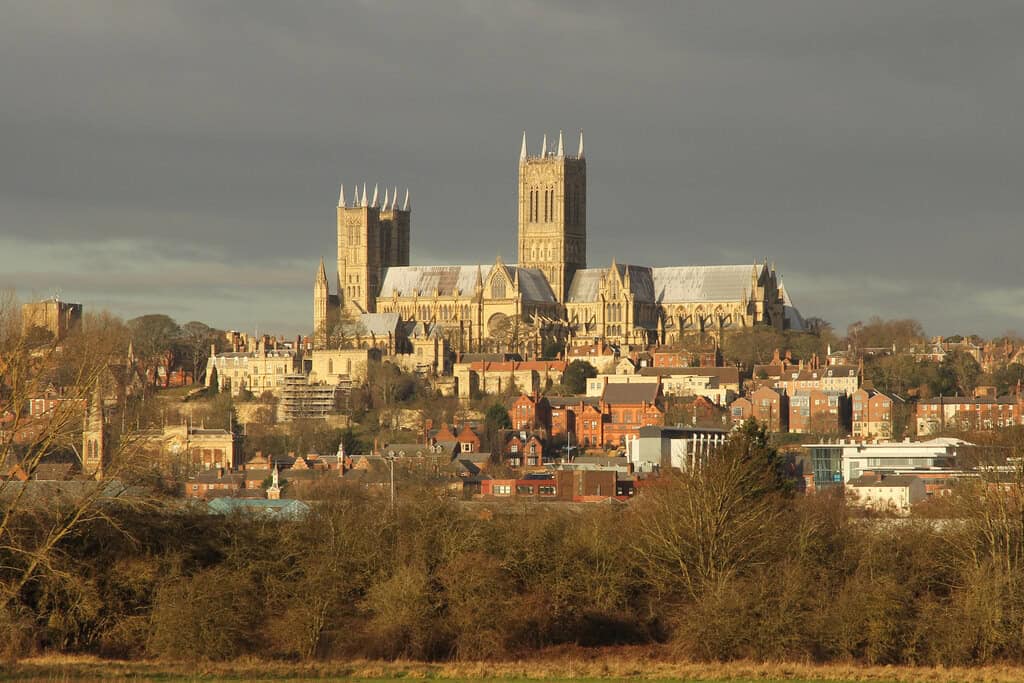
The Bishop of Lincoln, Stephen Conway, has been suspended from ministry and arrested by police on suspicion of sexual assault. He has been given conditional bail. The BBC reports thatthe complaint was made to the Church of England’s national safeguarding team at the end of January. Lincolnshire Police said an arrest of a 68-year-old man was part of an “ongoing investigation following an allegation that a man was sexually assaulted between 2018 and 2025”. The Bishop of Grantham, Dr Nicholas Chamberlain, will step up as diocesan bishop and, together with the Bishop of Grimsby, Jean Burgess, who took on the role just a fortnight ago, issued a statement saying the church in Lincoln will be tested during Lent. The Diocese said: “We understand that this will be a deeply unsettling time.” Pastoral care and support are being given to complainants, as well as to Bishop Stephen.
Bishop of Guildford’s ‘inspirational leadership’ living with inoperable cancer
Members of the Church of England in the Diocese of Guildford are gathering at Guildford cathedral today for prayer and reflection following the news that their Bishop, Andrew Watson, has been given only weeks to live. The cathedral will be open from 12 noon to 10pm, with choral evensong at 5.30pm. In a letter to the diocese, Bishop Andrew said he had been diagnosed with inoperable pancreatic cancer and had received the “sobering news” from his doctor that he would be doing well to be alive in a month’s time. Married with four children, he wrote that the family had received a “tidal wave” of love, prayer and good will” from the church. Reflecting on his life, he said he had been “deeply blessed” and that he did not fear death, describing how his faith had grown stronger in recent weeks. The acting Bishop of Guildford, Paul Davies, said the sudden news had “shocked and saddened us all”, describing Bishop Andrew as an inspiration in his faith, leadership and commitment.
CofE welcomes changes to provision for special education needs
The Church of England has welcomed proposed changes to the provision for children with special educational needs, which are expected to be outlined in a white paper today. Leaks suggest the government intends to review a child’s needs at the end of primary school, which has led to fears among parents that some funding will be withdrawn, but the Education Secretary Bridget Phillipson told the BBC that the government would be “spending more money”, not less. The Church of England says it is the largest single provider of schools in England and will engage constructively in the consultation. It has welcomed moves to increase professional development for teachers and share planning across providers. The changes are part of a wider programme to halve the attainment gap in England’s schools.
Rabbi suggests ceremony for assisted dying deaths
Rabbi Jonathan Romain, who chairs the Religious Alliance for Dignity in Dying, has suggested that planning a ceremony for the time of death can be “highly enriching” for someone seeking to end their life through assisted dying. In his book “A Better Death”, outlining arguments in favour, he explains how the medical process to end a life might be accompanied by a service that might — or might not — include a religious element. He says this might include prayers, a confession, readings from sacred texts, music – even communal music, rituals such as giving of roses or a parting gift to those assembled, the lighting of a candle, which could then be extinguished after their death, and the laying on of hands to signify support and farewell. The person dying might want to take a leading part, by reflecting on their life, saying a prayer or giving blessings. After death, there might be a further moment of ceremony to “act as a transition in moving everyone from being participants to mourners”. The discussion is hypothetical at this point: the Assisted Dying Bill is making its way, slowly, through parliament and is due to be debated again in the Lords this Friday. Read Lianne Kolirin’s article here.
Home Office announces £73.4 million for faith communities’ security
The Home Office has announced the allocation of £73.4 million to protect faith communities across the UK in the financial year 2026-2027. It follows the second-highest level of antisemitism ever recorded in 2025, and data showing 45 per cent of religious hate crimes targeting Muslims. The Chancellor, Rachel Reeves, on a visit to Heaton Park synagogue in Manchester, said she would continue to stand by the Jewish community to make sure that they had the protection they need. The funds will help pay for measures such as security staff, CCTV, fencing, intruder alarms and floodlights.
Pope appeals for immediate ceasefire in Ukraine
Pope Leo has renewed his appeal for an end to the war in Ukraine. Speaking at the Vatican yesterday, marking the fourth anniversary since Russia’s invasion, he said: “Let an immediate ceasefire be reached, and let dialogue be strengthened to pave the way toward peace”. He encouraged everyone to prayer for the “embattled people of Ukraine” and all who suffer, outlining the impact with “many victims, lives and families shattered, immense destruction and unspeakable suffering”. An Interfaith Prayer Service marking the anniversary will be held at the Ukrainian Catholic Cathedral in London tomorrow.
254 Christians ‘arrested in Iran because of their faith’
A joint report by Article 18, Open Doors, Christian Solidarity Worldwide and Middle East Concern, says that 254 Christians were arrested in Iran last year because of their faith. “Scapegoats: Rights Violations Against Christians in Iran” describes “sever repression” against Iranians of all beliefs in the political protests last December. The report says most of the Christians arrested for their faith were charged with “propaganda contrary to the holy religion of Islam”. Fewer Christians were sentenced in 2025 than the previous year, but their sentences were higher and the number imprisoned doubled from 25 in 2024 to 57 in 2025. In a population of more than 92 million, there are only about 800,000 Christians in Iran, according to Open Doors. The report is here
New adult Catholic members rise in Southwark and Westminster
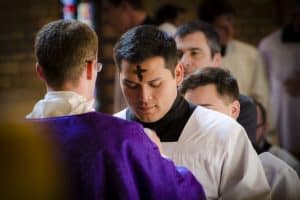
The Catholic Dioceses of Southwark and Westminster are reporting high numbers of people coming forward to be baptised and confirmed. At this weekend’s “Rite of Election”, where candidates are “elected” by the church for baptism, confirmation and the eucharist at Easter, Westminster presented almost 800 adults, the fourth largest group since diocesan records began in 1993 and the highest level of participation in fifteen years. Meanwhile Southwark reported that 590 adults have come forward, the highest since 2011, of whom half are aged 35 and under, and 57 per cent are women. The Diocese put this surge down to and evangelisation programme working with parishes.
Long read – Report on the debate over the “Quiet Revival” by BBC religion producer Catherine Wyatt. Analysis of the survey results and the “very unusual number of queries” which it has generated.
The legacy of Jill Saward 40 years after Ealing vicarage attack
It’s 40 years since the Ealing vicarage attack, when Jill Saward was raped, and her father, Canon Michael Saward, and boyfriend, David Kerr, were beaten with cricket bats. Jill Saward became a campaigner for justice for rape victims, waiving her anonymity, lecturing police and advocating change to the criminal justice system. She died suddenly in 2017, and her widower, Gavin Drake, pays tribute to her legacy in an “afterword”, postscript, to a new edition of her book “Rape: My Story”. He says the impact of her life continues, with “rape myths” entering mainstream discussion, greater emphasis placed on consent, correction of undue lenient sentences, and victims’ anonymity better protected in law. He says: “The measure of a life is not found in the harm endured, but in the courage that follows it.”
The bones of St Francis of Assisi on public display for a month in Italy
The skeleton of St Francis of Assisi is on display in the Basilica of St Francis, on a hillside in Italy. Francis of Assisi was a 13th-century Italian saint who renounced a life of wealth to embrace poverty, simplicity and service to the poor. He founded the Franciscan Order and is remembered for his love of nature, preaching about peace and humility, and his devotion to living like Christ. He died in 1226 but his tomb was discovered in 1818 after excavation work. His remains are in a transparent case which is usually inside a metal coffin inside a stone tomb. The case will be on view until 22 March with 24 hour security, as hundreds of thousands of pilgrims are expected. Italy will have a public holiday on 4 October, to mark the 800th anniversary of his death.