By Maira Butt
Health and the saving of lives is a crucial component of the Islamic faith, with the Quran teaching: “Whoever saves one life — it is as if he had saved all of mankind.”
It is therefore little wonder that so many Muslims are involved in healthcare, and their contribution has been acknowledged and celebrated in new national awards, organised by the British Islamic Medical Association (BIMA).
Of the 315,591 doctors in Britain, 36,128 (11.4 per cent) identify as Muslim, according to a 2021 GMC report. And BIMA estimates that there are an estimated 17,000 Muslim nurses across the UK, with British Muslims making up 12 per cent of dentists, 16.7 per cent of pharmacists and 18.5 per cent of optometrists, according to BIMA’s 2025 annual report.
However, Muslims face disproportionate challenges as well as successes in the workplace. A recent survey of 104 Muslim doctors, found that 40 per cent of Muslim physicians experienced religious discrimination while at work with 44 per cent having experienced it since medical school. At least 69 per cent struggled with fulfilling religious obligations such as praying at work and 28 per cent felt inadequately accommodated.
BIMA’s annual report says a “hierarchy of discrimination” remains around Muslim healthcare practitioners. BIMA tackles this through advocacy such as challenging dress-code barriers or “professional silencing”. It also continues to tackle Islamophobia and contributes to national debates on issues such as assisted dying and impact of the war in Gaza.
Its advocacy team has delivered 14 Islamophobia training workshops online and in-person across the UK, reaching more than 1,500 people, including attendees from medical schools, integrated care boards, NHS leadership and health trusts.
The report also highlights:
- Community work including the Lifesavers campaign, which sees medical professionals passing on essential first aid skills including cardiopulmonary resuscitation (CPR). More than 120 mosques and 300 volunteers were involved in the scheme in 2025.
- The association’s work with Islamic Relief UK, the Department of Health and Social Care (DHSC) and the British Heart Foundation, to install defibrillators in 57 mosques across the country.
- The Mindsavers programme, which combines Islamic teachings and psychological wellbeing principles to raise awareness and enhance mental health education. It involves more than 1,000 participants and 300 volunteers to provide 44 community workshops with 52 partners including mosques and universities.
- The marking of Dying Matters week to raise awareness of end-of-life care, delivering menopause education to more than 100 participants and collaborating with the North East London Cancer Alliance to raise cancer awareness.
- BIMA’s focus on global health, and particularly the lack of medical aid available in the Gaza Strip. The group has called for the protection of hospitals and healthcare workers and supported campaigns such as medicines and aid for Gaza. It highlighted the impact on Muslim healthcare staff in both media and reports.
- The association’s publication, in association with Glaucoma UK, of Ramadan guidance to encourage Muslims living with the condition to continue taking their eyedrops during fasting. The taking of medication can be confusing for Muslims observing the holy month, and BIMA takes scholarly religious advice to raise awareness that eye drops do not break the fast.
- The group’s advice to the DHSC and housing ministry on the issue of safe infant circumcision after the death of six-month-old Mohamed Abdisamad in west London. Mohamed fell ill in the days after the procedure and died in hospital.
- BIMA’s consultation with NHS Resolution about resolving concerns and disputes fairly; it contributed insights on ensuring proportionality and cultural context are “meaningfully embedded” with professional performance processes.
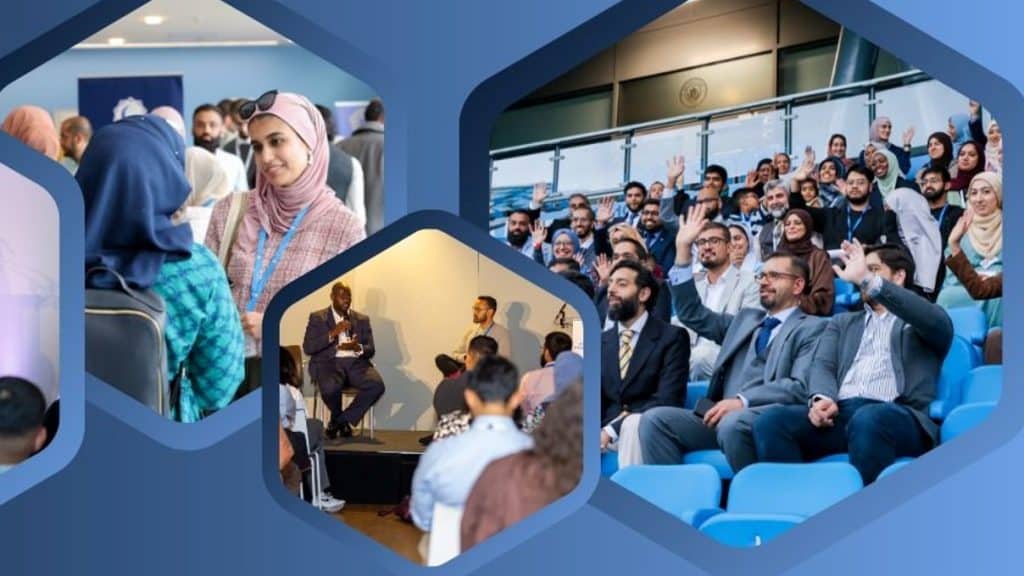
At the end of last year, BIMA launched the British Muslim Health Awards 2025, the first national event celebrating the contributions of Muslim professionals across the UK’s health and care sectors.
Dr Fatima Hussain, a leader in fertility medicine, was named Doctor of the Year; Dr Sakinat Tope Baiyewu, head of health and wellbeing at Leeds Beckett University (Public Health Award); and Dr Haroon Shah, a GP registrar (Digital Health Award).
Dr Sahira Dar, president of BIMA, said: “The British Muslim Health Awards were established to honour the compassion, integrity and excellence of Muslim health and care professionals across the UK.
“This was an inspiring celebration of service and leadership, highlighting the profound impact these individuals have on patients and communities. The depth of Muslim talent in healthcare is phenomenal, and it was humbling to see such excellence and honour their remarkable work.”