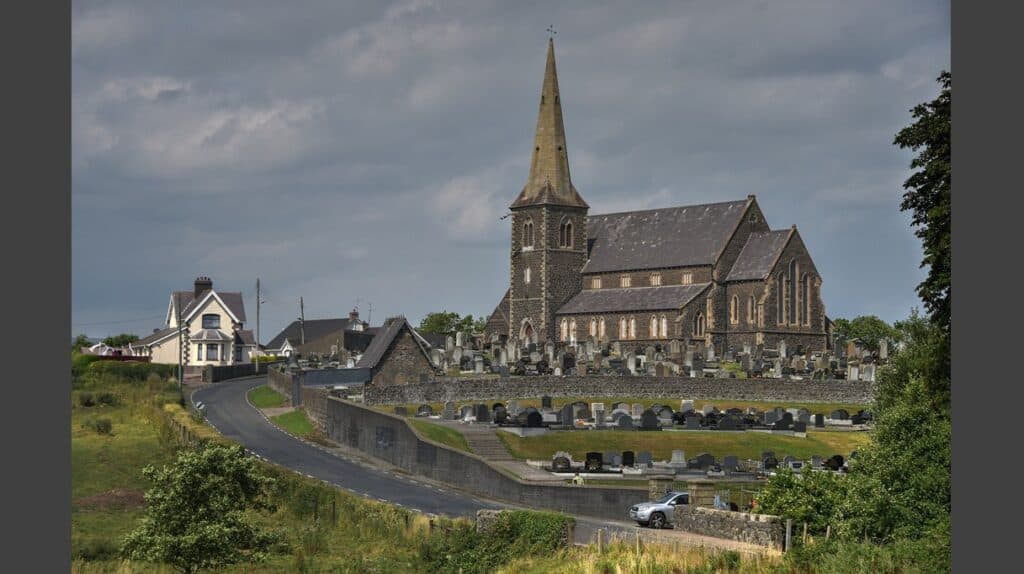
Drumcree Parish Church: beyond the politics
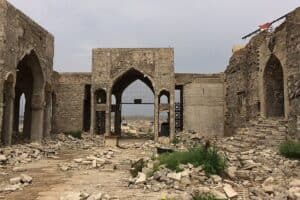
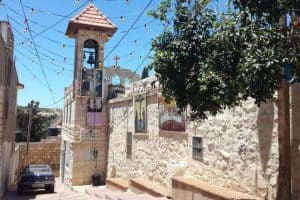
A small group of Orange Order members remained at Drumcree Parish Church yesterday still waiting for the parade down the Garvaghy Road to continue, as police and civic leaders held talks to defuse the crisis. The church is a Church of Ireland parish, with a Christian community recorded on the site for centuries before the present church was built in 1856. In recent decades, however, the church became internationally associated with the annual Orange Order marches and the confrontation over the Garvaghy Road. The rector, the Rev Gary Galway, who has been there since 2008, has sought to keep the parish separate from the politics of the dispute and has spoken publicly of improved relationships with the local community and the church’s involvement in cross-community work. Yesterday the church posted a statement on its Facebook page saying it was a welcoming church with doors open to all. It said: “We recognise that recent days have brought hurt, division and deep feeling to our community. We are committed to being a place of reconciliation where all may find a home in God’s love. We invite all people of goodwill to join us in seeking peace, building trust and showing the love of Christ to everyone in our community”
Christians in Liverpool march for peace in the Holy Land
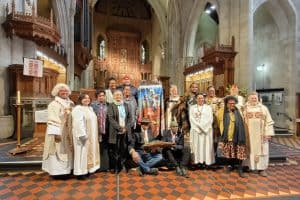
Almost 200 people from churches and charities joined a walk between Liverpool’s two cathedrals, calling for a just peace in the Holy Land. The event, held as the Labour Party gathered for its annual conference, was organised by the ecumenical Just Peace Coalition as part of its Time to Act campaign. Participants included Liverpool’s interim Bishop Ruth Worsley, Auxiliary Bishop Tom Neylon, cathedral deans, Methodist President Mark Slaney and representatives of Christian Aid, CAFOD and other charities. Palestinian Christian Daoud Nassar told the gathering that churches must “walk the talk” on justice and support non-violent resistance.
London City vicar says C of E bishops are ‘clear heretics’
The Rector of St Helen’s, Bishopsgate, the Rev William Taylor, has described Church of England bishops involved in the Living in Love and Faith process as “false teachers” and “clear heretics”. In a sermon delivered earlier this month, he said his church will not encourage people to seek selection for ordination through the Church of England or those in fellowship with the House of Bishops. At least 14 people have been ordained deacon in London by bishops of the Reformed Evangelical Anglican Church of South Africa (REACH-SA) over the past two summers. Church Society director the Revd Dr Lee Gatiss criticised Mr Taylor’s proposed alternative oversight, warning against creating a “small evangelical ecosystem” without effective episcopal accountability. Church Times story here.
Sarah Mullally seeks stronger ties in Anglican communion
The Archbishop of Canterbury Sarah Mullally has used her first visit to The Episcopal Church in the United States to emphasise unity and stronger relationships across the Anglican Communion. Addressing the House of Bishops in Texas, she said conversations across differences within the Anglican Communion were important for understanding and friendship. The Episcopal Church has differed from conservative Anglican provinces over issues including women’s ordination and same-sex relationships and has faced opposition for its stand. Dame Sarah said Anglican and Episcopal bishops are figures of unity, and the key to building understanding and friendship in a polarised world. Later she went to the United Nations raising the question of how the church should work with other organisations to ensure health care in areas of conflict. Episcopal News Service report here.
Rural churches challenge the Quiet Revival ‘big city narrative‘
Dr Michael Tang, a mission enabler and community engagement pioneer with the Thirsk and Northallerton Methodist Circuit in North Yorkshire, suggests that the Quiet Revival was a big city story, reflecting growth in cities. Writing for Premier Christianity, he says rural churches often have older, smaller congregations, giving the example of one with 11 members, average age 74, which feels it has failed when reports highlight young people returning to church. He points out that rural churches face different circumstances, with young adults often leaving for education and work. And he argues that rural ministry should not copy urban models but recognise the contribution of older Christians and give priority to listening. He describes his work in the rural area as: “Visit. Sit. Ask. Refuse to arrive with the answer. The eleven people in that chapel have been answering the question about Christ and growth with their lives for 50 years. Nobody counted it. The revival, if it came, came to London. The doors here open anyway.” The article is here
Hindus invited to imagine the future of Hinduism
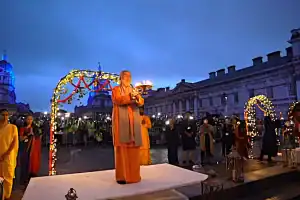
Hindus for Human Rights has launched The Speaking Tree, an online project inviting people to share their hopes for the future of Hinduism. Visitors can post a memory, question, experience or idea, with contributions appearing as “leaves” on an interactive tree. The project aims to encourage listening between people with different experiences of Hinduism and promote values of human dignity, equality and care. It forms part of a wider initiative exploring Hindu thought and practice through questions of caste, gender, pluralism and justice. HfHR says people do not need to belong to an organisation or have a settled view of Hinduism to participate.
Robot goes underground in the search for the remains of Noah’s Ark
An international research team led by archaeologist Cenker Atila and Noah’s Ark Scans has launched a scientific expedition at the Durupınar Formation, an area in the shape of a boat high up in eastern Turkey. They have drilled down to 18 metres and put a robot underground after detecting tunnels and regular shaped cavities. Mainstream geologists maintain the location is a natural geological formation caused by erosion and landslides, but Noah’s Ark Scans reports that the dig has discovered material that could be the decayed wood top layers of the Ark. No bedrock or solid limestone has so far been identified in the holes drilled inside the formation.