Iran protests driven in part by ‘opposition to imposed state religion‘
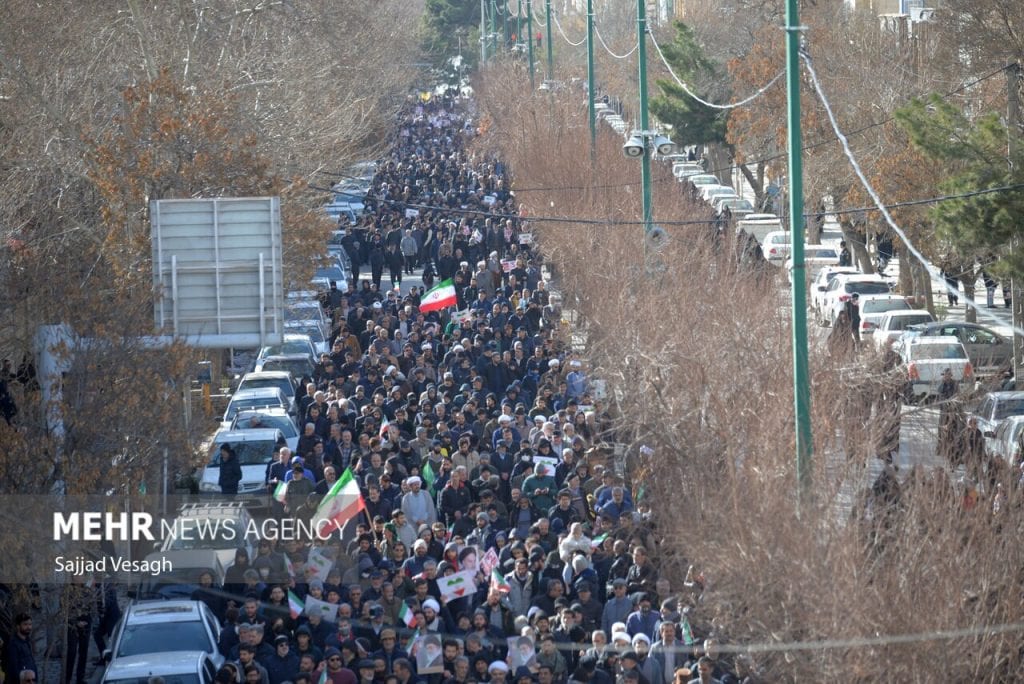
An estimated 500 protesters in Iran have died in the widespread and violent protests which have intensified over the past fortnight. While the protests were sparked by spiralling inflation, commentators suggest they are also a sign of a growing secularised society which objects to having had a particular organised religion imposed upon it since the 1979 Islamic Revolution. In an interview for BBC Radio 4’s Sunday programme, Professor Ali Ansari suggested there is a growing desire for a separation of religion and state. Some clerics have supported the protesters, despite the fact that dissident clergy have in the past been defrocked or imprisoned for their views. Some mosques have been attacked bby protesters because they have been used as bases for the militia. Recent research by the Group for Analyzing and Measuring Attitudes in Iran (GAMAAN), suggested only 40 per cent identify as Muslim, despite the census saying the figure is 99.5 per cent. Non-religion accounts for 22 per cent and there is a range of other faith traditions and worldviews in the country. Professor Ansari said the Iranians “always have a tendency towards spirituality of one sort or another”, but it is becoming the most secular society in the Middle East “and that is the consequence of 47 years of Islamic rule”.
Report warns of growing politicisation of religion in Britain
A report published today explores the rising visibility and politicisation of religion in the UK, with “new Christian symbolism of populist movements, the assertive politics of Hindutva, forms of Zionism shaped by existential insecurity, Sikh advocacy of a state of Khalistan and Islamist visions that link faith with power”. Questions of Hope and Hate: Faith and Faultlines in a Changing Britain, published by the Good Faith Partnership and Hope Not Hate, explores the reasons for faith narratives being mobilised for causes of division, and recommends actions to “strengthen the institutions and relationships that allow faith to serve the common good”. The report suggests that democratic fatigue, global conflict, internal religious change, and weakened interfaith structures are reshaping civic life. It recommends creating stable long-term mechanisms for government – faith relations, embedding religious literacy across institutions, renewing national narratives of belonging, strengthening faith leadership and institutions, and supporting interfaith infrastructure and local action. The report is to be formally launched this afternoon. The Religion Media Centre is holding a briefing on the report tomorrow, Tuesday 13 January at 1200 over zoom – to get the link [email protected]
Pope says foundations of international coexistence are being undermined
Pope Leo has issued a strong appeal for humility, dialogue, and a renewed commitment to multilateralism, in his address to the Diplomatic Corps accredited to the Holy See. He warned that “war is back in vogue” and that peace is increasingly sought through force rather than justice. He said the foundations of international coexistence are being steadily undermined, as diplomacy based on dialogue gives way to the logic of power and deterrence. “The principle established after the Second World War, which prohibited nations from using force to violate the borders of others, has been completely undermined,” he said, warning that peace sought through weapons to asserting dominion is a mentality that “gravely threatens the rule of law, which is the foundation of all peaceful civil coexistence.” Church Times article here
UAE limits UK university enrolment over Muslim Brotherhood fears
The Times reports that the United Arab Emirates is restricting funding for students wanting to study at British universities over concern about the influence of the Muslim Brotherhood, among other issues. The group is a proscribed organisation in the UAE, but not in Britain. A review in 2014 found its beliefs were opposed to British values but it was not banned. The UAE government is excluding British universities from eligibility for state scholarships covering tuition, living costs and travel. The Times reports that UAE student numbers in the UK doubled between 2017-2024 to 8,500. Middle East Eye reports that in the year ending September 2025, numbers dropped to 213, a drop of 55 per cent compared to 2022.
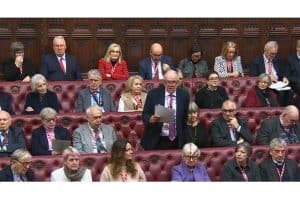
MPs have ‘striking level of goodwill’ towards the CofE
The Second Church Estates Commissioner, Masha de Cordova, has given an interview to the Church Times, making the observation that among MPs, the level of good will towards the Church of England “is striking”. She says: “everybody wants to see the Church do well and do better at this”. She has been in post for a little over a year and outlined her views on some of the contentious issues the Church of England faces: in favour of same sex marriage, making permanent the Listed Places of Worship Grant Scheme, and pursuing Project Spire which awarded £100 million to benefit communities affected by the slave trade, which she says is the right way forward. She is against the Assisted Dying Bill, and opposed to the use of Christian symbols by groups that sow division. The article reports that she is a member of Holy Trinity Clapham, in the HTB network, whose vicar, Rev Jago Wynne, is a leader of “The Alliance”, the group against bespoke same sex services of blessing, which has advocated a parallel system of bishops, training and finance for those who share their views.
Pete Meadows, evangelical ‘elder statesman’, has died aged 84
Pete Meadows, a leading figure in British evangelicalism who helped shape several major Christian initiatives, has died aged 84. He co-founded Buzz magazine in 1965 — later relaunched as Premier Christianity — as well as Spring Harvest and Premier Christian Radio. He also coined the name of the aid agency Tearfund and went on to serve as head of church action at World Vision. Many of the projects he helped establish continue to flourish today. Paying tribute, Spring Harvest said he carried with humility, the mantle of being an elder statesman, “an innovator at the highest level: entrepreneurial, purposeful, irreverent at all the right moments, yet utterly focused on partnering with Jesus in mission”. It added that his enduring legacy is evident in the ongoing life of the movements he helped to initiate: “They say the mark of a great leader is that when they step back, what they started continues. It is breathtaking to see that truth lived out in all we now steward at Spring Harvest, alongside the many other initiatives Pete helped bring to life”.
SPCK reports surge in Bible sales
The Christian publisher SPCK Group, reports that sales of the Bible in Britain soared last year, totalling £6.3 million, a rise of 27.7 per cent on the previous year and more than double the figure from 2020. The bestselling Bible translation in 2025 was the English Standard Version (ESV). Premier Christian News quotes Sam Richardson, CEO of SPCK Group, saying that the sales are “evidence of a significant cultural shift regarding matters of faith and religion in this country..As we face worldwide political and social change, including the after-effects of the COVID-19 pandemic, global wars, the rise of AI, and a growing mental health crisis, individuals are re-engaging with questions of meaning and spirituality”.
China cracks down on underground church members
Leaders of the Early Rain Covenant Church, a prominent underground church in south-west China have been detained, amid signs of a renewed crackdown on unregistered Christian groups. The Guardian reports that according to a church statement, police took its leader, Li Yingqiang, from his home and detained his wife, Zhang Xinyue, a pastor and at least two other members. Several others were briefly held and released. Early Rain is a house church whose founder was jailed for nine years in 2019 for inciting subversion of state power. Human Rights Watch reports that in October, 18 senior members of the underground Zion Church were arrested, and in December around 100 members of another unofficial church in Zhejiang province were detained. Underground church members are regarded as disobedient to Communist party ideology and are punished. Guardian article here
Scheme to encourage new organists for the nation’s churches
The Telegraph’s classical music critic, Ivan Hewett, sings praises for the 10,000 organists in Britain, skilled musicians who play music in church often at a moment’s notice, improvise, transpose and placate choir and clergy. But he says the numbers coming forward to train are declining, as parish choirs diminish and churches lose the ability to bring on the next generation. The article sets out rates of pay from a generous £95 per service to a £50,000 salary in a cathedral and explains one of the key issues to ensure the future is to set down minimum rates. The Royal College of Organists and the Royal School of Church Music offer schemes such as digital learning, play your organ days in churches and the introduction of digital organs in every school where it can be taught. The article is here
Buddhist monks on walk for peace across the United States
The Independent reports on a group of Buddhist monks, accompanied by their rescue dog, trekking across the United States, from Texas to Washington DC, in a meditative walk for peace. Once there, they will petition Congress for the recognition of Buddha’s day of birth and enlightenment as a federal holiday. The group’s leader is walking barefoot and says they will meet people en route teaching about mindfulness, forgiveness and healing at every stop.
Albania government appoints hologram ‘Diella’ to root out corruption
A hologram named Diella has become a government minister in Albania, responsible for identifying corruption and nepotism in the country’s public procurement processes, to bring it into line with EU rules. The Times reports that Diella will appear in cabinet meetings, focussed on the task of tackling practices that have stalled Albania’s bid to join the European Union. She was unveiled on a computer screen wearing national dress and made a short speech saying: “The real danger to constitutions has never been the machines, but the inhumane decisions of those in power.” Prime minister Edi Rama said Diella’s role would be “perfectly transparent”.