“An unspeakable atrocity” at Bondi Beach
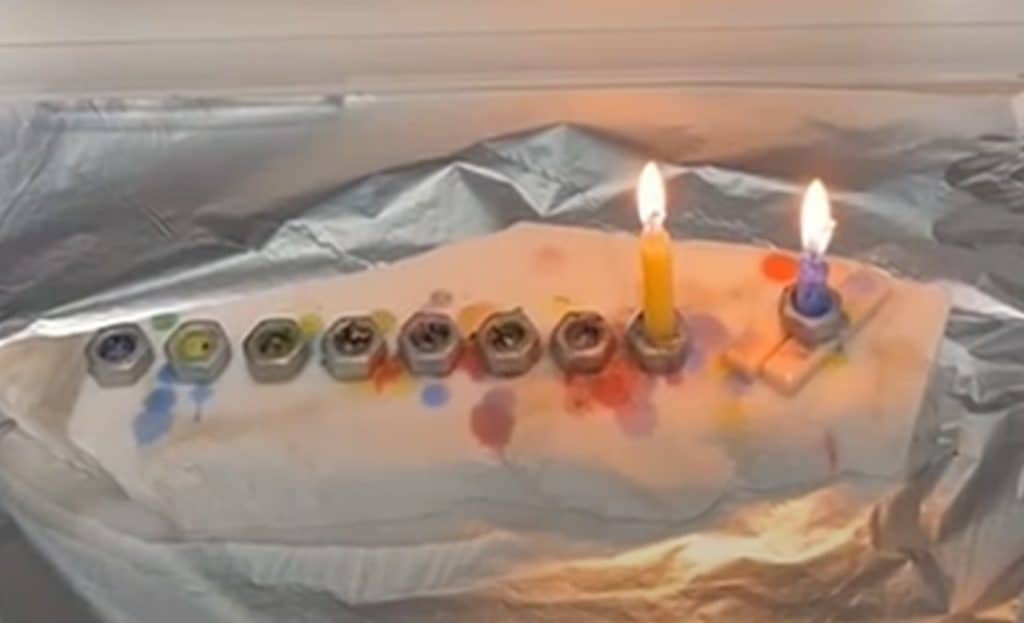
The Chief Rabbi, Sir Ephraim Mirvis, has described the killing of 15 Jewish people at Bondi beach as “an unspeakable atrocity”. The victims, aged between 10 and 87 years, had assembled for the lighting of the menorah, marking the beginning of the Jewish festival of lights, Hanukkah. A further 29 people were injured. Drones filmed the two men who shot indiscriminately at the crowds, and police have revealed that they were father and son. The father was heroically wrestled to the ground and his gun removed by Ahmed Al-Ahmed, a local fruit shop owner, but he staggered on and was eventually shot dead by police at the scene. There is extensive coverage of the story – here’s the BBC’s live page
One of the victims was Rabbi Eli Schlanger, aged 41, a father of five who was born in London. He was the head of the Chabad mission in Bondi, and had served the community there for 18 years. He was one of the organisers of the “Hanukkah by the sea” event on Bondi Beach, which was well established among the Jewish community in Sydney and attracted thousands.
Since the Hamas attack on Israel on 7 October, the Jewish communities in Australia have been subject to rising antisemitic attacks, with multiple synagogues burned or vandalised, homes and cars have been sprayed with antisemitic graffiti, and people have been assaulted. There are 117,000 Jews in a country of 28 million people. Time magazine has a timeline of incidents here
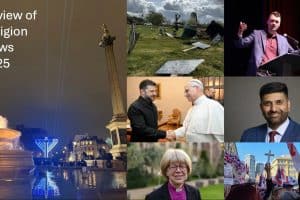
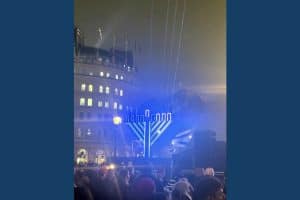
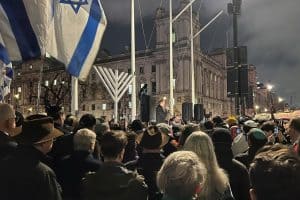
The Menorah (candelabra) in Trafalgar Square, London, said to be the tallest in Europe, was lit last night as planned, amidst tightened security. It was the first night of Hannukah and more candles will be lit during the eight day festival. Police have promised more officers will be put into Jewish communities around synagogues and community venues in the UK during the festival. The Prime Minister, Sir Keir Starmer, whose wife is Jewish, was pictured lighting a candle in the window of their home in Downing Street, with him saying their thoughts and prayers are with those murdered, their loved ones and the whole Jewish community “Light will always win over darkness”.
Other news
Unite the Kingdom Christmas event ‘modest and muted‘
An estimated 1,000 people gathered for the Unite the Kingdom Christmas event in Whitehall on Saturday, titled “Putting the Christ back into Christmas”. It was organised by far right activist Tommy Robinson and his allies, and the prospect of an event aligning those politics with Christian symbols alarmed bishops and main denominations, who warned against it. Christian campaigners supporting refugees staged a protest outside St Paul’s Cathedral. Amongst the crowd assembled outside the Cabinet Office in Whitehall, there were wooden crosses as in the summer rally when 150,000 people attended, but there were fewer people and only around 15 Union flags or St George’s flags. It was a more muted affair, with carol singing and addresses by clerics, but little mention of politics, according to Nick Spencer, senior fellow at Theos, which is undertaking a two year research project into Christian nationalism. He told the Sunday programme on BBC Radio 4 that there was one “very fleeting mention of Islam”, a couple of mentions of liberal elites and some reference to “patriots”, but he didn’t recall any mention of immigration or wokery. Pastor Rikki Doolan, who was instrumental in Tommy Robinson’s conversion to Christianity, said they kept politics out of it and he would pray for the bishops who suggested they were trying to weaponise Christianity for a political agenda. Tommy Robinson pledged to make this an annual event and fill Trafalgar Square next year.
British model of tolerance ‘needs to be defended’
Times columnist Fraser Nelson charts the weaponisation of Christianity by political parties across the west, noting that “we can see the cross creeping into politics a lot more now”. He sees the dividing line among Catholics, or on polar opposites of the political divide, and says: “It is not about left versus right but two visions of what faith means in public life. One sees Christianity as a tribal marker, a rallying flag for those who feel their culture is under threat. It declares a battle already under way. The other vision sees faith as a code for how to get along together; how to strengthen our principles and define society anew… My hunch is that the British model of tolerance will win out — but it needs to be articulated and defended. It’s too important a debate to duck and politicians, in the end, have to find a way of making the case. The King and the Pope have, between them, offered a good place to start.” Article is here
Government launches faith security training scheme
The Security Minister, Dan Jarvis MP, says that the government is developing a new Faith Security Training Scheme, to help local faith communities be secure and to build resilience. He explained the initiative to Sikhs in the West Midlands, who sought his reassurance after racially motivated attacks on Sikh women in the area, and an incident where a man ran into the Gurdwara Guru Nanak Parkash in Foleshill and behaved violently. In a letter, he condemned the “abhorrent” attacks on women and advised that the new Scheme will cover current threats, practical security measures, and steps communities can take to enhance safety. He said the contract for the training has been awarded and will roll out soon. He also reminded the community that the government has a Places of Worship Protective Security Scheme and a resource pack ProtectUK offering guidance. Coventry Live report here
Andrew Graystone’s account of his years investigating abuser John Smyth
Andrew Gaystone, the author and campaigner who exposed the sadistic abuse by John Smyth against young men and boys, has written for The Times on his ten years of investigation which led to the story coming out. His questions led him to Zimbabwe and South African, where Smyth had been sent after abuse became known to leaders in England. He said: “I was shocked to discover how many church leaders had known what he was doing all that time. It was an open secret, shared over sherry and gossiped about at dinner parties. No one stepped in to stop him because, in the words of one, if people found out about Smyth’s grotesque practices, “it would damage the work of the Kingdom of God”. The article is here
Statement and legal judgment re Smyth abuse
The Church Times reports a ruling by the Church of England’s President of Tribunals, Lord Justice Males, that the Bishop of Lichfield, Dr Michael Ipgrave, was “clearly correct” in taking no further action against the Rev Tim Hastie-Smith concerning the handling of reports about John Smyth’s abusive behaviour. Mr Hastie-Smith was national director of Scripture Union from 2010 to 2019 and was one of ten members of the clergy who could be subject to disciplinary proceedings in connection with response to John Smyth. But the judgment says that he did report appropriately the disclosures which were made to him and criticism of him was unfounded… Separately, the Church of England has issued a statement following last week’s documentaries into Smyth, repeating that it is “profoundly sorry for the ways in which the Church failed to protect children and vulnerable adults and for the lasting impact of those failures.. We are appalled that any clergy person could believe that covering up abuse was justified in the name of the Gospel.”
Vicar calls for Archbishop of Canterbury’s appointment to be paused over safeguarding
The official appointment of Dame Sarah Mullaly as Archbishop of Canterbury on 28 January, should be paused because of an outstanding safeguarding complaint, according to the Rev Robert Thompson, a London vicar on the Church of England’s General Synod. This follows the disclosure that a complaint over her handling of an abuse allegation in 2020, is being formally considered by Church of England officials, which could lead to a range of outcomes including a disciplinary tribunal. Mr Thompson told the Sunday programme there would be “absolutely no way” in which a person would be appointed to a parish position who had an outstanding clergy disciplinary measure against them, but there was one rule for priests and another for bishops. He questioned whether the group that selected her, the Crown Nominations Commission, knew about this matter. The situation was “a total mess” he said and he suggested the issue must not be resolved by the Archbishop of York because he is her closest colleague.
Canadian hate speech law change ‘would criminalise religious texts’
Planned changes to Canada’s hate speech law have sparked controversy, with critics warning they could criminalise passages of the Bible and other sacred texts. Under current law, “wilful promotion of hatred” is punishable by up to two years in jail, but statements made in good faith and based on religious texts are exempt. That defence would be removed under an amendment to the Combating Hate Act agreed by the Liberal government and the Bloc Québécois. Supporters say the change would close a loophole highlighted by a 2023 case involving a Montreal imam saying “Zionist aggressors” must be killed – his defence was that this was a prayer. He was not charged. A government minister has said there are hateful sacred texts, for example against same sex relationships, but they should not be used. However, opponents, including religious leaders and civil liberties groups, argue that the change threatens religious freedom. Catholic bishops warn it removes an essential safeguard for people with sincere beliefs grounded in long standing traditions. Conservative politicians say the amendment would criminalise sections of the bible, Qur’an, Torah and other sacred texts. Telegraph report here
‘Hope, generosity and belief’: the values binding football and Christian faith
Hundreds of Christian football fans took part in the FA’s Faith and Football Christmas event at Wembley, hearing how faith and football are intertwined and then joining a carol service beside the pitch. There were stories of Premier League players praying before, during and after matches; Christians involved at grassroots level offering lifelines to young people through taking part in the game; chaplains helping players negotiate the ups and downs of a professional sporting life; and the abiding values that build both the game and a life of faith. There was insight from Martin Bateman, director of Ambassadors Football: “If you want to know somebody’s discipleship and their walk, don’t meet them on a Sunday morning at church, see them when they’re fouled from behind on a Wednesday night in Luton somewhere.” Read our report with pics here