
Pope Francis’ diary reveals he had seen and heard the Devil
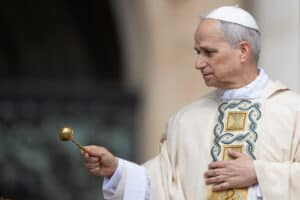
The Private Diary of Pope Francis, charting his innermost thoughts from 1992 to 2025 when he died, includes the astonishing revelation that he had seen the Devil three times, describing his “flaming eyes” and “rasping voice”. In Argentina, he said “I saw him from the car window. I can’t forget his menacing and, at the same time, seductive eyes.” Secondly at a Carmelite chapel, “He looked at me with flaming eyes. I won’t forget that look, more intense than the previous one. They were like flashes of fire. I escaped by clasping the Rosary and praying to the Virgin.” After a visit to Chile in 2018 when he learned of the extent of sex abuse by clergy, he saw the Devil again and heard his voice “triumphant, possessing everything”. He wrote “I can’t forget the powerful raspiness of his voice”. Some entries are written in indecipherable “hieroglyphics” and one passage speaks of his spiritual crisis in 2021 and 2022 as his health declined. Just before he died, Pope Francis gave permission for Cardinal Víctor Manuel Fernández, the Vatican’s doctrinal chief, to publish the diaries. The Times quotes commentator Austen Ivereigh, who said a sense of the spirits was common among mystics, but the description of the Devil’s physical presence “is startling to me”. According to Catholic commentator Christopher Hale, “Francis made the devil a regular guest in his preaching from the first week of his pontificate”.
Christians Against Poverty wants more clarity from government over benefits
Christians Against Poverty has welcomed proposals to reform the process of claiming Personal Independence Payment (PIP), particularly for people with serious or terminal conditions, and to reduce reviews for lifelong conditions. But it is urging the government to set out clear timescales, funding commitments, and cast-iron protections for the future of the benefit. In his Commons statement, Sir Stephen Timms said the review of the PIPs system found it is not fit for purpose, but a good deal of further work is needed, and the government will set out its plans next year. Christians Against Poverty’s CEO, Stewart McCulloch, said: “The cost of PIP will have almost tripled between 2020 and 2030, and the Government has made clear that it sees this as unsustainable, but we are still unclear about how this will be addressed”. CAP warns that uncertainty over future spending and eligibility could cause anxiety for millions already facing financial hardship.
Bishop endorses ‘rehumanising’ benefits process’
The Bishop of Leicester, Martyn Snow, and members of the Church of England’s Disability Task Group, also welcomed the review’s recommendation to end unnecessary reassessments for people with lifelong and degenerative conditions, a faster route to support for those with the most serious conditions, and a more individualised assessment process. The bishop “strongly endorsed” the review’s call to ‘rehumanise’ the process of applying for PIP.
CofE redress scheme for abuse survivors to launch on 7 December
The Church of England says preparations for its independent Redress Scheme are in their final stages. The scheme will provide compensation and support to victims and survivors of Church-related abuse. A helpline and website will launch on 7 December, with applications opening in January 2027.
Archbishop to advise on penalty for Bishop over failings in John Smyth case
The Church Times reports that the Archbishop of York is to advise on an appropriate penalty for the former Bishop of Durham, Paul Butler, who has admitted misconduct over his failure to act on disclosures about John Smyth’s abuse in 2015. He was chair of Scripture Union at the time. A further hearing to determine a penalty is scheduled for 14 December. Two years after the Makin report into the John Smyth abuse case, only one priest has received a formal disciplinary penalty, while Paul Butler is the only bishop to have admitted misconduct in proceedings arising from the report.
Call for independent analysis of Islamophobia in Italy
The Italian Union of Muslim Organisations (UCOII) is calling for an independent national observatory to collect evidence of Islamophobia, monitor trends and provide a basis for action by government, media and other institutions. Its report “Islamophobia in Italy: Numero Zero”, identifies 73 recorded incidents of anti-Muslim hostility in Italy between April 2024 and November 2026, including threats, intimidation, graffiti and attacks on places of worship. It also examines media coverage, broadcasting and social media, and finds that in the mainstream media, explicitly hostile material was relatively uncommon, but contrasts with social media where more than a third of the sampled comments were classified as hostile. Citing research by the European Union Agency for Fundamental Rights, it says 34 per cent of Muslim respondents in Italy experienced discrimination over five years. The report stresses that its figures are not a measure of the national scale of Islamophobia and independent data is necessary.
IHRA definition of antisemitism adopted by Italian parliament
Last week, Italy passed legislation adopting the International Holocaust Remembrance Alliance (IHRA) working definition of antisemitism, prompting debate over freedom of expression and criticism of Israel. The lower house of parliament approved the measure by 147 votes to 93, with five abstentions, in a vote which follows a fourfold increase in reported antisemitic incidents since 2022. The IHRA definition states: “Antisemitism is a certain perception of Jews, which may be expressed as hatred toward Jews” and cites eleven examples of antisemitism, including holding Jews collectively responsible for the actions of the State of Israel. Supporters say the law strengthens protection against rising antisemitism, while Amnesty International and opposition politicians warn it could restrict legitimate criticism of Israel and pro-Palestinian activism. The legislation creates no new criminal offences or penalties. Associated Press report here >>
Sikhs mark the birthday of their founder
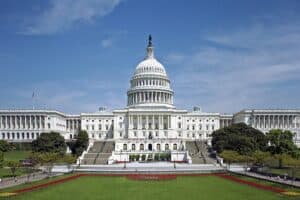
British Sikhs have marked Sri Guru Nanak Dev Ji’s Gurpurab, the birthday of Guru Nanak, the founder of the Sikh tradition, with celebrations at gurdwaras across the country. Observances included prayers, readings from the Sikh scriptures, devotional singing (kirtan) and communal meals (langar), open to all. A special celebration will be held at the Houses of Parliament this evening, Wednesday 25 November, organised by the Sikh Network, Sikh Federation and All-Party Parliamentary Group for British Sikhs.