By Ruth Peacock
Religion in North Wales has shifted dramatically over the past 100 years, from the great nonconformist Welsh revival of 1905, to a society where fewer than half — 43.6 per cent — identify as Christian.
Its Christian roots, however, continue to shape public life. Today, the religious make-up of Wales is increasingly diverse, with small numbers of other faith traditions, often hidden, and the emergence of alternative spiritual paths.
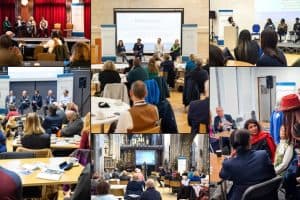
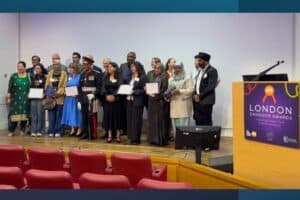
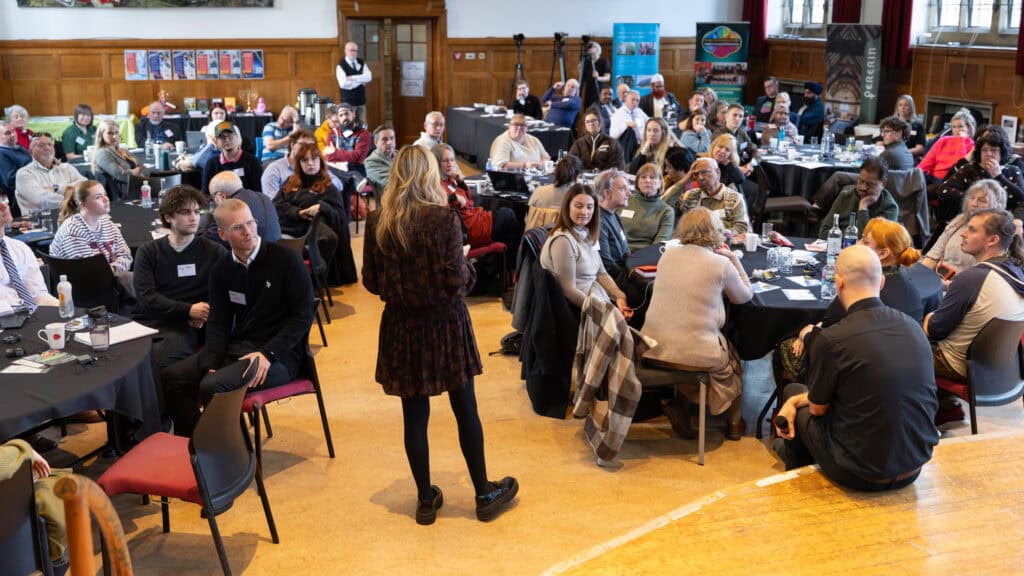
On Monday 2 November at Bangor University, about 80 people representing these many traditions came together to meet journalists at an event that aimed to explain their views and enhance links with local media.
It was the latest in the Religion Media Centre’s Creating Connections series, which has already visited 12 English cities, aiming to deepen understanding and widen contacts. This was the first foray into Wales and was put on in partnership with Bangor University.
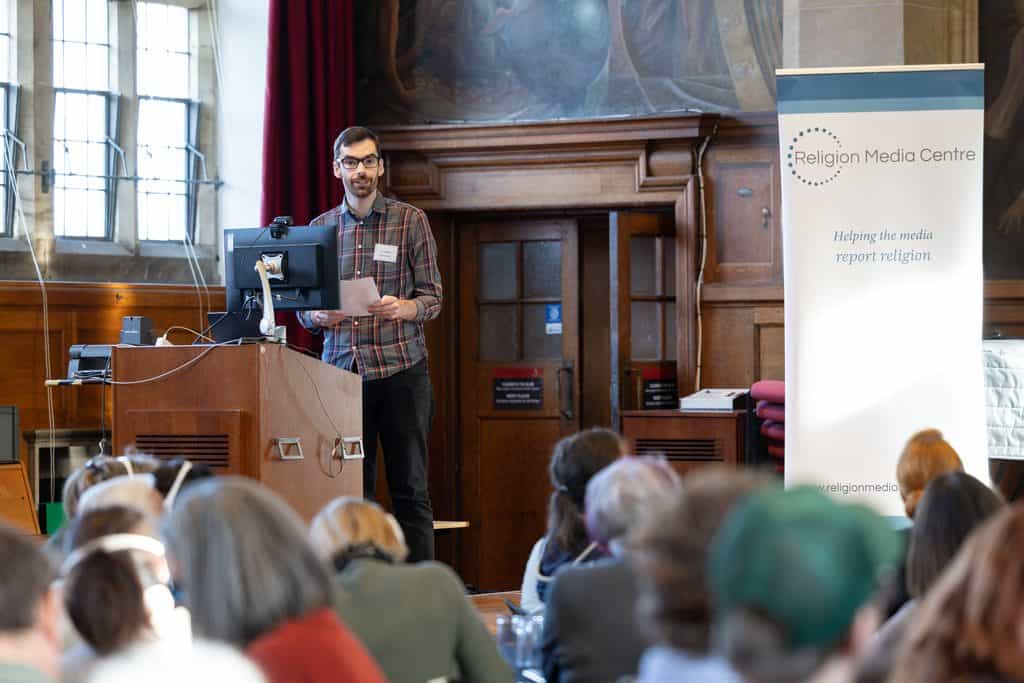
Dr Gareth Evans-Jones, lecturer in philosophy and religion at Bangor, said a diverse range of Christian traditions continue to shape the religious heritage of North Wales, and many institutions and public traditions reflected this inheritance, for example in education, the law, public services and the voluntary sector.
He explained that, after Christianity, Islam was the faith with the largest number of followers, many linked to the universities and the healthcare sector. All main traditional religions are represented in the recent Census results, as well as Pagans, Wiccans, Spiritualists, Druids and just plain “spiritual”.
The religious landscape of Wales has three key characteristics: Christianity remains the largest religious tradition; a significant proportion (46.5 per cent) say they have no religion, and there is an increasingly diverse pattern of other spiritual paths.
The place of the Church in Wales
Nonconformist congregations have declined sharply, alongside the waning influence of the Church in Wales, which was disestablished in 1920. In recent years, it has made headlines for the wrong reasons, after critical reports into Bangor Cathedral identifying safeguarding failures, blurred sexual boundaries, inappropriate conduct and weak financial controls, led to the retirement of Bishop Andy John.
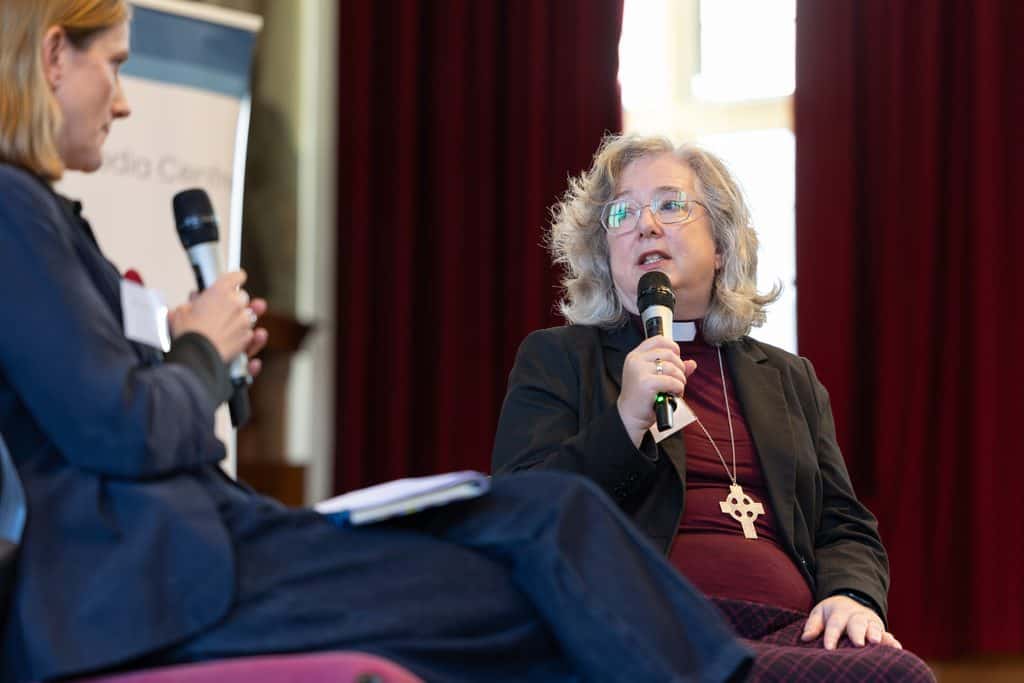
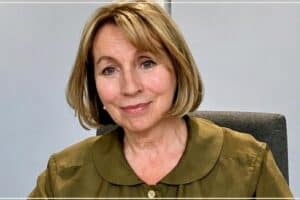
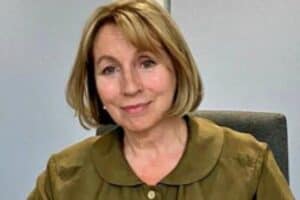
His successor, Dr Manon Ceridwen James, was interviewed about the challenge of rebuilding trust. She had first come to Bangor as dean of the cathedral and found that being in the centre of a media storm was “very confusing and a bit shocking”, but she determined to be kind, thoughtful, sensitive and kind, to build trust.
She had three tips for dealing with the media: build trust with journalists to get the facts straight; always have notes with key words when doing an interview; and, when feeling nervous and anxious, know that the story and the world will move on.
Faith stories to interest journalists
The bishop’s experience of dealing with the media in a crisis was not common among the 10 people from faith groups, who told the meeting about their work and activities which they thought should interest journalists. Here’s a selection:
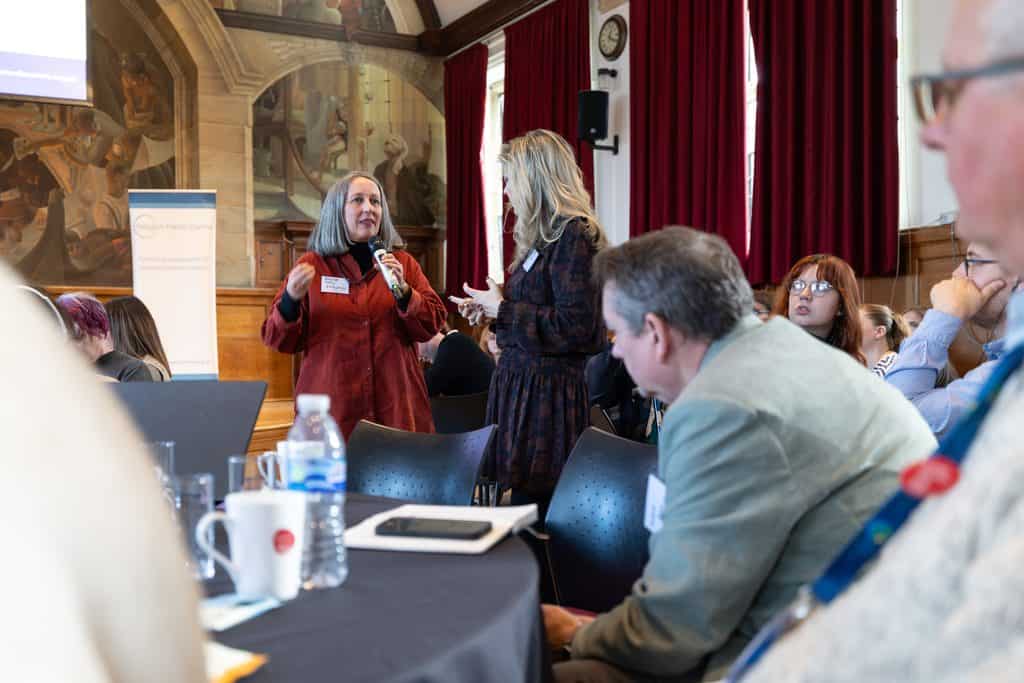
- Gareth Hall, North Wales interfaith co-ordinator and northeast Wales community cohesion co-ordinator, spoke of his work gathering people from all main religious traditions in the Wrexham area, creating a network and enabling conversations and joint activities such as speaking about interfaith work in school visits. He urged journalists to listen to people who spoke quietly and practised their beliefs through daily acts of kindness, to enable their voices to be heard.
- Elin Owen and Nia Roberts from the Bangor diocese, are working on a project called Pererin — Welsh for pilgrim — to develop a pilgrimage movement that combines Christian spirituality, Welsh history, landscape, education and tourism. The initiative followed the popularity of the BBC series Pilgrimage: The Road to Wild Wales, which renewed interest in walking historic spiritual routes. Two new pilgrimage routes have been launched: to Bardsey Island, known as Llwybr Cadfan, and from Holyhead to Anglesey, called Llwybr Cybi a Seiriol. The idea is to make the Christian heritage of northwest Wales accessible to people who might never normally attend church.
- Elinor Wyn Reynolds, on behalf of the Union of Welsh Independents, told the meeting that they were about to launch a digital programme on YouTube, a space for discussion on “the intangibles”, the things that matter in life that transcend monetary value. In a magazine format with sofa, presenters and guests, they would talk about spiritual and philosophical matters, and cultural, ethical, and moral issues. She explained this was because the church believed it was at risk of disappearing, and this was outreach work to make the church relevant again.
- From the Diocese of St Asaph around Llangollen, there was news of a two-year project to expand and improve the experience of pilgrims across North Wales, starting with a public consultation process. Churches in that area are also being encouraged to promote community wellbeing, including sound baths, and take their place as a key part of community building. There is also a desire in the church to nurture spiritual care of people, whatever their faith tradition, through chaplaincy, education and health care.
- The Bible Society which distributes Bibles in more than 200 countries throughout the world, has a centre in Bala, the Mary Jones Pilgrim Centre, named after the 15-year-old girl who started the movement. In 1800, Mary saved for six years for a Welsh-language Bible and walked 26 miles across Snowdonia to Bala, to buy one from the Methodist minister, Thomas Charles. He was so touched by her story that he told the Religious Tract Society in London and as a result, the British and Foreign Bible Society was founded. Nerys Siddall, the manager and education officer at the centre, said this was still a great story and suggested the headline “A girl from Merionethshire who transformed the lives of millions of people.”
- Amarjite Singh, development officer for TUC Cymru spoke on diversity in the workplace, equality and representation of different faiths. He comes from the oldest Sikh community in Wales: his grandfather arrived in 1948. He was born in Swansea and now lives in Cardiff and has seen society change. There was a time when he travelled through Wales for work and didn’t see any people of different faiths, but that has changed now.
Where do young people get their news?
A group of students explained that young people got their news from social media, from individuals they followed, believed and trusted. They searched for information and they liked engaging with people online in a way they could not do in person, especially with people from other interfaith groups. They knew they had to be careful about misinformation, but they found social media helpful as a resource.
In the session on social media, the two presenters passed on top tips on how to create great content for platforms, when to post, why not to use hashtags, and how to deal with abuse, sometimes just because the content is about faith.
The Rev Glyn Wise rose to fame as a teenager when he took part in Big Brother. Then, he said, he was seeking attention, but now, as a minister in the Church in Wales, he makes film clips for TikTok to tell the story of his faith.
Emma Meese, director of the Independent Community News Network, and the Centre for Community Journalism, was a pioneer in social media when she worked at BBC Wales. Now she is a content creator, using her journalism skills differently, while still attracting audiences.
Matt Batten, the Bangor diocese communications director, spoke of the vast changes in the media landscape which meant churches could tell their own stories in their own way. Content must be engaging and he advised that it required investment to provide great content and build a following.
How the media reflects religion in Wales
Alongside content created from within an organisation or by an individual, there is still a desire to get your story into the local publication — online, radio or TV — where larger audiences are reached. The media panel opened the window on how journalists and programme makers found stories, what interested them, and what they needed to turn a story round quickly.
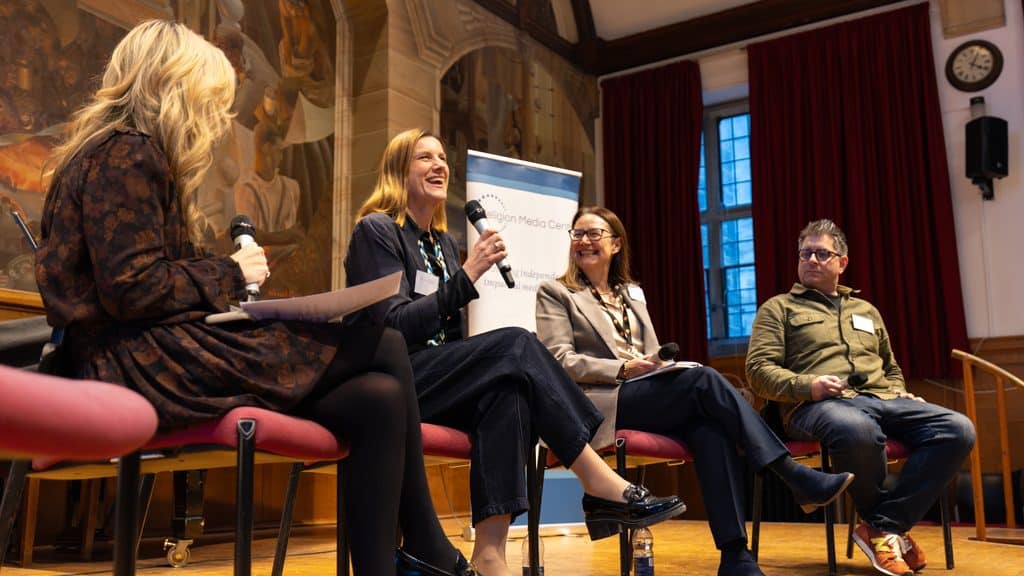
Alison Gow, board member of the Independent Press Standards Organisation (Ipso), former editor of the Daily Post and a director at Reach PLC, explained that one difficulty placing stories about religion in news outlets was that there were not as many brands or reporters, after budget cuts. Journalists tended not to have an office as they once did.
She was asked whether there was a reason that established churches got their stories in the media, but smaller minority groups failed to cut through. She explained: “I think mostly it’s because journalists don’t like to say, ‘I have no idea what you are or what you represent’, and ‘I might ask the wrong question and potentially offend you.’ I would never underestimate the fear that human beings have of asking questions and looking stupid.”
Creating strong relationships with local journalists was key, she said. Background conversations could enable trust to be built, which would be important when a scandal or crisis broke. If an organisation found itself in this position, Ipso and Ofcom, the broadcast regulator, could give advice confidentially.
Professional media ethics were a key part of journalists’ training, she said, with a requirement to observe the Editors’ Code over privacy, harassment, intrusion, as well as compliance with being fair and reasonable. There was a complaints process and where there were breaches, a company could be subject to penalties.
For another panel member, Professor Ruth McElroy, head of Bangor University School of Arts and Humanities, and Ofcom content board member for Wales, placing religious content outside news was a concern, where commissioning budgets affected the volume of content.
This was an area where public service broadcasting continued to be important, she said, but content makers were looking at a range of other platforms, and she observed that “the growth of podcasting is phenomenal”.
Jonathan Thomas, a religion producer at BBC Radio Wales, works on longer-form programmes, and aims to represent all of the faiths and the geography of Wales. The challenge for him, he said, was in finding good contacts, especially difficult in new fast-growing religious movements without a large organisation behind them.
He suggested media training was worth the investment for challenging interviews. But his key need was to interview “real people from the congregation” on the stories that affect them.
A top tip from the panel at this time of year was to offer journalists timeless stories which can be banked and published over Christmas, such as 100th birthdays, cleaning the church bell, events such as pet services, all of which lend themselves to pictures and film. Alison Gow said: “You will be a gift to newsrooms with stories that are a gift to read — interesting, lovely content.”
Importance of RVE
The last panel discussion of the day reflected that the media’s reflection of religion in Wales was just one means by which society recognised the place of religion and its influence on society.
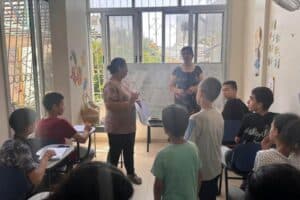
In education, the place of religion values and ethics (RVE) on the school curriculum, the time allocated to its teaching, the training of specialist teachers and the numbers taking the subject for GCSE are an indication of its importance.
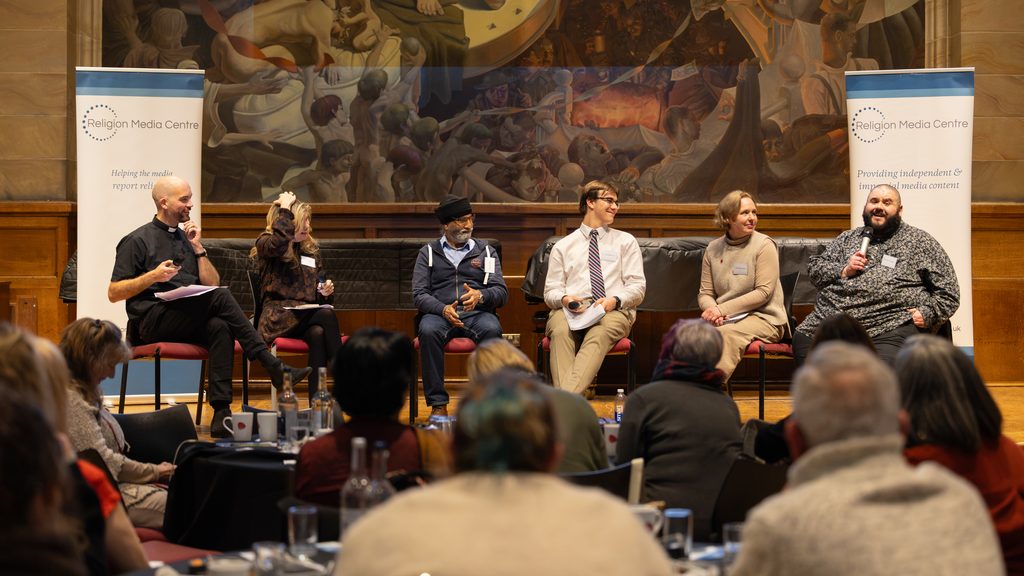
Dr Joshua Andrews, co-director of National Centre for Religious Education in Wales and lecturer at Bangor University, said social cohesion was a goal for all of society to achieve, not just teachers.
But he pointed to a decline in numbers taking GCSE, failure to reach targets for training teachers of RE, and a loophole in the system which said RVE was mandatory but did not define what this means. This has led to wide discrepancies in the time allocated for teaching RVE in schools, which is decided at the discretion of staff.
It ranged, he explained, from an hour a week, to 20 minutes a term by a non-specialist teacher, citing one example where studying Macbeth counted as RVE because it mentioned witches.
The skills taught in RVE, enabling pupils to navigate the complexities of life, needed to be better understood and communicated.
This was an essential skill in today’s society, said Amarjite Singh from the TUC, as employers brought in staff from different cultural backgrounds with religious obligations that needed to be understood. There had to be a commitment to making RVE work well in schools.
The Rev Tania ap Siôn, executive member of Wales Association of Standing Advisory Councils for Religious Education, said there were some excellent examples of RVE working well. The issue was not just about teaching knowledge, but looking at the way religion affected meaning, purpose and belonging. Interactions between pupils in the school was as important.
But with a decline in Christian affiliation and a rise in non-religion in Wales, current sixth-former Callum Morrissey pointed out that if a pupil did not find education in religion in school, where else would this happen?
Callum chairs Conwy Youth Council and is the Welsh Youth Parliament member for Clwyd West. He believed action was needed.
Polarisation in society was a massive problem, he said, and suggested the only way to create an anti-racist Wales where people were tolerant and respectful of other cultures and religions was through education.
He believed that RVE was the most important subject in the curriculum, showing how to respect other opinions and disagree agreeably. But the inconsistencies in teaching and learning, and the decline in specialist teachers and GCSE entries, indicated that prioritisation was not there, he said.
All pics: Credit RMC