By Catherine Pepinster
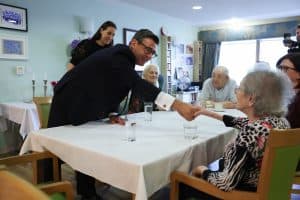
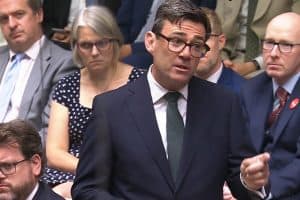
Andy Burnham has backed a report highlighting the role that churches play in the community, from lunch clubs for the elderly to mental health support groups – what he calls “a massive contribution of resources for the benefit of all”.
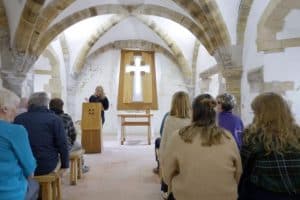
The report – Heart of the Neighbourhood – which is being presented today (Tuesday September 8) to the All-Party Parliamentary Group on Faith and Society – puts the spotlight on what its authors call the “significant yet largely unrecognised role” of churches across England. It estimates that the country’s 33,000 churches of all Christian denominations regularly provide 250,000 instances of community provision – often helping people who would otherwise struggle to survive.
According to Mark Cowling, the national mapping co-ordinator for the report, “Churches are there for people on the brink. Some people are in crisis and they are only surviving because of churches.”
Cowling cited as an example, a church project that helps people in distress, the “Night Lights” cafes in Lincolnshire. They are out of hours, non-clinical mental health support services which are created in church spaces and offer a calm environment where trained volunteers can help with conversation and support. The project was commissioned from the churches by the NHS which found that 999 calls from people with suicidal thoughts were soaring at night but A&E was an unsuitable, chaotic space for them and an alternative was needed.
Churches are not only providing additional services alongside statutory ones but also filling gaps caused by overstretched organisations, said Cowling. He highlighted the work being done by churches to host parent and toddler groups that prepare the children for school. Around half of all children of this age group now attend these groups run by churches and other faith organisations. “Family hubs are overwhelmed, not everyone can get a nursery place, but church parent and toddler groups are really accessible and children learn vital skills”, he said.
Heart of the Neighbourhood is based on a survey of 1,632 churches and Christian charities across 25 local authority areas (representing a population of 6.1 million people), and the report identified that they provided 12,840 instances of community services, including children and family projects, food security, mental health, and housing and homelessness help.
The research was conducted by the Gather Movement, which brings churches, charities and other organisations together to improve communities. In Greater Manchester, churches, other faith groups and local authorities have worked together to better co-ordinate services. Andy Bunrham, then Mayor of Manchester, backed the mapping work. He endorsed the Neighbourhood report, saying:
“It is critical that we pull together in a cross-sector collaboration to meet the significant challenges we face today”, and he went on to say that collaboration of the Gather Movement provides “a vital response from the Church to harness a massive contribution of resources for the benefit of all.”
Heart of the Neighbourhood also shows that the 1,632 churches surveyed, ran 541 youth projects, 2,445 projects that support mental health well-being, from lunch clubs to crisis support groups, and 309 food banks, food clubs, and community larders.
According to Roger Sutton, chief executive of the Gather Movement, churches “aren’t the only ones serving our communities but all our services are open to all the community and we have buildings, staff and volunteers. We’ve been in our communities for decades”.
“This data challenges a prevailing narrative that the Church is dying, irrelevant, and does some good things but is not extensive … many local neighbourhoods rely on its services”.
However, some of these services could well be under threat in areas where congregations are declining in number, and they cannot afford the bills for keeping church buildings running.
According to the National Churches Trust, nearly 1,000 historic churches are officially designated “at risk” because they need repairs so urgently – so putting the community services they offer at risk.
Limited grants for repairs works are available but the Government decision to cut its Listed Places of Worship Grant Scheme earlier this year was a blow. It means listed places of worship must now pay the standard 20 per cent VAT on repairs and maintenance.
Last week, Dr Marie Tidball MP highlighted in the House of Commons during questions to Second Church Estates Commissioner, Marsha de Cordova MP, that the grade II listed St John’s church in Dodworth in her constituency of Penistone and Stockbridge, is temporarily closed and in danger of being closed permanently because it needs £250,000 for structural repairs and running costs.
The church, said Tidball, provides vital services for children and young people as well as older people to combat loneliness.
Some dioceses also offer grants for community services. The Diocese of Oxford has just announced £300,000 worth of support for projects including those for young people and the isolated. Among them is a £39,000 grant for St Frideswide’s Church in the Osney Benefice to help with its Friday meal project when its offers free vegetable curry to visitors by making use of otherwise wasted food.
The St Frideswide free curry project has been running for four years and draws people, including the homeless and the isolated, from across Oxford. A team of volunteers, led by a chef who is a member of the congregation, prepares the food, set out tables, and cleans and washes up afterwards. They serve about 100 meals each Friday.
The rector, Rev Clare Sykes said: “When we started this project it was about feeding people but it is also about being hospitable and ensuring people’s spiritual needs are being met. People come to eat but we have established pastoral relationships too. They can talk to us and some have started coming to services too”.
St Frideswide’s curry project is an example of co-operation between a church and another voluntary body. It began when the SOFEA community foundation in Oxford offered the church free vegetables through its food waste programme.
But according to the Gather Movement, not enough churches and civic and voluntary organisations work together. Even churches don’t always know what other churches in their neighbourhoods are doing, it says. It recommends more mapping of provision so that services can be better co-ordinated and more collaboration can take place.