Chief Imam: ‘Choose dialogue to prevent civic fracture before it happens’
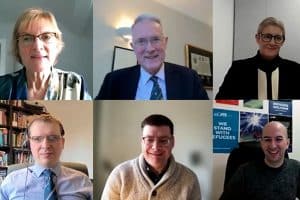
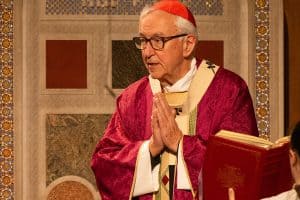
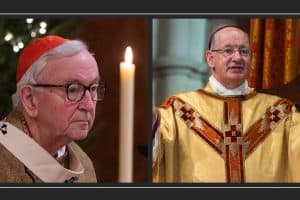
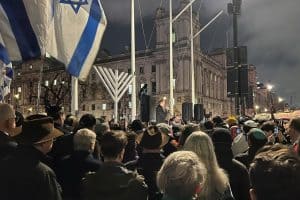
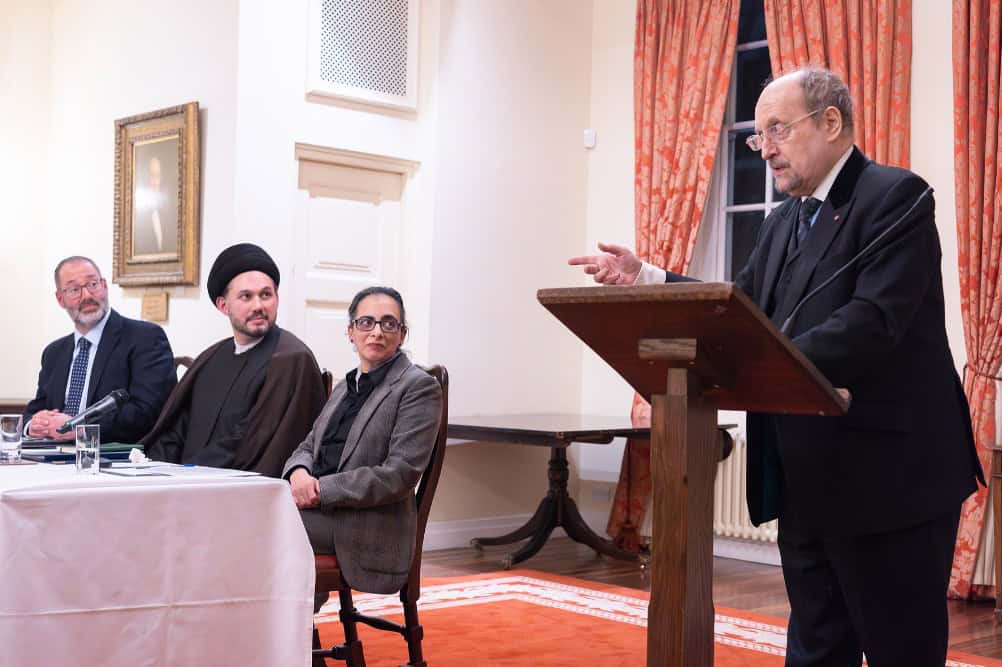
One year after the “Drumlanrig Accords”, a landmark document in which British Muslim and Jewish leaders affirmed a framework for reconciliation, two of the principal leaders met at an annual event in London to discuss the next steps. They were brought together at the annual Sir Sigmund Sternberg Memorial Address, in tribute to a philanthropist committed to interfaith dialogue. Rabbi Josh Levy, co-leader of Progressive Judaism, and Imam Dr Sayed Razawi, the Chief Imam of the Scottish Ahlul Bayt Society, discussed the challenges involved in dialogue between Muslims and Jews and the way conversations could expand across the whole of the United Kingdom. After the meeting, Dr Razawi said the Accords “exist to prevent civic fracture before it happens. In a divided age, leadership must choose dialogue early or face damage later.” He added: “They recognise that peace is not created by pretending our differences do not exist, but by deciding how we will manage them. At their heart is a discipline our age has forgotten – the art of disagreeing agreeably”. Rabbi Josh Levy said the Drumlanrig Accords were just the start of a reconciliation process: “It has to be built into something which is more sustainable, that has impact beyond the people who were there, that cascades into our communities. We have lots of work to do to build an infrastructure, an organisation that can really do that”. Sir Sigmund’s son, Michael, a barrister active in interfaith work for over 30 years, said the topic was ideal for the lecture in memory of his father, “who was ahead of his time in matters of Muslim Jewish relations”. He said the Drumlanrig Accords marked a historic step toward reconciliation and building lasting solidarity in Britain.
The changing landscape of faith in Britain
A survey for the think-tank The Institute for the Impact of Faith in Life, has charted the movement of people towards faith and away from organised religion in Britain, and concludes that the decline in Christian affiliation discovered in the 2021 census “does not reflect a disappearance of religion but rather a diversification and personalisation of belief”. 39 per cent of those surveyed had given up faith for atheism / agnosticism. But 49 per cent had joined another faith tradition or spiritual movement. People were selecting traditions from a marketplace “according to what they seek, whether it be structure, solace, balance, or transcendence”. The survey was conducted by Whitestone Insight, among 2,774 UK adults who self-identified as having had a change in religious belief. It found that among Christians, 55 per cent had left, with two thirds becoming atheist/agnostic, 20 per cent experiencing weakened faith, nine per cent adopting Wicca or Paganism, three per cent becoming Buddhist and two per cent turning to Islam. The most cited reason for leaving was a lack of belief in God or the supernatural, followed by doubts about doctrine. Often this was prompted by bereavement. The survey also found 36 per cent of all those surveyed had turned to Christianity, not enough to counterbalance those who left, but driven by the feeling of a personal connection with God, a sense of purpose and community. The report says that Islam showed a modest gain, with the most distinctive single external life factor marking the faith change as global events such as war, followed by financial or career pressures. It also says: “Reasons for becoming Muslim included a sense of purpose as the most selected option (41%) .. and a personal connection to God at 33%”. Dharmic traditions, particularly Buddhism, attracted converts seeking improved wellbeing. Paganism, Wicca, and broad spiritualism, showed noticeable growth with nearly one in ten of all respondents newly affiliated to these traditions. Atheism was the largest single worldview to attract new people, but the survey concludes: “While atheism tends to provide cognitive clarity, it rarely brings the emotional, communal, or psychological benefits associated with faith-based transitions; most atheists in the survey reported no significant post-transition wellbeing gains.” The Changing Landscape of Faith in Britain: Rebirth, Renewal and Reimagining is here. Times report here. Telegraph report here
Pope Leo ends his visit to Turkey and Lebanon with a waterside Mass
Pope Leo ended his visit to Beirut with a moment of silent prayer and reflection at the memorial to the 200 people who lost their lives in the 2020 port explosion. Families of survivors and victims joined him as he lay down a wreath of red roses in their memory. He also presided at a waterside Mass for the thousands of Lebanese faithful who have seen him on his visit. On his flight home, he spoke to reporters and is said to have “hinted at behind-the-scenes discussions about Hezbollah and Israel in Lebanon, urged dialogue rather than US military threats on Venezuela and discussed his hoped-for future travels in Africa and South America”. The Associated Press reporter was struck by his new confidence and frank admission of a spiritual path as “a type of prayer and spirituality where one simply gives his life to the Lord and allows the Lord to lead”.
Church Commissioners’ new rules to stop investment in oppressive regimes
The Church Commissioners for England have published an updated restrictions policy for defence-related investments. It will make it harder to invest in companies linked to oppressive regimes while enabling responsible investment in NATO and UK defence related business. In a statement, the CofE says that under the previous policy, it was theoretically possible to invest in a large company from an oppressive regime generating less than 10 per cent of its revenue from offensive weapons, but not in a firm earning more than 10 per cent from supplying protective personnel equipment to the Ministry of Defence. This will change, but what remains is that “companies involved in controversial weapons (such as cluster bombs, landmines, chemical and biological weapons) remain strictly excluded… The bar to investing in defence businesses will remain high.”
Trial begins of Unification church leader in South Korea
The trial has begun of Han Hak-ja, the 82 year old leader of the Unification Church, known as The Moonies, who faces charges of bribing the former First Lady with Chanel bags, a diamond necklace and wild ginseng, in order to buy power. The case is one of a number of investigations into ousted president Yoon Suk Yeol and his wife Kim in the wake of Yoon’s martial law order in December 2024. Han Hak-ja, the widow of The Moonies’ founder Sun Myung Moon, is in a wheelchair and has been in prison awaiting trial. She denies the charges. On the second day of the trial, the South Korean president ordered a review of of whether religious foundations that breach the country’s church–state separation rules can legally be dissolved.
German court bars Muslim woman wearing headscarf from being a judge
A Muslim woman has been told that she cannot serve as a judge or prosecutor in a German court, unless she removes her headscarf during court proceedings. In a statement, the Darmstadt court said a lawyer’s religious freedom is outweighed by competing constitutional principles of state neutrality and the religious freedom of trial participants. Religious freedom campaigners say the state neutrality argument has become a tool for discrimination rather than impartiality. Andelou Agency report here
Margaret Court, tennis player now Pentecostal minister
The Telegraph’s chief sports writer, Oliver Brown, who is in Australia reporting on The Ashes, took the opportunity to interview legendary tennis player Margaret Court, who is now a Pentecostal minister in Perth. He finds her aged 83, running the Victory Life Centre church in a former carpet warehouse, with a conservative faith which has “rendered her a pariah in her own country”. She said he was the first press person to interview her in years. Her conservative “Bible based” views on same sex relationships and transgender issues have stayed with her since Bible college 50 years ago, and she has found herself disowned and denounced. But the report says that next year she will be at the Australian Open and her 64 grand slam titles in singles and doubles are “unlikely to be eclipsed in anyone’s lifetime”. The Telegraph interview is here
Christians in Gaza prepare for Christmas
Christians in Gaza are preparing for their first peaceful Christmas in two years, despite isolated violations of the ceasefire and widespread destruction. Fr Gabriel Romanelli, parish priest of Gaza City’s Holy Family Church, told Aid to the Church in Need that the community is determined to celebrate, though the situation is dire, with more than two million people “who have nothing and need everything.” With the 10 October ceasefire largely holding, the parish has begun planning liturgies, choir rehearsals and dabke dances – Palestinian group dances – and he hopes to stage a small outdoor event if it is safe. Fr Romanelli also plans visits to the sick and wants to distribute small gifts, including chocolate. About 450 people, including many with disabilities, are sheltering in the church compound but 60 people have returned to their damaged homes, though they still rely on the church for drinking water and power. Fr Romanelli urged prayers for peace across Gaza, Palestine and Israel.
Run a Blue Christmas service to make single people feel welcome
Churches have been reminded that Christmas services are difficult for people who are alone through losing a relationship, bereavement, or longing for a partner or a child. So the Single Friendly Church Network is suggesting that churches run a “Blue Christmas service”, an alternative service for those who find Christmas a difficult time. The liturgy provides space for reflection and time for hope without minimising the pain. A guidance note from the Network, the “Single Friendly Guide to Christmas Services”, says that only 40 per cent of single people are likely to attend church on Christmas morning and it encourages churches to make their Christmas worship welcoming for everyone, including avoiding family focussed language. The guidance suggests churches should look out for people alone on Christmas Day, saying that even offering lifts to and from the service can make the day more enjoyable.
(“Changing Landscape” story updated 3/12/25 with more information on converts to Islam)