By Tim Wyatt
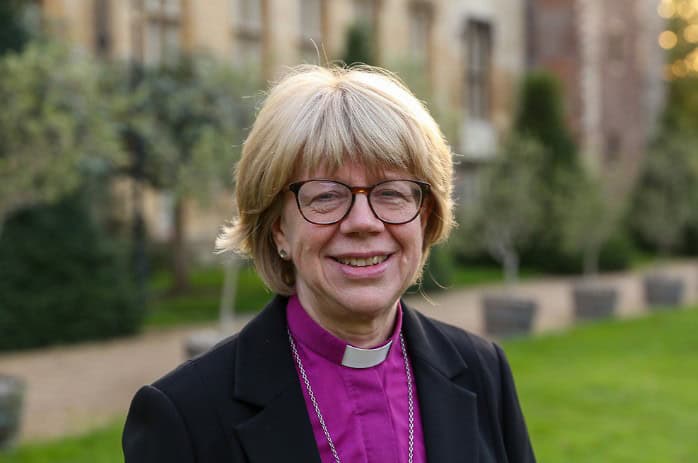
On Wednesday, Dame Sarah Mullally will walk into St Paul’s Cathedral as Bishop of London, and walk out an hour or so later as the 106th Archbishop of Canterbury. The service, formally known as the confirmation of election, marks the next stage in the protracted process of installing Bishop Mullally as head of the Church of England.
Although she was named in October as Justin Welby’s successor, she will not begin public-facing work until her installation ceremony at Canterbury Cathedral in March. However, she is legally archbishop from Wednesday lunchtime, and will not wait until March to get started on the daunting to-do list facing the first woman to hold the title.
Safeguarding
Top of her list must be the church’s safeguarding crisis. Archbishop Welby’s perceived failure to grip properly the case of the prolific abuser John Smyth ultimately forced his resignation in 2024, and the months since then have seen a cavalcade of revelations and allegations.
Among the most damaging cases was that of John Perumbalath, the former Bishop of Liverpool, who was forced into an early retirement after it emerged that his deputy, Beverley Mason, then the Bishop of Warrington, had accused him of sexual harassment.
The second most senior bishop, the Archbishop of York, Stephen Cottrell, has also been under pressure over his own handling of a priest in his former diocese known to church authorities to have a history of sex offences.
And then, in the final weeks of her time as Bishop of London, Mullally has been dragged into several safeguarding scandals. There has been fresh media coverage of her role in the death of Alan Griffin, a retired London priest who killed himself in 2020, while under investigation by the diocese’s safeguarding team. It later turned out that inquiry was a botched response to false rumours spread by a former senior diocesan official, Martin Sargeant, who has since been jailed for defrauding the church of £5 million.
Then, a second story emerged about another safeguarding crisis. This time, a survivor known only as N complained over her handling of an abuse allegation against a priest. This was said to be an administrative error. Earlier this month, Archbishop Cottrell decided to take no further action on the complaint.
These damaging stories have not been enough to threaten seriously Mullally’s accession to the throne of St Augustine, but they will have stressed how toxic the issue can be.
Mullally is 63 and relatively brief six years as archbishop before mandatory retirement at 70, will no doubt be almost entirely judged on whether she can slow the stream of scandals and allegations, and begin to regain the public’s trust.
Reforms are already well under way, with the CofE’s governing body, the general synod, due next month to debate the latest stage in a plan to outsource safeguarding to a new independent charity beyond any influence by bishops. There are other proposals on the table, too, to try to standardise how complaints against clergy and bishops are handled by the 42 dioceses.
But the issues go deeper than what can be fixed by smart policy or institutional tweaks. A deeply embittered community of survivors has emerged, with some influential advocates within the clergy, who relentlessly attack the church’s hierarchy and widely believe the entire bishop class is incapable or unwilling to do what is required to make the church safe. At the same time, bishops and clergy are increasingly living in terror of becoming the subject of an allegation and frustrated at how much safeguarding dominates the church’s everyday life.
Mullally must find a way not just to convince the sceptical public that the CofE has turned over a new leaf and has appropriate procedures in place, but also de-escalate the tensions and mistrust that is ossifying within the church.
Sexuality
The primary fissure within the church remains that between liberals and conservatives over the Prayers of Love and Faith, the prayers of blessing for gay couples introduced in 2023.
Years of wrangling in synod has created two large and increasingly intransigent factions, well-resourced and organised, who cannot even agree to disagree over their radically different views.
After managing to implement prayers for same-sex couple blessings within regular Sunday worship a few years ago, the House of Bishops has run into the sand in its efforts to push forward the agenda further. After taking more theological and legal advice, the bishops have reluctantly concluded they can, for now, attempt no further liberalisation, including letting gay couples have standalone blessings in church (which would more closely resemble weddings), or lift the ban on gay vicars getting married.
And so, while the Living in Love and Faith programme (LLF), under way since 2017, is being formally shut down as Mullally enters Lambeth Palace, the issue will not go away so easily. Liberals feel betrayed by the hierarchy, which appeared at times to suggest it could achieve more but has now had to row back. But even this partial victory has not much appeased the conservative faction, which remains implacably opposed to even the blessings that are now on offer.
A new working group on relationships, sexuality and gender will be set up by the bishops to explore further questions around transgender identity and other hot issues not yet addressed by LLF. If the liberals can win more seats in the synod elections this year and hit the crucial mark of a two-thirds supermajority, it is possible some of these controversies will re-erupt and dog Mullally’s time in office just as they did her predecessor.
But even if not, she will have to handle a deeply divided and fractious church. The gay blessings saga has served to radicalise both liberal and conservative factions, and these movements, which are now much better organised and resourced, will remain active even when not arguing about gay marriage.
Some larger and wealthy evangelical churches have continued to withhold money and boycotted collaboration with their dioceses in protest, which could threaten already stretched local budgets further.
Money and growth
Mullally takes over a church that has been shrinking in size for generations, posing ever-greater strain on resources. The theory of one vicar for every parish has long since gone by the wayside, with most clergy now responsible for two, three, four or more churches. A bulge of baby boomer priests about to retire is looming, while the pipeline of new recruits starting vicar training is declining.
Some dioceses are being forced into more radical experimentation, trying to get lay volunteers to take on leading parishes while their thinning ranks of ordained priests step up to a more regional oversight role. And accelerated by Covid, diocesan finances are also in crisis, with the national church’s endowment fund having to pump in tens of millions of pounds each year to prevent dioceses collapsing financially.
Attempts under Welby to streamline the church, simplify procedures and accelerate experimentation beyond the traditional parish network have so far failed to spark national growth consistently. They have also triggered a backlash from more traditional clergy and parishioners who are mobilising on synod and in the dioceses to forestall any more new church models and even to radically redistribute central funds paid to these new churches, back to dioceses to prop up failing parishes.
And yet within this bleak picture, there is also a vibrant debate about revival. Highly contested research by the Bible Society has claimed there has been an unnoticed explosion of churchgoing, an idea that has been embraced enthusiastically by some across the church. Many have sensed a renewed openness to faith culturally, especially among younger generations, and insist the long winter of secularism is drawing to a close.
The official CofE attendance statistics, however, have shown very modest growth — in the region of 1 per cent a year — every year since the nadir of the 2020 lockdowns.
There’s also the rumbling debate about Christian nationalism, amid signs that parts of Britain’s anti-migrant right wing are increasingly attaching themselves to Christianity. Will this be a productive avenue for evangelism or a challenge to the church’s moral authority?
Mullally must find a way to preside over this cacophonous picture, steer the church’s finances towards forms of ministry that are actually thriving while maintaining internal harmony between factions and traditions that squabble over the shrinking pile of cash.
Smaller issues
There is potential for a constitutional confrontation with parliament, whose ecclesiastical committee has refused to sign off on two significant reforms passed overwhelmingly by the synod in recent years.
One is a long-awaited overhaul of the CofE’s disciplinary proceedings, implicated in numerous safeguarding failures; and the other is a sweeping rationalisation of the national church bodies, aimed at making the CofE a more efficient and nimble institution and seen internally as a crucial piece of the puzzle if the church is to survive.
Mullally and the hierarchy must try to get these two pieces of legislation through both houses of parliament, navigating an increasingly intransigent and antagonistic group of MPs and peers on the ecclesiastical committee.
In 2020 the synod rebelled against the bishops and imposed a target for the church to hit net zero carbon emissions by 2030. This has rapidly accelerated efforts to cut emissions and energy usage across parish buildings, vicarages, bishops’ vehicles and even church schools, but most do not expect that CofE net zero can be achieved within four years.
Mullally will be in post when this milestone is reached, and will have to handle the resulting public relations repercussions, but before that she must also manage a backlash from the other direction. Conservatives and traditionalists have jumped on the net zero programme as further evidence of how the CofE has “gone woke” and constantly attack any efforts to get more heat pumps or solar panels into churches.
Similarly, the church’s programme for racial justice has been sucked into the culture war. Prompted by a reckoning with its entanglement in the slave trade, the Windrush scandal and the Black Lives Matter movement during Covid, the CofE had embarked on a huge project to make it more inclusive for ethnic minority clergy and worshippers.
As this project now winds down, some bishops and clergy have loudly berated the curtailing of money for further work, while right-wing voices continue to attack the entire edifice of racial justice. One plan in particular has come under attack in parliament and elsewhere, the proposal to invest £100 million in a special fund directed at education and reconciliation among descendants of slaves. Mullally has the plan as a moral and Christian imperative.