By Maira Butt
Twenty-five years ago, the world as we knew it changed for ever.
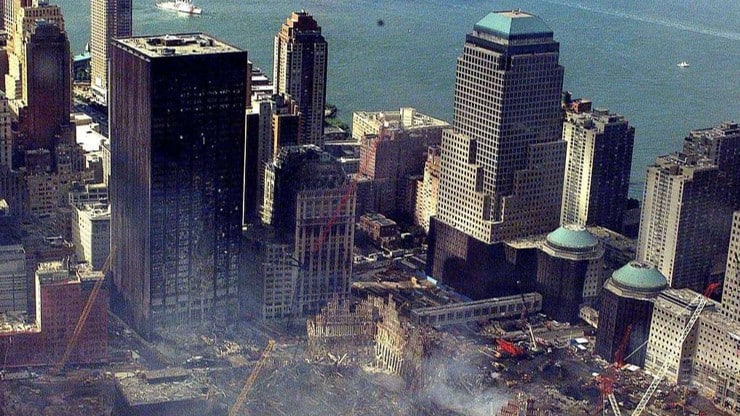
On the morning of 11 September 2001, two planes hijacked by members of al-Qaeda flew into the World Trade Centre in New York.
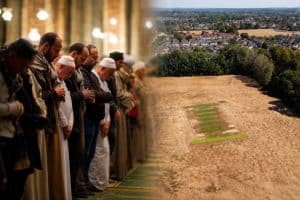
Another plane was crashed into the Pentagon, the defence department’s HQ. A fourth plane, believed to be heading for the White House or the US Capitol, crashed in an empty field in Pennsylvania.
The attacks killed 2,977 people. Thousands more have since died or developed serious illnesses as a result of exposure to the toxic dust and smoke that engulfed the site.
It marked the deadliest terrorist attack on American soil in history and became the basis for the George W. Bush administration’s “Global War on Terror”.
The UK joined forces with the United States in its decision to invade Afghanistan a month later in October 2001, and then Iraq 17 months later.
The legacy of that day has reverberated across the world in the decades since. In many ways, the images of the burning and collapsing Twin Towers have become the defining symbol of the 21st century.
The Watson School of International and Public Affairs at Brown University, Rhode Island, estimates that 940,000 people were killed by direct post-9/11 violence in Iraq, Afghanistan, Syria, Yemen and Pakistan between 2001 and 2023.
Its Costs of War project estimates that 3.6 to 3.8 million people died indirectly in post-9/11 war zones as a result of the “destruction of economies, healthcare systems, infrastructure and the environment”. It brings the total estimated death toll to at least 4.5 to 4.7 million and counting.
Here in the UK, the legacy led to increased security measures, and fractures within communities that are still being healed today.
The enemy within and 7/7
Dr H. A. Hellyer, a geopolitics and security analyst, told the Religion Media Centre that 9/11 had a less significant impact in the UK immediately after of the attacks but that the real change came nearly four years later, with the 7/7 bombings on the London transport network, which killed 52 people, injuring more than 770.
“9/11 was significant, but I would argue far less significant than 7/7,” he said. “Until that point there was far less concern about Muslims in the UK or Muslims in Europe. It was all about faraway stuff.
“This changed post-7/7 and that’s where I think you see a lot more aggressive activity or a lot more problematisation around Muslims in the UK or in the West.”
Dr Hellyer connects this change in framing to the “culture war that we’re talking about today and where the discussion has really centered over the past 15 years in particular”.
What had initially been framed as a threat emanating from abroad increasingly became a domestic concern, with attention turning towards religious extremism within Britain itself.
The 9/11 attacks, Dr Hellyer said, did not create Islamophobia, which had a centuries-long history, but it profoundly changed the context in which Muslims were discussed and perceived.
Security policy also changed substantially in Britain, with the government’s Prevent programme transformed in the years after 7/7. First devised in 2003 as one strand of the then-secret Contest counterterrorism strategy, Prevent was publicly launched in 2006 and subsequently developed into a highly visible domestic counter-radicalisation programme.
Prevent has long faced criticism that it eroded trust among some Muslim communities. A significant official acknowledgement of these concerns came in 2010, when the House of Commons communities and local government committee examined the programme’s focus on Muslims, allegations of surveillance and its unintended consequences.
The next year, Prevent was overhauled. Its remit was formally expanded to address all forms of terrorism, including extreme right-wing terrorism, while greater emphasis was placed on challenging extremist ideology.
Dr Hellyer said debate around the strategy had become marred by “ideological” concerns, making it difficult to assess the programme’s efficacy objectively. He argued that people do not have sufficient access to the data needed to properly judge its impact.
That difficulty was acknowledged in a 2025 review by the Independent Prevent Commissioner, which identified a “fundamental problem” in assessing Prevent’s effectiveness. It was often impossible to know what an individual would have gone on to do had the intervention not taken place. The review nevertheless concluded that Prevent’s Channel programme could successfully divert some people from a pathway towards terrorism.
Concerns about trust have persisted. During a parliamentary debate in 2017, MPs discussed evidence gathered from young Muslims in Bradford, Leeds and Dewsbury. Their verdict on Prevent was “pretty clear and damning”, according to Stuart McDonald, then a Scottish National Party MP.
“They felt picked upon and stigmatised,” he said. “Many had felt restricted in what they could say and do for fear of attracting attention. They certainly did not feel engaged with or involved positively in Prevent; it was quite the opposite.”
Naz Shah, the Labour MP for Bradford West, meanwhile, called for greater transparency around the programme and warned that without it Prevent would continue to be viewed through a “lens of suspicion” by Muslim communities.
The reach of the post-9/11 security response extended far beyond Prevent. Nine British nationals were detained at Guantánamo Bay before eventually being returned to the UK. But Dr Hellyer points to an important distinction: these detentions related to activities alleged to have taken place abroad.
For him, this illustrates how the security landscape evolved. Immediately after 9/11, much of the focus remained on threats emanating from overseas. After 7/7, attention increasingly turned inwards, towards questions of radicalisation, extremism and security within Britain itself.
Islamophobia
“The modern concept of Europe, which is really about Western Europe, is formed almost as a contradistinction to Muslims, that is, ‘we’re not like that; we’re not like them over there’,” Dr Hellyer says. “We’re not like the Moroccans … we’re not like the Turks … we’re not like the Ottomans. There are people drawing on these old histories.”
These prejudices took on new forms and intensified amid the Global War on Terror.
A 2006 study found an 82.6 per cent increase in implicit and indirect discrimination against Muslims and a 76.3 per cent increase in overt discrimination since the attacks.
Islamophobia repeatedly spiked after “trigger events” such as the murder in 2013 of a British soldier, Lee Rigby, in southeast London, Brexit, and debates over immigration. The wider discourse on Islam in the West has become entangled with discussions around integration and asylum seekers. Some asylum seekers have reported changing their faith to Christianity in the hope of receiving a more receptive approach.
Dr Hellyer refers to Baroness Warsi’s “dinner-table test” — that bigotry against Muslims was no longer taboo and could be expressed at family meals — and says Islamophobia has become “incredibly mainstream”.
Islam and the presence of Muslims remain regular topics of television, while figures including President Donald Trump and billionaire Elon Musk regularly make comments that can be perceived as hostile towards the community. Right-wing marches in London have openly ridiculed Muslim women wearing niqabs, with very little backlash or censorship.
The 2024 Southport riots also brought home the issue of Islamophobia. In the year to March 2025, Muslims were the subject of 45 per cent of all religious hate crimes where the targeted religion was recorded, the largest share of any group.
Muslims have also become the subject of suspicion and sensationalism in the mainstream media, while reported cases of Islamophobia have risen sharply.
The role of the media was emphasised by parliament in 2016 in Radicalisation: the counter-narrative and identifying the tipping point, which concluded: “The media have a responsibility to avoid contributing to negative views of particular groups in society through unbalanced or unsubstantiated reporting.
“This is particularly important in relation to stories about extremism and terrorism involving people professing to be Muslims, and in reports about views held by Muslims, because of the impact it can have in creating hostility towards Muslim communities and alienating people from those communities, particularly young people.
“Islamophobia contributes to young Muslims feeling alienated from mainstream society, as we heard in Bradford and Glasgow, thereby potentially leading to them becoming more susceptible to radicalisation.
“It is not clear to us that all news editors are taking sufficient care in their handling of these stories and some continue to prioritise sensationalism over facts. They should refrain from using the term ‘so-called Islamic State’, and should instead refer to ‘Daesh’. We also recommend that they do not identify terrorists as Muslims, but as terrorists and followers of Daesh.”
The Centre for Media Monitoring has published extensive research on bias in mainstream news coverage of Islam, including an over-reliance on themes of terrorism and extremism, even where links are tenuous or reports are completely unsubstantiated.
Muslims in the mainstream
But Dr Hellyer says that the story of Muslims since 9/11 is not simply one of increasing hostility. Muslim visibility and participation in public life has also changed considerably.
“Today I have a British Muslim calling me as a journalist, which I probably wouldn’t have had a decade ago,” he says. “I have a very openly Muslim mayor of London who is quite popular. There are a bunch of prominent Muslim Brits in the cultural space, in the political arena, in academia, even presenters on TV. That’s not something that I would have taken for granted 20 or 30 years ago.”
He adds: “I would say that’s the mainstreaming of Muslims in British society that people ought not to dismiss or fail to take account of. It is good for the UK to really benefit from all of its components and Muslims are indeed a very integral component of British society.