By Lianne Kolirin and Ben Rich
Antisemitism is prejudice against Jews based on race, nationality, religion or culture. This long-standing hatred has recently become more prominent in western countries, including the UK
How is antisemitism defined?
The International Holocaust Remembrance Alliance (IHRA) is an intergovernmental body comprising 31 members that promotes the need for Holocaust education, remembrance and research. In May 2016 its new definition of antisemitism was adopted during a meeting in Bucharest.
Though not legally binding, the definition has been adopted by many governments and institutions. On 12 December 2016, the UK government formally adopted the IHRA’s working definition of antisemitism:
“Antisemitism is a certain perception of Jews, which may be expressed as hatred toward Jews. Rhetorical and physical manifestations of antisemitism are directed toward Jewish or non-Jewish individuals and/or their property, towards Jewish community institutions and religious facilities”.
In a speech that day, Theresa May, who was then the prime minister, said: “There will be one definition of antisemitism — in essence, language or behaviour that displays hatred towards Jews because they are Jews — and anyone guilty of that will be called out on it.”
The IHRA definition came to the fore over the summer of 2018, after a dispute over whether it should be adopted, in full or in part, by the Labour Party. In particular, Labour’s national executive committee (NEC) initially rejected the examples, arguing that they risked inhibiting legitimate criticism of Israel and free speech. In September 2018, the NEC accepted the definition and examples in full. It added a caveat: “This does not in any way undermine the freedom of expression on Israel and the rights of Palestinians.”
It has been the subject of considerable debate in other spheres too. Back in October 2025 The Telegraph published its own analysis which showed that more than 100 councils have rejected calls from the government to adopt the definition. Critics of the IHRA’s definition have argued that it restricts their ability to criticise the Israeli government over its treatment of Palestinians.
How is antisemitism expressed?
Stereotypes
Antisemitism often relies on age-old prejudices that depict Jews as greedy, uncaring, power-hungry, hook-nosed, and so on. These are known as antisemitic tropes, all of which were frequently used in Nazi Holocaust propaganda. Among the most common is the claim that there is some powerful “Jewish conspiracy” controlling politics, business, finance, and the media or world events.
Conspiracy theories
In the most transparent and absurd cases, antisemites ascribe to a wide variety of conspiracy theories, such as the assertion that Jews use the blood of Christian babies to make matzah, unleavened bread, were behind the 9/11 terrorist attacks in 2001, or are simultaneous controlling left-wing and right-wing governments across the globe. Most recently, extremist conspiracy theories have arisen over the events of October 7 2023, some of which suggest that the attack was somehow orchestrated by Israel in an attempt to justify the subsequent war in Gaza.
The recent release of the Jeffrey Epstein files has also triggered a wave of antisemitic conspiracies, though many of these have been circulating since the disgraced financier’s death in prison in 2019. His Jewish identity has often been alluded to, as have his connections to Israel and other Jews, with many suggesting his influence is proof of a global Jewish elite.
Coded lexicon
Where explicit antisemitism is less acceptable, we see implicit “nods and winks” to the prejudices above, such as irrelevant references to people’s religion, which play to these prejudices — such as the supposed Jewishness of those convicted in the Guinness share-trading scandal in the late 1980s. Alternatively, negative stereotypes might be used to describe somebody Jewish — as in the case of the investor and philanthropist George Soros or the men in the artist Mear One’s mural in Spitalfields — without a direct reference to their Judaism.
Indeed, antisemites have developed a new lexicon substituting the word “Jew” or “Israelite” or “Hebrew” or “Zionist”. Terms such as “rootless cosmopolitans”, “international financiers”, “globalists” or even “New Yorkers” have been used instead of “Jews”. In these cases, the context is everything.
Holocaust denial
Another prevalent form of antisemitism is to seek to justify the Holocaust, or deny its existence, or diminish it in some other way. Holocaust denial is rarely total but questions the numbers, the role of the Jews, and their complicity in their own destruction.
It might take the form of suggesting Jews are “obsessed” by the Holocaust or use/exaggerate it to “justify” Israeli policies, its creation, or the general mistreatment of others.
Antisemitism and anti-Zionism
The most complex area is where Israelis or Zionists — rather than Jews per se — are apparently the subjects of criticism. It is not antisemitic to criticise the government or policies of Israel, but there are important red lines and caveats (some are laid out in the International Holocaust Remembrance Alliance definition’s examples).
Nevertheless, in some cases “Zionist” is simply used instead of “Jew” and the reader needs to ask whether the statement really does apply to those who support a Jewish homeland, or whether it is actually a comment on Jews as a whole, often utilising the stereotypes above. The use of “Zio” as an abbreviation of “Zionist” is derogatory and was coined to be so, and so can always be regarded as antisemitic.
This has become turbocharged since October 7 2023 and the subsequent war in Gaza. The word has become widely used as a pejorative term and has been employed by those seeking to criticise the actions of the Israeli government.
How has antisemitism played out in history?
Anti-Jewish prejudice can be traced back to the ancient world where Jews were the target of attack simply for being different. This greatly increased after the rise of Christianity, which cast Jews as “Christ killers”.
During the Crusades, the prejudice worsened with many European Jews forced to wear identification badges and cone-shaped hats, pay extra taxes and, from 1215, they had to live in ghettoes. Many were massacred. The worst pogroms — riots against Jews, often condoned by the state — were built upon the ideas of the “blood libel”, that Jews killed Christian children to make matzah at Passover. Jews were expelled en masse from several countries: England (1290), France, Provence and Spain (1492), and not returning to Britain until the 1650s.
In the 1700s and 1800s, there were frequent attempts to legalise the Jewish presence in England, leading to the Jews Relief Act of 1858 that allowed Jews to stand for parliament without taking the Christian oath. Moves towards religious tolerance and emancipation overcame resistance, including expressions of antisemitism, and led to a period of tolerance, allowing migration from Eastern Europe.
In 19th-century Europe, in parallel with increasing civil and political emancipation, antisemitism was becoming more racial and political in nature. In France, Colonel Alfred Dreyfus, a Jewish officer in the French Army, was falsely accused of spying for Prussia and towards the end of the century antisemitic political parties were formed in Germany, France, and Austria, precursors to Nazism. A growth in nationalism across Europe, coupled with insecurity based on the treatment of Jews across the continent, led to the revival of Zionism at the end of the 19th century, the desire that Jews should have their own nation state in their historic and religious homeland of Palestine.
Millions of Jews lived in the Russian Empire: they were restricted to the Pale of Settlement — a western area including Ukraine, Belarus, Lithuania and Moldova, parts of eastern Latvia and eastern Poland — until the 19th century. They also faced discrimination and, from the 1880s, pogroms. The Tsarist authorities faked a notorious text, The Protocols of the Elders of Zion, which claimed to be minutes of a meeting of Jews trying to take over the world. It continues to be widely used even today, even though it was exposed as a forgery by The Times of London in 1921.
Building on such sentiments and the huge resentment at the terms of the end of the First World War, Hitler came to power in Germany in 1933 on the explicitly antisemitic platform that ended in the Final Solution: the systematic murder of more than six million Jews.
In the immediate aftermath of the Second World War, the Soviet Union supported the establishment of the state of Israel. But by the 1960s it had developed a doctrine of anti-Zionism, reviving classic antisemitic tracts and tropes, as the Cold War played out in the Middle East with Israel, America’s ally. By the 1970s — and particular after the Yom Kippur War in 1973 — this approach was also widely adopted by many hard-left groups in Britain.
How bad is antisemitism in Britain?
The Community Security Trust (CST), a charity providing security advice for Jewish communities in the UK, recorded 3,700 antisemitic incidents across the UK in 2025, the second-highest total on record, up 4 per cent from 2024 and slightly below the record 4,298 incidents in 2023.
Of these incidents, 83 per cent were abusive behaviour including verbal and online. There were 170 assaults and 217 cases of damage or desecration to buildings; 61 per cent were in London and Greater Manchester.
The CST has recorded incidents of antisemitism since the 1980s. There have been surges in 2014 and 2021 related to Israel and Gaza, but after the Hamas attack on Israel in 2023, the CST has recorded the highest number of incidents.
In the early hours of March 23 2026, three masked attackers targeted four ambulance belonging to the Jewish rescue service Hatzola in Golders Green, a suburb of northwest London heavily populated by Jews. The suspects were caught on camera pouring fuel on the four vehicles, before setting them alight and causing massive explosions in the largely residential area. Nobody was hurt but the incident led to widespread condemnation from across the political spectrum.
This came just days after two Iranian men appeared in court after being charged with engaging in conduct likely to assist a foreign intelligence service. They have been accused of scouting out Jewish targets to attack in the capital, including the country’s oldest synagogue, the offices of the CST and Jewish cultural centre, JW3, among other locations. They are awaiting trial.
On October 2 2025, which coincided with Yom Kippur — the most holy day in the Jewish calendar — a man rammed his car into Heaton Park synagogue in Manchester before brandishing knives and then stabbing two people. Two Jewish men were killed and the attacker, Jihad Al-Shamie, was shot dead by armed police.
The wave of antisemitic incidents triggered by the conflict since October 7 2023 has also included incidents in the health sector, at schools, on campus and online. There have been numerous incidents of Nazi symbols daubed on Jewish venues, including outside the home of a rabbi in Bournemouth.
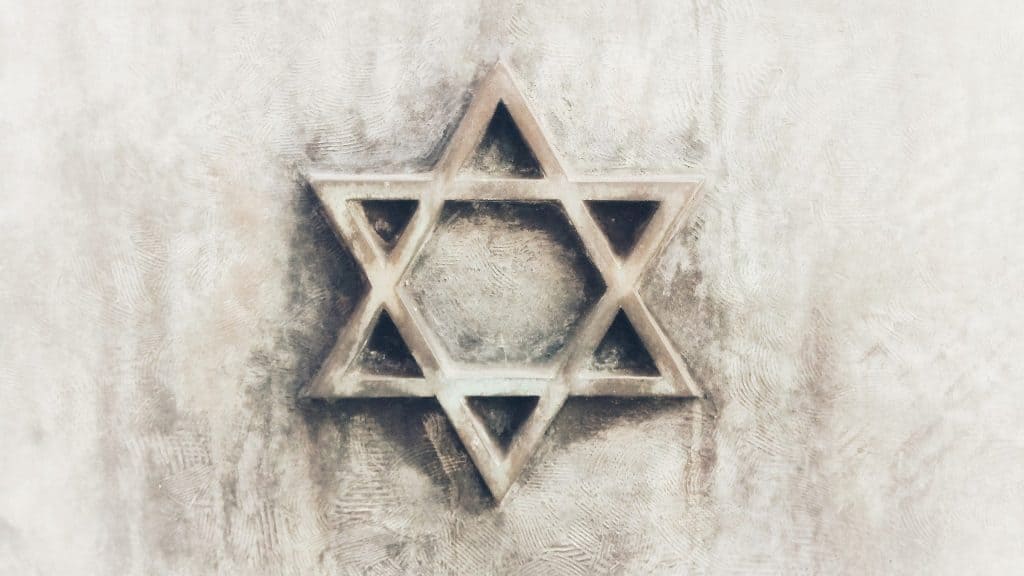
Many have also criticised the large anti-war protests since October 7 for featuring banners, chants and symbolism that many regard as antisemitic, including the Star of David superimposed over the Swastika.
Prime minister Sir Keir Starmer reiterated his pledge to stamp out antisemitism following the attacks on the Hatzola ambulances in late March, tweeting: “Antisemitism has no place in our society.” In the hours following that attack he met leaders of the Jewish community at Downing Street where he pledged his determination to stamp out antisemitism.
Although the level of antisemitic incidents has rocketed since late 2023, there were marked examples of it before that, which made headlines in national news.
On 8 May 2021, a man was filmed using a megaphone to shout antisemitic abuse from a convoy of cars with Palestinian flags that travelled through a Jewish neighbourhood in north London.
In November 2021, a bus conveying Orthodox Jews was attacked while travelling through central London as part of celebrations for the festival of Hanukkah.
What about in other countries?
France
President Emmanuel Macron of France has also recently called for greater efforts in combating antisemitism in his country. Home to the largest Jewish community in Europe, France recorded 1,320 antisemitic acts in 2025. This accounted for 53 per cent of all anti-religious incidents there that year, according to a report from the Interior Ministry. Although it was lower than the number of incidents recorded the previous year, levels have still proved “historically high” since the 7 October attacks, the report said.
There have been incidents of violence against people, vandalism and in March 2026 police launched a terrorism investigation into two Moroccan brothers allegedly plotting a “lethal and antisemitic attack” in France.
After Israel and the United States, France is home to the world’s largest Jewish population. Yet the rise in antisemitism well before the 7 October attacks has led to a wave of emigration of French Jews to Israel. This exodus started in 2012 after a French-born Islamic extremist opened fire at a Jewish day school in Toulouse. Three years later, a supporter of the Islamic State opened fire at a kosher supermarket in Paris, killing four.
Elsewhere in Europe
Antisemitism has been on the rise in many countries across Europe since 7 October 2023, including in Germany where the number of incidents reached a new high in 2025. These included violence, incitement, property damage and propaganda offences, according to the European Jewish Congress. Among the incidents has been a “concerning rise” in incidents targeting memorial sites, according to the congress, including most recently at a site in Hanover.
In March 2026 a car was set on fire in a religious district of Antwerp, which came soon after an explosion outside a synagogue in Liege. A synagogue in the Dutch city of Rotterdam was also targeted, as was a Jewish school in Amsterdam, although no injuries were reported.
According to a recent EU report, 55 per cent of Europeans believe antisemitism to be a problem in their country, while 47 per cent of people think the problem has worsened over the past five years. According to the report, the countries where it was most thought to be a problem were France (74 per cent), Italy and Sweden — both with 73 per cent.
The United States
Four in 10 Jewish people worldwide live in the US, according to the Pew Research Center. The country has long been heralded as a haven for Jewish people but as with many other places around the world, levels of antisemitism have surged since the war in Gaza.
According to a joint report in 2025 by the Anti-Defamation League and Jewish Federations of North America, 55 per cent of Jewish Americans reported experiencing some level of antisemitism in the previous 12 months — while 79 per cent said they were concerned about the issue.
Twelve people were wounded — and one later died of her injuries — after a man shouting “Free Palestine” threw petrol bombs at a vigil for Israeli hostages in Boulder, Colorado, in June 2025. It came soon after a gunman shot and killed two Israeli embassy staff outside a Jewish museum in Washington.
Australia
Bondi Beach was the site of one of the most shocking antisemitic attacks in recent years. Fifteen people, including a 10-year-old girl, were killed in December 2025 when two gunmen — a father and son — opened fire on a Hannukah celebration on the Sydney beach. Dozens more people were injured in the attack.
It was the latest and most serious of antisemitic attacks in Australia since 7 October 2023 Prior incidents including arson attacks at a synagogue in Melbourne and in a Jewish neighbourhood of Sydney.
Useful contacts
- Simon Round, communications officer, Board of Deputies of British Jews, 020 7543 5437, [email protected]
- Community Security Trust, 020 8457 9999, [email protected]
- Richard Verber, communications director, United Synagogue, Union of British Orthodox Jewish synagogues, 020 8343 8989, [email protected]
- Mark Frazer, director of communications at the Office of the Chief Rabbi, [email protected]
- Campaign Against Antisemitism, 0330 822 0321 (option 1), [email protected]
- Woolf Institute, Dr. Charles Asher Small 01223 761971, [email protected]
- Lianne Kolirin is a freelance journalist and Ben Rich is a communications consultant and think tank director
This factsheet was updated in March 2026