‘We dare not take it for granted’: warning over future of religious broadcasting
The prestigious “Sandford St Martin Awards” for religious broadcasting excellence, were presented last night at a reception in Lambeth Palace. The chair of the Sandford St Martin Trustees, Dr Tony Stoller, said it was a difficult time for public service broadcasting, as audiences migrate to global streaming and digital platforms. If programmes of the kind celebrated at the awards are to continue and be protected, he said, it will be crucial for people to make clear to decision makers that religious literacy is essential to understanding today’s society. The evening had shown that “we collectively own something which we dare not take for granted”. And Tom Loxley, editorial director of the Radio Times, said its 300,000 readers cherish public service broadcasting and are loyal supporters of Reithian values.
They voted for a Radio Times award, which went to “Long Lost Family Special: The Mother and Baby Home Scandal”, Wall to Wall media for ITV. Other award winners were:
- Journalism award: “RTE investigates: Christian brothers – the assets, the abusers”, RTE One
- Young Audience Award: ”Sky Kids Investigates: World, War, Me”, Fresh Start Media for Sky News
- Radio / Audio Award: “Thirty Eulogies”, Falling Tree Productions for BBC Radio 4
- TV / Video Award: Eternal Spring: The Heist of China’s Airwaves”, Lofty Sky Entertainment for Storyville, BBC Four
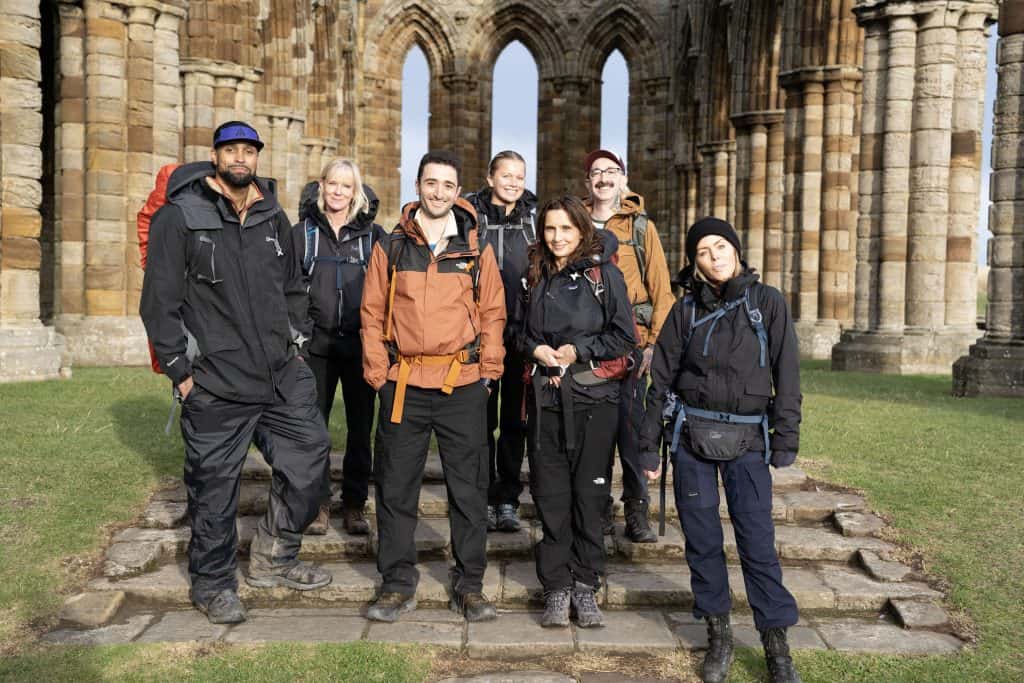
- 2026 Sandford St Martin Special Award: “Pilgrimage”, CTVC for the BBC. A series where people of all faith traditions and none have conversations rather than arguments’ encouraging ’empathy, faith and connection’.
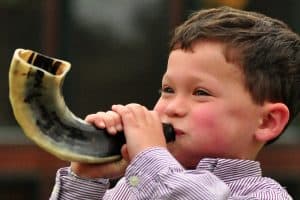
Two precious stolen Torah scrolls turn up after a minister’s ‘Pause for Thought’
A Methodist minister in Manchester tells the extraordinary story of how she mentioned sacred texts on a BBC Radio 2 Pause for Thought last week, and hours later found two stolen Torah scrolls on the doorstep of her church. The Rev Dr Joanne Cox-Darling chatted on air about scrolls and writing on parchment, as she delivered her early morning thoughts with presenter Owain Wyn Evans. Unbeknown to her, two Torah scrolls had been stolen in March from Beis HaMedrash Torah Etz Chaim synagogue in Salford. They are around 100 years old, holy scriptures passed down through generations, central to Jewish worship. When the scrolls later appeared outside her church, she alerted police and interfaith contacts, who quickly identified their owners. Local Rabbi Warren Elf described the recovery as “like a miracle” and the community was “overwhelmed” to receive the scrolls. The congregation celebrated the return of the scrolls with singing and dancing, as they were carefully returned to the synagogue. Read Catherine Pepinster’s report here.
Catholic bishop’s ‘deep disappointment’ that assisted dying bill is being brought back
Archbishop John Sherrington, lead bishop for life issues for the Catholic Bishops’ Conference of England and Wales, has expressed his deep disappointment that the Terminally Ill Adults (End of Life) Bill will return to parliament in autumn. The bill is the same as the one which ran out of time for debatein the Lords, after more than 1000 amendments were put. The Archbishop said: “The recent debate about this Bill showed how many people found the proposed legislation, even if they accepted it in principle, to be flawed and full of unresolved matters. The majority in the Commons reduced between readings, the Lords identified many shortcomings and bad legislation. Many professional bodies argued against this Bill, including the Royal College of Psychiatrists and the Royal College of Physicians, whose members would be required to be involved under the provision of the Bill. Disability rights groups, those fighting against eating disorders, and against domestic abuse were highly concerned and considered it dangerous. Concerns that were raised remain unresolved”. He says better palliative care is needed and proper hospice funding. Once more he is urging support to prevent the bill from going through.
Reuters Institute report suggests increase in news consumption from social media and video platforms
The latest Reuters Institute Digital News Report found that social media and video platforms have become the most widely used route to news globally, with 54 per cent of respondents accessing news that way in one week, compared with 52 per cent for television news and 51 per cent for news websites and apps. The data comes from an annual online survey of around 100,000 people in 48 countries in January / February this year, including the UK. The report suggests that in the UK, news consumption is still dominated by traditional print and broadcast brands. 48 per cent use television as their main source of news, compared to 56 per cent for news websites and apps and 40 per cent for social media. 12 per cent use printed newspapers. 23 per cent use radio. In the UK, trust in news providers has fallen to 30 per cent, from 51 per cent 10 years ago. Globally, 37 per cent trust news providers. The use of Facebook and YouTube increased on the previous year. Full report here
Pilgrimage route on Anglesey to commemorate 6th century Welsh saints
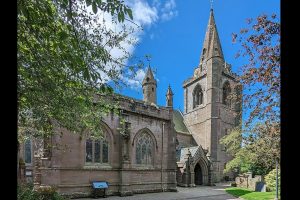
A new festival celebrating the pilgrimage route of sixth century saints Cybi a Seiriol, will take place on Ynys Môn (Anglesey) this summer, with walks, talks, music and heritage events held in churches across the island. Organised by the Diocese of Bangor, Gŵyl Cybi a Seiriol will be held from 3–5 July and is the first festival centred on a 57-mile pilgrimage route inspired by the story of the saints. The route stretches from Holyhead to Penmon and passes through some of Ynys Môn’s most important religious, historic and natural landmarks. According to tradition, Cybi and Seiriol established religious communities at opposite ends of Anglesey. Cybi settled at Holyhead, while Seiriol founded a monastery at Penmon. Legend says the two saints regularly met near the centre of the island for prayer and fellowship. The festival programme includes a special Sunday pilgrimage service at Sy Cybi’s Church. More details here.
Westminster Abbey plans to build ‘The King Charles III Sacristy’
A new building to be named The King Charles III Sacristy will be built adjoining Westminster Abbey, on the footprint of the Great Sacristy, which fell into disrepair after the dissolution of the monasteries under Henry VIII. It was a place for storing vestments, altar linens, and other sacred items and is the only part of Henry’s church to have been lost. The foundations of the original building were discovered in the 1860s and their age was defined by Channel 4’s Time Team in 2009. The plan is to create a centre for welcome, security and ticketing facilities, and a corridor will lead to the Great West Door. House of God and a House of Kings. It is due to open in early 2027.
Muslims are celebrating the New Year
Muslims are celebrating New Year, 1448 AH. Dates may vary according to moon sightings, but for many Muslims, the celebrations began at sunset last night. AH means the year of the Hijra, the historic migration (Hijra) of the Prophet Muhammad from Mecca to Medina in 622 CE, an event that marks the new year. Read our factsheet on the Islamic New Year here.