By Anna Averkiou
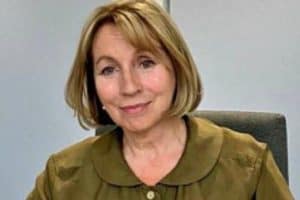
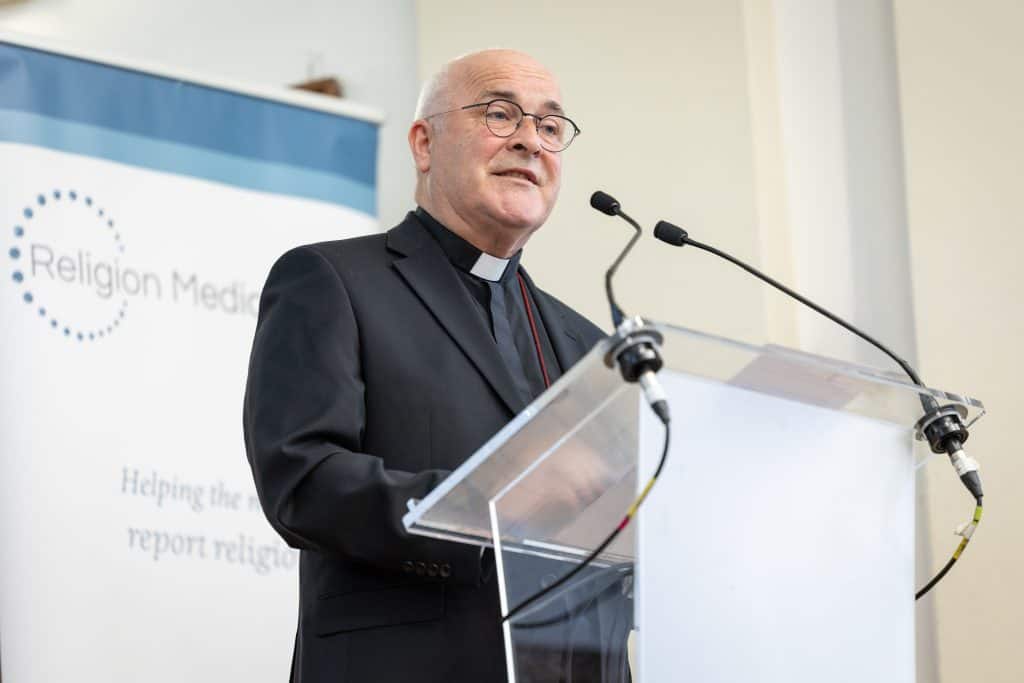
Religion is essential to understanding society and must be given greater prominence in the media if trust is to be rebuilt and communities held together, says the Archbishop of York, Stephen Cottrell.
In his keynote speech on Monday at the Religion Media Festival at Central Hall, Westminster, he argued that faith remained fundamental to public life and could not be treated as marginal or private.
“We will never understand the world around us, let alone our own nation’s history, religion, culture, literature and law unless we understand faith,” he said. “Religious literacy is essential for community cohesion.” Faith, lived well, “can be one of the main drivers for building the good and flourishing society we long for”.
Collapse in trust
With public trust in news now at 30 per cent, down 20 points in a decade, the archbishop warned of a wider collapse in trust across media and institutions. A fragmented digital landscape, he said, meant “truth-telling, reliability and accountability are in short supply”.
He highlighted how both traditional and digital media contributed to the problem — with concentrated ownership limiting scrutiny to social media content that “risks relativising and trivialising everything to my experience and even my truth”. A lack of representation further deepened the problem when people did not see themselves represented.
Against this backdrop, the archbishop strongly defended public service broadcasting, as critical for both information and social cohesion. The debate, he said, should focus not just on cost but on “values for money” and whether broadcasting promotes the shared values that underpin society.
“Faith must be central to this. Because it is central to life,” he said, adding that it helped to build trust across institutions and shape the values by which society lives.
He pointed out that all the great monotheistic faiths bore witness as a moral bulwark against what he described as the “self-serving philosophies that we see flourishing around us”.
“We prize honesty, truth-telling, kindness, the importance of penitence and the opportunity to start again … and loving our neighbours is an absolutely non-negotiable core value,” he said, adding: “You don’t get to choose your neighbour, and whether you like it or not, your neighbour is the person who is alongside you right now and the people we have been called to live with.
“These values have been the bedrock of our society for centuries. In a time of uncertainty, and as the tectonic plates of culture and climate shift, it is these values that most of our citizens crave. It is to promote and understand these values that we need to protect the place of faith within the media, even with the very contested and diverse media of our digital age.”
Decline in religious literacy
Yet religious content within the media was shrinking, the archbishop said. The decline of specialist reporting coverage was increasingly limited to “worship or narrow ‘specifically religious’ content”, failing to reflect the broader role of faith in national life. “Religious illiteracy remains widespread … We are poorer as a result.”
This lack of understanding had serious consequences, from misreporting global conflicts with religious dimensions to fuelling “stereotyping and misrepresentation”, which can lead to “fear of people ‘not like us’” and the spread of harmful narratives online.
Archbishop Cottrell called for urgent improvements in religious and theological literacy across both media and society, insisting that without it, we were less able to make sense of what was happening in our world and why.
“History’s very familiar story of powerful people using religion to bolster their ambitions, means that the Middle East conflict, for instance, cannot be understood without knowing its religious history. Likewise, the Russian invasion of Ukraine has a strong religious dimension to it.”
Public service broadcasting, he argued, had a particular responsibility to reflect a modern diverse Britain defined not just by geography, but by ethnic origin and faith. Religious broadcasting, therefore, needed to be given a much higher priority.
He said great national events often had a distinctive and essential religious flavour — from the remembrance service at the Cenotaph to royal events such as Queen Elizabeth’s funeral or King’s coronation. “These are moments of national belonging, retelling and affirming the story and history of our nation. But they, too, need unpacking and explaining.”
He also highlighted the everyday work of faith communities, from local support to interfaith co-operation. “There are countless positive stories that need telling,” he said.
Regulations
While acknowledging that digital platforms allowed faith groups to communicate directly, the archbishop warned of growing risks from disinformation and misinformation which affect stories relating to religion. He stressed that, as a public space, there was an urgent need for the digital landscape to be regulated.
“Conversations lack nuance and substance. Commentary, sometimes anonymous, is uninhibited by social norms. Those clever algorithms that tell us that “if you liked this, you will probably ‘like that’ — and are usually correct! — all steer us towards a narrow reinforcement of existing views rather than challenge or expose us to wider or different perspectives”.
Turning to the rapid changes in technology, including artificial intelligence, he said: “We need all media to have proper safeguards, standards, boundaries and regulations in place so that it can be seen to be trustworthy and allow free expression to flourish — but also where lies and hatred, abuse and manipulation can be called out — and those making and supporting these statements are held to account.”
He also stressed the need for ethical frameworks in AI that respected “the dignity and worth of every person”. Technology, he said, could not replace human judgement or conscience.
Ultimately, the case for religion in the media was inseparable from its role in society itself. “Faith keeps alive a truth about human dignity and a set of values to live by,” he suggested.
The archbishop concluded by reaffirming the importance of public service broadcasting, asking whether it delivered “values for money” by helping society to understand faith, each other and the world, and “build a kinder and more coherent society”.
Future of religious broadcasting
The speech was followed by a panel discussion chaired by the broadcaster Roger Bolton, a Religion Media Centre trustee. It was structured around four questions: where religious broadcasting stands; where it is heading; how fast change is coming; and what should be done.
Panellists agreed that religion remained influential but said both media and institutions struggled to represent it accurately or earn trust.
Mr Bolton said accountability was key to reversing declining confidence, arguing: “You only rebuild trust by choosing to trust and by choosing to make yourself accountable.” His comments reflected wider concerns that both religious institutions and the media faced a credibility gap.
Questions about the future of public service broadcasting also surfaced.
Gareth Barr, ITV’s director of policy and regulation, pointed to uncertainty around the future of public service broadcasting, noting that “discussions are ongoing” and it remained unclear how religious content will feature in a more commercial system.
Others noted that digital media offered new opportunities for faith groups to reach audiences directly but also risked further fragmentation and misinformation.
Professor Barnie Choudhury, journalism lecturer at the University of East Anglia, editor-at-large for Eastern Eye, and a former BBC journalist, said the issue was not just airtime but understanding. Journalists often lack confidence and knowledge in covering religion, underlining the need for religious literacy in newsrooms.
He urged more human-centred reporting, saying: “Where’s the grit? Where’s the real sense of where the
community is? What the community is speaking about? What it’s like to walk in the footsteps of somebody who’s Jewish today, or somebody who’s facing Islamophobia today? There’s none of that!”
In a robust defence, Daisy Scalchi, BBC TV’s head of religion and ethics, was more optimistic, highlighting strong audience demand for religious programming when it was done well.
However, she acknowledged the shift away from traditional broadcasting: “The time that we have just left behind us is never coming back … the under-25s are predominantly on YouTube … so that feels like an exciting opportunity.”
Professor Jolyon Mitchell, of Durham University, an RMC adviser, was also hopeful for future audiences who were more digitally literate. He is a huge supporter of journalists who are risking their lives to report from Gaza, Ukraine and Sudan, and reminded the audience that religion can both incite conflict and promote peace, which makes accurate reporting essential.
He put forward possible futures including smaller “echo chambers” where we hold on to our own truth, ignoring what is happening in others — or one where they would all be integrated, listening to each other, curious. He did, however, question how realistic that could be.
While there was broad agreement that religion needed more serious and informed coverage, differences remained over whether today’s fragmented media landscape could deliver it.
The discussion ended with a clear message: without greater religious literacy, stronger public service broadcasting and a renewed commitment to trust, the media will struggle to reflect one of the most influential forces in modern life.
View the session on our YouTube channel here