By Lianne Kolirin
A Liberal Democrat MP has described how her position on some complex issues is sometimes assumed because of her Christian faith.
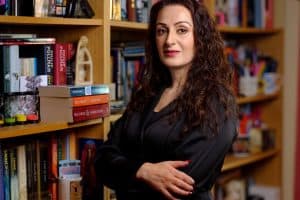
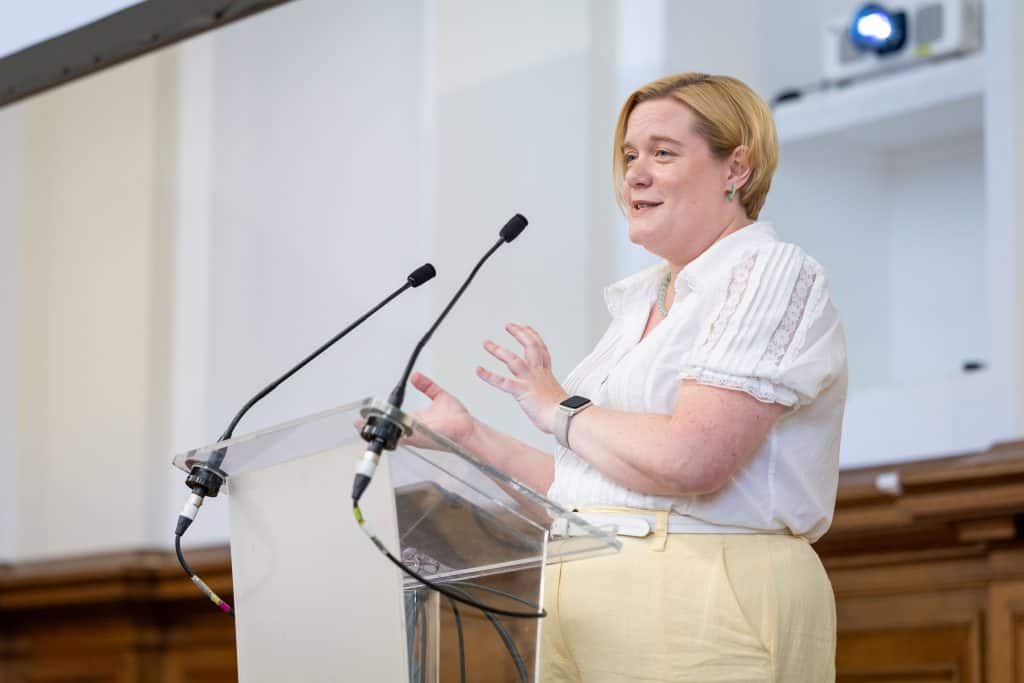
Zöe Franklin, the Liberal Democrat MP for Guildford who chairs the all-party parliamentary groupon faith and society, told the Religion Media Centre’s annual festival that people often reached conclusions about her because of her faith.
In a speech entitled Faith on the Frontline, delivered at Methodist Central Hall in Westminster on Monday, she gave the example of the terminally ill adults bill in the last session of parliament.
“There is often an assumption that I, as a Christian, must be opposed to it,” she said. “I am not. I supported Kim Leadbeater’s bill and I will support it when it comes back, but it’s also worth noting that I’m not alone in that.”
She said that 30 per cent of “known Christian MPs” voted as she did, while polling suggests support among Christians “is actually much closer to the general public than I think sometimes is portrayed”.
Part of the reason for the misconception, she argued, comes from media reporting of debates as complex as the one of assisted dying as a “much more uniform binary answer”.
Her discussions with people of faith — and none — has convinced her of the need for a “space for honest nuanced disagreement within faith communities on these issues”.
Ms Franklin described how people often “pause” when hearing she was a Christian. “It’s not always said out loud, but you can almost see the question forming in someone’s mind of ‘how does that work?’ as if there should be some sort of internal tension, something I have to reconcile, something slightly contradictory about the two things sitting together.”
She finds this reaction interesting because: “My faith has never been something that I’ve had to navigate around politics.” In fact, she said the values of Christianity were actually what motivated her and her politics.
“Many politicians of all faiths will say exactly the same thing if you get them into a conversation. “I think sometimes it can feel a bit abstract, but for me as an MP, it shows up every single day in very different ways,” she said, adding that it impacted everything from conversation about matters of conscience to issues like mental health.
“I don’t think we fully recognise as a society that faith and belief are not added extras — they’re often a fundamental part of who someone is.”
While it is important to reflect upon the faith dimension of big contentious issues like assisted dying, she called on the media to dig deeper to uncover the “quiet consistent work of faith communities” such as running foodbanks and setting up community networks.
“So many people have absolutely no idea that nationally the faith communities have stepped up as local government and national government have had to step back, and that’s what we try to focus on in the all-party parliamentary group: of how we make those contributions more visible,” she said.
Wrapping up her speech, Ms Franklin called on the media to “always come from a place of curiosity”, adding: “We are living in an increasingly divided world where I would argue faith literacy has declined and there is a real opportunity to take a slightly different starting point — not where is the conflict, but why does this matter to you? Not how does this fit or not with a particular doctrine, but actually how does it shape your life?”
View the session on our YouTube channel here