The Catholic heritage of Andy Burnham, en route to Number Ten
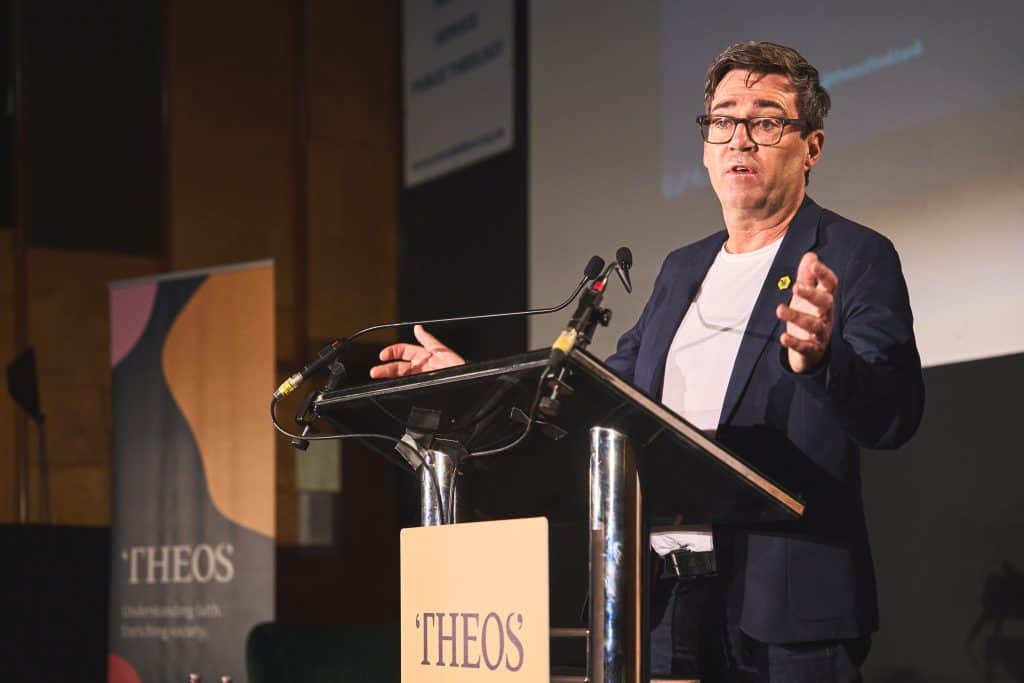
Andy Burnham won the Makerfield by-election and is now back in the Commons seemingly on the brink of challenging Sir Keir Starmer to become the next Prime Minister. He is Catholic by family tradition, and last October, he used the annual Theos lecture to call for a new way of doing politics “with trust, community, faith, belief, connection at his heart”. Our report on the address is here » Kaya Burgess, writing in The Times, points out that if Andy Burnham becomes prime minister, as a Catholic he will be barred from advising the King on any Church of England bishop and archbishop appointments. This is due to the 1829 Roman Catholic Relief Act, which retained some constitutional restrictions on Catholics. Similar rules apply to Jews under the Jews’ Relief Act of 1858. In fact, the Prime Minister is currently not given a choice in bishop or archbishop appointments, as the CofE gives only one name for approval, not two as was the tradition. But the laws relating to Catholics and Jews have not been changed. The article makes clear that Burnham’s mother is Catholic, his children attend Catholic schools, he has said that Catholic social teaching underpins his politics, but he says he is “not particularly religious”. The Times article is here.
Archbishop apologises for CofE role in historic adoption practices
The Archbishop of Canterbury has issued an apology on behalf of the Church of England, for the church’s role in historic adoption practices particularly in mother and baby homes. Dame Sarah Mullally said the church is “profoundly sorry for the pain, trauma and stigma experienced – and still carried – by many people because of historical adoption practices in homes affiliated to the Church of England”. The statement has been issued alongside a report on CofE mother and baby homes between 1949 and 1976. It said records are incomplete, but it believes tens of thousands of mothers and babies were connected to some 200 CofE affiliated homes in this period. A total of around 185,000 children born to unmarried mothers were adopted across England and Wales in this time, in all contexts. The report says the experiences of mothers, their children and families are often missing or only partly recorded, but individual testimony was given to the researchers by women who spoke of “the pain, shame and indignity experienced both then and now”. Mothers were separated from babies with few choices, women and girls were at times made to carry out menial and manual work as a form of correction, and there was prejudice on grounds of race and disability which left lifelong feelings of exclusion or stigma. The report says the CofE was part of a society which valued secrecy and respectability over compassion and care: “These practices are in the past and must never happen again”. Report here, and statement here.
Dr Manon Ceridwen James, Dean of Bangor Cathedral, elected as Bishop of Bangor
Dr Manon Ceridwen James, the Dean of Bangor for all of nine months, has been elected as the next Bishop of Bangor, a role which was mired in controversy when the last bishop retired a year ago. He left after two reports into Bangor Cathedral described weak governance of finances, a culture where “sexual boundaries seemed blurred” and excessive drinking. Manon Ceridwen James has strong links with the diocese. She is a Welsh speaker, was brought up within the diocese in Nefyn on the Llŷn Peninsula, ordained in Bangor Cathedral and has served as a priest in the diocese. She was appointed as Dean in October last year and has been dealing with serious governance issues after the reports found “a breakdown in accountability between the bishop, diocesan officers and trustees”. Her appointment as Bishop follows previous unsuccessful attempts to find a suitable candidate. She is quoted saying it felt “very daunting, but I’m also very excited”.
Mosque safety and security guidance issued amid far-right threat
The Muslim Council of Britain has published a Mosque Safety and Security Guidance toolkit, saying “the threat from far-right and white supremacist terrorist attacks remains a deeply entrenched and evolving danger for British Muslims”. It cites anti-Muslim incidents that have happened across the UK on average at least once a week, such as Nazi swastika symbol graffiti, threatening and Islamophobic letters sent to mosques, a “hit and run” incident where a Muslim woman was struck by a car at speed, smashed windows in a mosque and speakers at a Unite the Kingdom rally saying “it’s time for many Muslims to leave this country.” Dr Wajid Akhter, Secretary-General of the Muslim Council of Britain, said dehumanising rhetoric remains unchecked and the guidance is about “empowering our communities to remain vigilant, to build strong local relationships and allies and to have the structure in place to respond.”
Aid agencies say World Refugee Day highlights impact of aid cuts on humanitarian help
Tomorrow is World Refugee Day, designated by the United Nations to highlight issues affecting refugees around the world. This year it is estimated there are 130 million people who have been displaced from their homes, and the Jesuit Refugee Service is urging everyone to continue campaigning for their safety and protection. It points out that this year is the 75th anniversary of the Geneva Convention, the international agreement that protects the rights of refugees and people forced to flee. UNHCR and several Christian based agencies have warned that cuts in government grants for overseas aid risk the provision of humanitarian assistance, leaving charities struggling to meet growing needs. Islamic Relief is highlighting the plight of around 11 million people displaced in Sudan, where refugees are in desperate need of food parcels, safe shelter, mosquito spraying across the settlement, and schools. World Vision says children are particularly affected, with household insecurity failing to protect children from hunger, child labour, early marriage, and family separation. Anglican Communion leaders have issued a statement resisting divisive political narratives on refugees.
Author ‘comes out’ as a Christian and is met by warmth and curiosity
Author Matthew Hall, writing an “Opinion” in The Guardian, has explained how he “came out” as a practising Christian and found he was met with curiosity rather than hostility. His reluctance to make his faith public before, was because “at best you might be silently dismissed as odd, having chosen the wrong therapeutic crutch, or worse, be taken for a narrow-minded bigot.” In fact he has an active faith which he kept private, finding the study of Christianity to be challenging and comforting, and is committed to his local church as a churchwarden and Bible study leader. What changed him was the death of his 23-year-old son, Will, whose Christian faith sustained him through serious illness. He spoke at Will’s funeral, on suffering and faith, and copied his son’s Christian themed tattoos on his arm, which led to conversations “invariably filled with warmth and curiosity. I sense I am more novelty than freak”.