Pope Leo warns of dangers of artificial intelligence
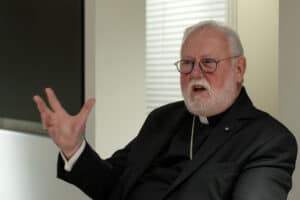
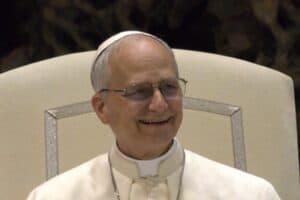
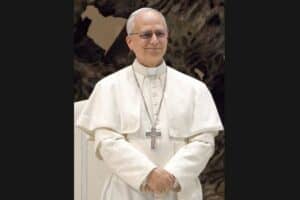
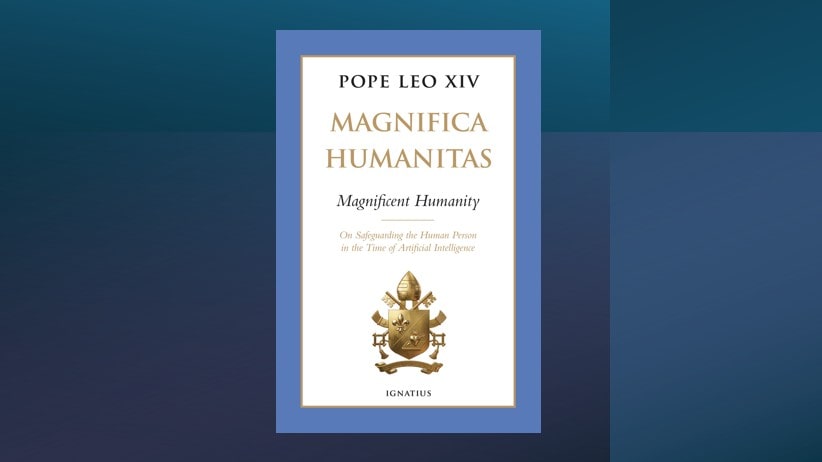
Pope Leo has warned of the dangers facing human civilisation in the face of the growing power and influence of artificial intelligence. In his first encyclical, or teaching document, “Magnifica Humanitas” (Magnificent Humanity), he said AI must be “disarmed” to free it from the mentality of military, economic, and cognitive competition and to prevent it from dominating humanity. He issued a special appeal to AI developers, saying they “bear a particular ethical and spiritual responsibility, for every design choice reflects a vision of humanity”. The encyclical not only focuses on AI but other pressing issues including war, modern slavery, wealth inequality, threats to democracy and to human endeavours, but it is AI that is Pope Leo’s chief concern. Pope Leo’s speech is here. Catherine Pepinster reports here.
Catholic bishops in England and Wales continue AI discussion
The Archbishop of Westminster, Richard Moth, said Catholic bishops in England and Wales have set up a working group to study the encyclical and issues it addresses. He said: “Technology must not be used to embed unjust economic systems and abuses of power, but must always be at the service of human development”. And the Archbishop of Cardiff-Menevia, Mark O’Toole, welcomed the recognition of AI’s potential to support the world’s most vulnerable, and the call to build a civilisation of love rather than a culture of power.
UK’s 4 million Muslims ‘young, well educated, but stuck in deprived neighbourhoods’
The Muslim Council of Britain has produced a report analysing census data on Muslims in the UK over the past 20 years. “British Muslims in Numbers: Census Report” says there are 3,998,875 Muslims in Britain, representing 6.5 per cent of the UK population, an increase of 151 per cent since 2001. The study analyses demographic, social, and economic trends among British Muslims and compares outcomes across faith and ethnic groups. It concludes that “the Muslim population is young and well educated, they identify as British and speak English, they live in the big cities across the country, and they are ethnically diverse. Despite this they are stuck living in the most deprived neighbourhoods, in poor housing, have poor self-reported health and are under-represented in good jobs”.
Some of the stats include: 46 per cent are under 25, compared to 29 per cent of the general population. 38 per cent of the Muslim population are of Pakistani heritage, and 15 per cent are Bangladeshi. 40 per cent of the Muslim population live in the most deprived neighbourhoods in the country, a figure that has remained the same since 2011. Six per cent of the Muslim population live in the most affluent neighbourhoods in the country, again the same as in 2011. Education amongst young Muslims has shown improvement since 2011, in line with the overall population trend. Muslims are underrepresented in higher managerial and professional jobs, which has shown little improvement over time. There are fewer homeowners and more in social housing than the general population. The report says as people get older, a gap rapidly develops between the health of Muslims and the total population, with Muslims seeming to age 10-15 years faster than the overall population. Report is here
Three Catholic charities launch campaign to urge government to protect asylum seekers
Three Catholic charities are launching a campaign to defend the right to asylum and uphold the dignity of people seeking sanctuary. The Jesuit Refugee Service, the Society of St Vincent de Paul, and the Caritas Social Action Network say it is a Christian duty to protect and stand alongside people who are forced to flee their homes. The campaign, under the slogan “As Christians we stand with refugees. Join us”, is calling on the Government to place dignity and protection at the heart of the asylum system and end immigration detention. The charities say “refugee rights and the principle of protection are under sustained pressure, with an absence of safe routes, criminalisation of people seeking sanctuary, the end of family reunion and an increase in the use of immigration detention”, and this is taking place with “increasingly harsh and dehumanising rhetoric in political debate”. The charities are askingChristian communities across the UK to campaign by writing to the Prime Minister, displaying posters and taking part in public events.
Christian march in London displays evangelistic zeal ‘not political or a protest’
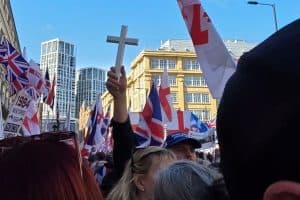
Thousands of Christians braved the sweltering heat on Saturday, and gathered in central London for the Jesus March, an evangelistic mission to show that Christianity is “alive, growing and increasingly diverse”. A cross was carried along the route, but there was no political message or motive. This was a revival of the Jesus march of the 1980s, which became an international event. One of the organisers, Henry George, said it was the right time to revive the idea of a march because of the “fresh and exciting zeal” among Gen Z Christians. He told Premier Christian News: “This is not a protest, this is not political, and this is not a promotion for one particular church or Christian brand. This is about Jesus.”
Reform led Kent County Council votes to recite the Lord’s prayer at start of meetings
Kent County Council, run by Reform, has voted to recite the Lord’s Prayer and sing the national anthem at the start of council meetings. Councillor Chrstopher Hespe proposed the move’ saying: “We are a Christian monarchy, and this is about standards, it’s about patriotism, it’s about heritage, and it’s about our roots. It’s about grounding us and accepting that we have duties and responsibilities.” The vote followed a vigorous debate with opposition councillors saying it was “performative politics”, “embarrassing” and making patriotism “a karaoke moment”. Reform swept to power in Kent a year ago and has 47 councillors, to 34 in all the other parties combined.
But Reform led Calderdale Council sacks cleric chairing Board of Standards
Calderdale Council in West Yorkshire, taken by Reform in the May elections, has sacked the Vicar of Halifax Minster, Canon Hilary Barber, as the independent chair of the council’s Board of Standards. He had applied for the role as independent chair of the committee 16 years ago but was sacked with no explanation, discussion or thanks. The council has abolished three committees scrutinising adult health and social care, children and young people, and place. The Church Times reports Canon Barber‘s view that “there looked to have been a deliberate choice” to avoid scrutiny by independent members of the council, and to shut down boards “that have provided essential transparency [over] the council’s work”. He was “clearly disappointed”.
Pastoral care for a dying parishioner and their love of a pet
The Rev Richard Coles has told an audience at the Hay Festival that he had surreptitiously placed pets’ ashes in parishioners’ coffins, if this was the final wish of the deceased. He explained that this is against the law over the disposal of remains, so he would place the ashes while the undertakers were looking the other way, but explained: “There is a wideness to God’s mercy like the wideness of the sea”. Telegraph story here