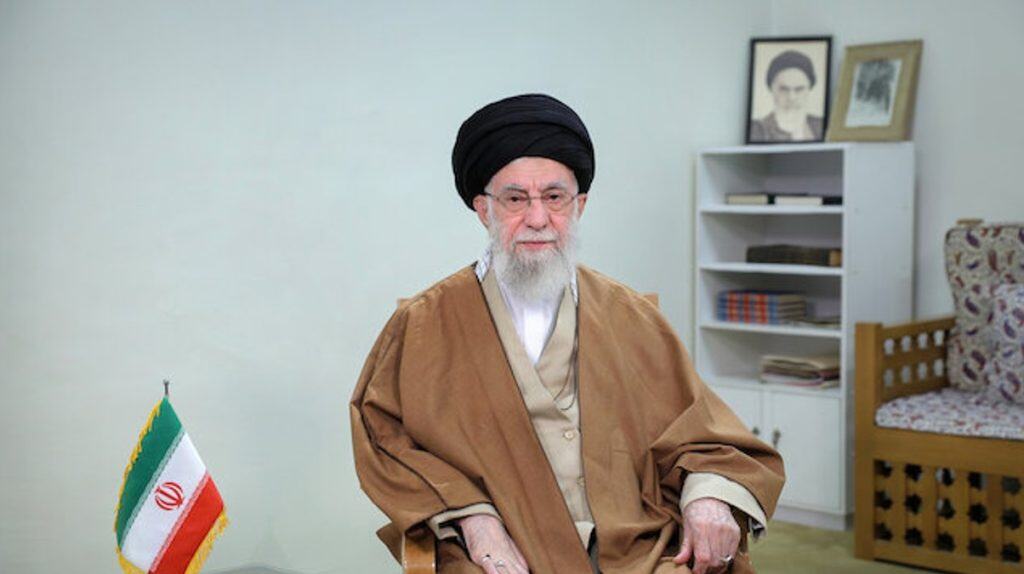
Ayatollah Khamenei supreme leader and top religious authority, confirmed dead
Ayatollah Ali Khamenei, the supreme leader of the Islamic Republic of Iran since 1989, has been confirmed dead at the age of 86 following the major joint US – Israeli air campaign against Iranian targets. Iranian state media announced his death and a 40-day period of national mourning. Khamenei was a senior Twelver Shia cleric who succeeded Ayatollah Ruhollah Khomeini, the leader of Iran’s 1979 Islamic Revolution. He was chosen as Supreme Leader by the “Assembly of Experts”, a body of 88 senior Iranian clerics, and he was Iran’s ultimate authority in both religious and political matters, with control over foreign policy, the armed forces, the judiciary, and state media. Khamenei’s tenure was marked by a rigid interpretation of Shia Islam, staunch opposition to Western influence, and by the expansion of a network of regional alliances with groups such as Hezbollah in Lebanon, Hamas, and other militias described as part of the “Axis of Resistance.” His government faced widespread domestic discontent and was criticised for brutally suppressing political dissent. Associated Press obituary here, Guardian obit here.
Faith leaders warn against war in Iran and urge peace and diplomacy
Pope Leo has expressed “deep concern” over the war in Iran and the Middle East, warning of “immense tragedy” if violence escalates out of control recent events in the Middle East and Iran. Speaking yesterday at his weekly Angelus address, he said: “Stability and peace are not built with mutual threats, nor with weapons, which sow destruction, pain, and death, but only through a reasonable, authentic, and responsible dialogue… Faced with the possibility of a tragedy of enormous proportions, I address to the parties involved a heartfelt appeal to assume the moral responsibility to stop the spiral of violence before it becomes an irreparable abyss!”
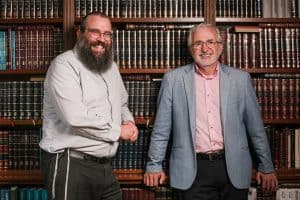
The Chief Rabbi, Sir Ephraim Mirvis, issued a statement on Twitter / X, saying: “We pray for the State of Israel and for her citizens who right now are being targeted by a barrage of deadly missiles. We pray for those citizens of Iran, who have seen tens of thousands of their people murdered by a regime more dedicated to the destruction of the State of Israel than the welfare of its own people, and who yearn for a new era of freedom. We pray for the success of the forces which stand in defence of our people and who seek to guarantee that peace and stability will reign in our volatile and vulnerable world. We pray for the day when no nation will ever need to raise sword against nation”.
The Muslim World League secretary general, Sheikh Dr Mohammed Al-Issa, who is also chairman of the Organisation of Muslim Scholars, strongly condemned the Iranian aggression against several Arab countries. Based in Saudi Arabia, he described the attacks as a blatant violation of religious values, international laws, and humanitarian norms, and he called on the international community to confront these actions with absolute firmness and resolve.
The World Council of Churches has expressed grave concern at the US–Israeli strikes on Iran and the resulting retaliatory action, calling for an immediate cessation of all military action in the region. In a statement, WCC general secretary Rev Prof Jerry Pillay, said: “This dangerous spiral of violence places millions of civilians at immediate risk, undermines regional and international security, and threatens already fragile economic and social stability across the Middle East”.
Bishop Guli Francis-Dehqani, who fled Iran after the Islamic revolution when her brother was murdered, said it was unclear whether the military action complied with international law and warned it would “wreak havoc and bring death and destruction” across the region. Speaking on BBC Radio 4’s Sunday programme, she said that it was difficult not to have a glimmer of hope that the regime will end, but there was no obvious or credible alternative ready to take its place: “My concern is that the IRGC will simply find somebody in due course to replace Khamenei and we’ll go back to where we were, but simply under different leadership.”
Other news
Government ‘committed to working closely with churches’ to tackle social challenges
The Prime Minister told hundreds of Christians involved in social action projects, that the government remains committed to “working in close partnership with church leaders and congregations” to tackle social challenges and create opportunities for all. Sir Keir Starmer sent this message to a summit of the Church Works Commission, part of the Good Faith Foundation charity, which seeks to bring together the church and the government to support vulnerable people. The meeting at Methodist Central Hall, Westminster, included clergy and lay people from all denominations, whose churches provide front line support such as food, warmth, family support, help for mental health and shelter. At the start of a day of panel discussions, interviews and workshops, the faith minister, Miatta Fahnbulleh, who has been in post for six months, told the meeting that the government is creating a “clearer framework for how government and civil society can work together” to serve communities. But she acknowledged they “must go further to strengthen community cohesion and resilience, especially in places which face the greatest risks and threats”.
URC: Church growth is not ‘bums on seats’, but ‘growth in people’
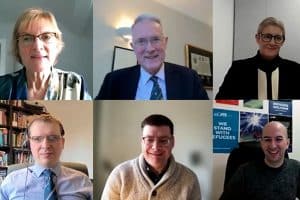
Church growth and engagement with people at the margins are not competing priorities, but complementary, according to speakers at a webinar run by the United Reformed Church. It was the first in a series of three webinars to encourage churches to be “places where people at the margins are loved, nurtured and empowered”. A report on the day says the traditional measures of church growth were challenged, suggesting congregations might look beyond Sunday attendance figures. Mike Hart, from the URC North Western Synod, said: “Many of the churches most active in their communities are also seeing growth. But perhaps we also need to measure things like volunteers, partnerships, and the number of people coming through our doors through the week.” Church worker Fliss Barker echoed this: “My job is never about putting bums on seats. It’s about growth in people, the conversations happening across our community – that’s kingdom building.” URC report here
Manchester mosque helping homeless living under bridges in the city
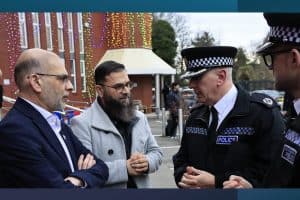
The food bank at Ashton Central Mosque in Manchester has seen the number of people using its food bank rise from 60 last year to 500 users a month. In a film for the National Zakat Foundation, one of the project leaders, Adam Ahmed, said they were able to offer a range of help from advice on benefits and debt, to providing clothes, a health clinic and food, thanks to a grant from the Foundation. He described homeless refugees and asylum seekers living under bridges in the city, with no families to help them and in desperate need of support, and said the project is their only lifeline.
Theos report urges theology-led rethink of investment and wealth
The Theos think tank has produced a report on “A Theology of Investment”, suggesting that a theological approach to wealth conceives money “not as personal possession, but as one of the many resources we are called to steward well”. It says investment is often seen as “finance–driven capitalism” associated with profits which “reinforce injustice, entrench inequality, and contribute to environmental damage”. Instead, the authors suggest investment is a mechanism for human and global flourishing, in relationships and in creation. The report lists practical steps investors can use to avoid, engage or embrace investment prospects. It was produced in partnership with Christian Aid, and is available here.
Independent Christian schools lose court case against VAT on school fees
The Court of Appeal has dismissed a challenge from a coalition of Christian schools, parents and pupils, against the UK Government’s decision to impose 20 per cent VAT on private school fees. The coalition is not giving up its fight and says it will now apply for permission to appeal to the Supreme Court. It says the imposition of VAT will adversely affect smaller independent Christian schools, who face closure as parents will not be able to pay. The case is being fought by families and leaders from Emmanuel School in Derby, The Branch Christian School in Yorkshire, The King’s School in Hampshire and Wyclif Independent Christian School in South Wales and supported by the Christian Legal Centre. The Court of Appeal dismissed the appeal on all grounds. Story here
Acquittal upheld for man who burned Quran outside Turkish consulate
The Crown Prosecution Service has failed in a High Court attempt to overturn the acquittal of a man who burned a copy of the Quran outside the Turkish consulate in London. Hamit Coskun, 51, was convicted last June of a religiously aggravated public order offence after setting fire to the Islamic holy book and shouting an insult about Islam outside the embassy in February last year. However, he appealed and last October, his conviction was overturned. Then the CPS appealed, arguing that it was wrong to find that Coskun’s behaviour was not “disorderly” and unlikely to cause harassment, alarm or distress. But the High Court was not persuaded. BBC report here.
March 2026 is Muslim Heritage Month highlighting contribution of British Muslims
March has been designated Muslim Heritage Month, to coincide with Ramadan and the International Day to Combat Islamophobia, on 15 March. Organised by the Muslim Women’s Network, organisations are encouraged to hold events, donate to charity and make full use of resources providing creative ideas. The network says that the month will help to counter prejudice and dispel negative attitudes towards Muslims, by highlighting the successes and accomplishments of British Muslims, promoting and celebrating their contributions to society.
Jewish festival of Purim starts this evening
The Jewish festival of Purim begins this evening, marking the biblical story of Jewish survival in ancient Persia. The story is of a young Jewish woman, Esther, who became queen after marrying King Ahasuerus and concealed her identity until a plot to massacre the Jews was uncovered. She intervened, revealing her faith and helping to avert the destruction. As people prepare for the festival, Chief Rabbi Pinchas Goldschmidt, president of the Conference of European Rabbis, said the story of Esther resonates amid the current war with Iran, which he said has “fuelled terror” against Israel and Jews. Purim is traditionally celebrated with joyful parties, fancy dress, festive meals and community celebrations. Our Purim factsheet is available here.