By Catherine Pepinster
Christians from across the Middle East’s ancient churches will gather in London on Friday to pray for persecuted Christians in the region.
Although the Stations of the Cross service – a traditional Lenten meditation – was planned before the US-Israel conflict with Iran began, it will have added poignancy now.
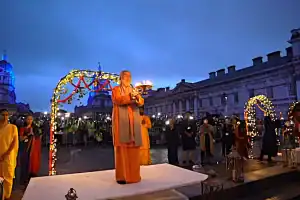
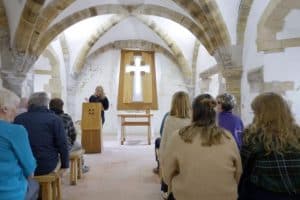
The service at St Mary’s Cathedral of the Holy Apostolic Catholic Assyrian Church of the East, in Ealing, West London, will involve representatives and choirs of the Chaldean, Armenian, Syriac Orthodox, Coptic, Maronite, Melkite, Assyrian and Syriac Catholic Churches – the churches to be found in countries like Iraq, Lebanon and Syria, which, like other countries neighbouring Iran, such as the United Arab Emirates and Qatar, are facing bombardment at the moment.
They will meet next Friday, as drones continue to be fired by Iran around the region, in response to the US and Israel strikes against Iran on Sunday 2 March, which killed the country’s Supreme Leader, Ayatollah Ali Khameini.
Just what is happening to Christian minority populations in the countries under fire is not entirely clear at the moment. There is growing concern that they are at heightened risk because some might see them as directly connected with the West. There is also concern that their future and the existence of Christianity in the very region where it first began, is under threat.
Regina Lynch, Executive President of the Roman Catholic charity, Aid to the Church in Need (International) said: “A new spiral of violence could push already fragile communities beyond the point of survival”.
Supporters of Christians in the Middle East say that finding out what is happening to communities there is proving very difficult, although on occasion they are withholding information for fear of putting people are further risk.
John Pontifex, a spokesman for Aid to the Church in Need, said: “The situation in the Middle East is delicate for Christians at the best of times and we’re especially concerned about them now”.
Here is what organisations in the West have so far been able to learn about the situation for Christians caught up in the conflict:
IRAN
Estimates vary widely about the numbers of Christians in Iran, most of whose 93 million population is Shia Muslim. An estimated 20,000 are Catholic, and mostly belong to the Armenian and Assyrian rites, although there are 2,000 Latin-rite Catholics. Their cardinal, the Belgian Franciscan Dominique Mathieu, whose home and cathedral were in the grounds of the Italian embassy in Tehran, which has been closed, fled Iran and is now in Rome. Other Christians belong to underground evangelical groups and are believed to include converts from Islam.
Even before the start of the war on March 2, organisations including Open Doors and Christian Solidarity Worldwide were reporting that Christians were being targeted in Iran with 254 arrested in 2025, twice as many as the previous year. Offences for which they were investigated included holding baptisms and receiving Communion.
The Iranian-born Bishop of Chelmsford, Guli Francis-Dehgani, told the news outlet OSV News that the Anglican diocese of Iran has been “hanging by a thread” without a bishop for the past decade, and its three main churches in Tehran, Isfahan and Shiraz are now closed, while small house churches lived in fear of being discovered.
“Iranians are totally disillusioned with the version of Islam they’ve received over four decades — many are finding something in Christianity, and it’s our responsibility to foster this,” she said.
IRAQ
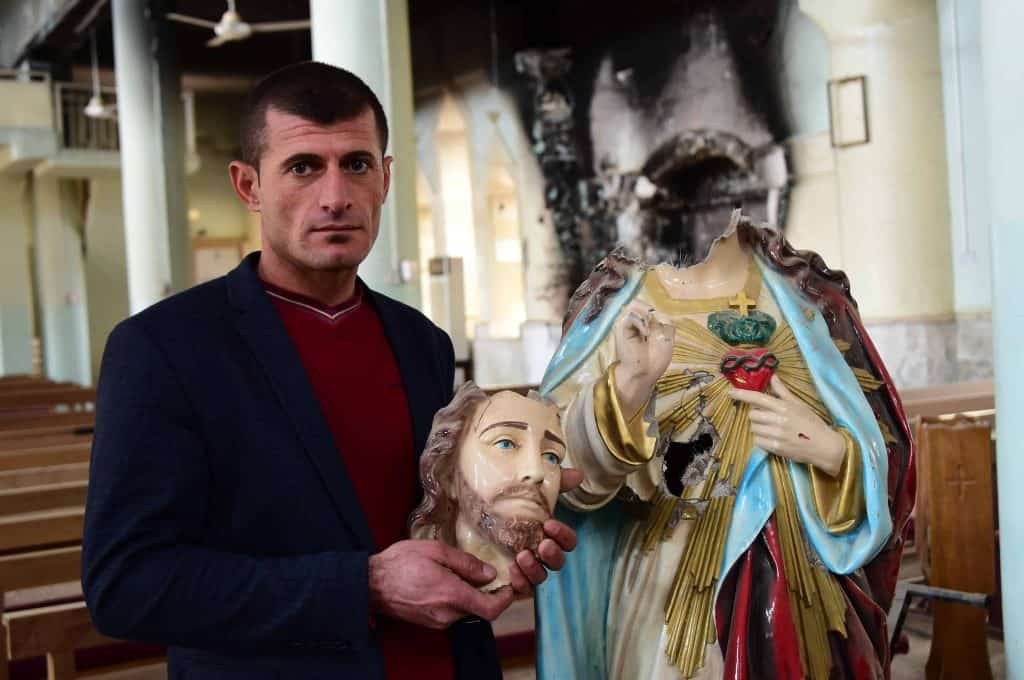
Christians living in Erbil, in the Kurdistan region of northern Iraq, have long been the target of persecution. The region has seen in recent years threats of violence as well as discriminatory treatment meted out to Christians by Islamist extremist groups but also sometimes by government agencies.
On March 5, a drone attack struck the Christian-majority quarter of Erbil with an apartment block owned by the Chaldean archdiocese of Erbil and the nearby convent of the Chaldean Daughters of Mary Immaculate were damaged, although nobody was hurt.
However, there are concerns that the attack and others like it may well be the last straw for many Christians living there, who have endured years of harassment. Archbishop Bashar Warda of Erbil told CAN “When war erupts in the Middle East, we face another erosion, fast or slow. Do we stay? Do our children have a future? We fear bombs and uncertainty. Our hope in Jesus is not built on politics but on God’s faithful presence.”
Cardinal Louis Raphaël Sako, Patriarch of the Chaldean eastern Catholic church in Baghdad, who has just submitted his resignation at the age of 76 to Pope Leo XIV, says he fears for the future of Christians in Iraq, if the war in Iran extended over the border. He told Vatican News: “We Christians are very worried, because if they start attacking the Nineveh Plains, where there are 50,000 Christians, these people will leave their homes-and this time, they will not return”.
The number of Christians in Iraq today is estimated to be 150,000, compared to 1.3 million in 2003, and an overall Iraqi population of 42 million.
LEBANON
Lebanon has been seriously affected by the war, with air strikes hitting its capital, Beirut, causing thousands of people to flee, and Christians living near the southern border caught up in conflict.
The country has been hit near-daily air attacks by Israel since the Iran-backed Hezbollah claimed responsibility for strikes on the Israeli city of Haifa.
Lebanon has appealed to the Holy See for help in securing the presence of Christians there. The Lebanese Christian population is largely made up of about one million Maronites and 200,00 Melkites, and in the south of the country they are enduring relentless bombardment and evacuation orders. The impact of the ongoing conflict was highlighted last week by the death of a Maronite priest.
Youssef Raggi, Lebanon’s Minister of Foreign Affairs, spoke by phone this week with Archbishop Sir Paul Gallagher, the Vatican Secretary of States and International Organisations. Posting later on X, Mr Raggi said: “I asked the Holy See to intervene and mediate to help preserve the Christian presence in those villages, whose residents have always supported the Lebanese state and its official military institutions and have never departed from this commitment.
Last week Maronite rite Catholic priest Fr Pierre el-Rahi died in Qlayaa, Lebanon, on Monday as he tried to help parishioners whose home had been fired on by an Israeli tank, Lebanese media reported. As the tank struck again he was wounded and died from his injuries in hospital.
Despite many Israeli evacuation orders for the area, Fr. El-Rahi remained to serve his parishioners. Fr. Toufic Bou Merhi, Latin-rite parish priest in Tyre and Deirmimas,told Vatican News that people are very afraid, with the house of another priest directly attacked.
“Up to now, people haven’t wanted to leave their homes in Christian villages, but in this situation, everything has changed,” said Fr. Merhi. “Leaving home means living on the streets or trying to rent another place, but people can’t afford it, especially given the country’s already dire economic situation.”
The Franciscans of the Custody of the Holy Land are currently hosting 200 displaced people, all Muslims, at their monastery in Tyre, according to Fr. Merhi, who estimates over 300,000 people have left southern Lebanon because of the conflict.
The Melkite Bishop of Tyre, Georges Iskandar told ACN that around 800 Christian families within his diocese may soon need help if the violence escalates.
“People are exhausted; they fear for their children and their future; they yearn for a simple and ordinary life – that a child may go to school without fear, that an elderly person may sleep peacefully in his home, that a father and mother may work for their daily bread in dignity”, he said.
SYRIA
Syrian media have reported that Israeli defences have intercepted Iranian drone and missile attacks over southern Syria in the past few days. The explosions were heard in Daraa city, Al-Ikhbariya.
For Christians living in Syria, who make up just one per cent of the population, the past few years have already been traumatic, with forced closures of their schools, attacks on churches and the killing of Christians.
Even before this conflict, Christian communities were targets by people who perceived that they have ties to the West – which includes the United States. Open Doors’ World Watch List, published earlier this year, reported that since the Assad regime was deposed in Syria, widespread instability has made life even more difficult for Syrian Christians.
Although there has been an historic Christian presence in the cities of Damascus and Aleppo, communities there have more recently experienced hospitality from conservative Muslim groups.
SAUDI ARABIA
Saudi Arabia has experienced several drone attacks by Iran since the start of the current conflict, with some targeting oil fields and another hitting the CIA station at the US embassy in Riyadh.
Although Saudi maintains strategic relations with the West, including the United States, focused on security and oil, it has often faced strain over human rights.
Citizens of Saudi Arabia are Muslim, so those who reject Islam and convert to Christianity are considered to have dishonoured the culture of the country and its identity. Most converts live out their Christian faith in secret. Christians who move to Saudi for work also face problems, not least that there are no church buildings. Open Doors reports that some Christians have been expelled for attending house churches.
Other countries caught up in the violence in the Middle East include Oman and Qatar where converts from Islam to Christianity face hostility, threats to their employment, and, like cradle Christians, a lack of access to worship.
Organisations workinig with Christians int he Middle East:
Open Doors media spokespeople listed here
Aid to the Church in Need, based in Surrey here