Christian affiliation in Wales is in decline, while “non-religion” is increasing alongside the emergence of ancient faith traditions and diverse new expressions of spirituality.
Mainstream media outlets are struggling in competition for audiences with an explosion of social media platforms and lone influencers.
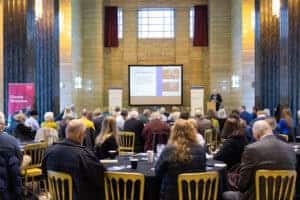
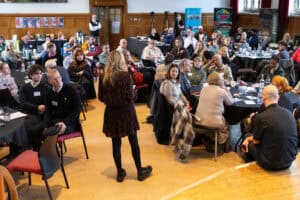
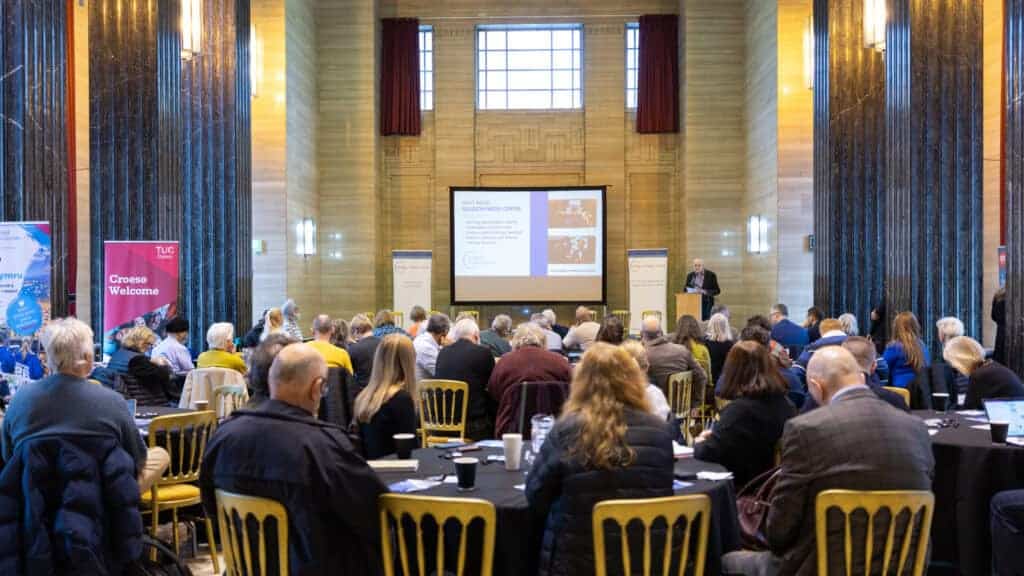
The impact of these profound shifts was up for discussion at the Creating Connections event in Cardiff, where faith groups met the media and grappled with the understanding of how they should relate to each other.
They were told that there were fewer reporters with a knowledge of religion, that news desks were swamped with emails as the ease of communications exploded, and that a silo screen culture made face-to-face meetings a rare event.
And the uncoupling of a Christian ethos with the political and social discourse of the nation has implications.
So this exchange of ideas with about 80 people — journalists and people of faith — in a room at The Temple of Peace, talking and listening to each other, was novel, and as the feedback shows, provoked new thinking, engendered new contacts and left a desire to be repeated.
The religious landscape of Wales
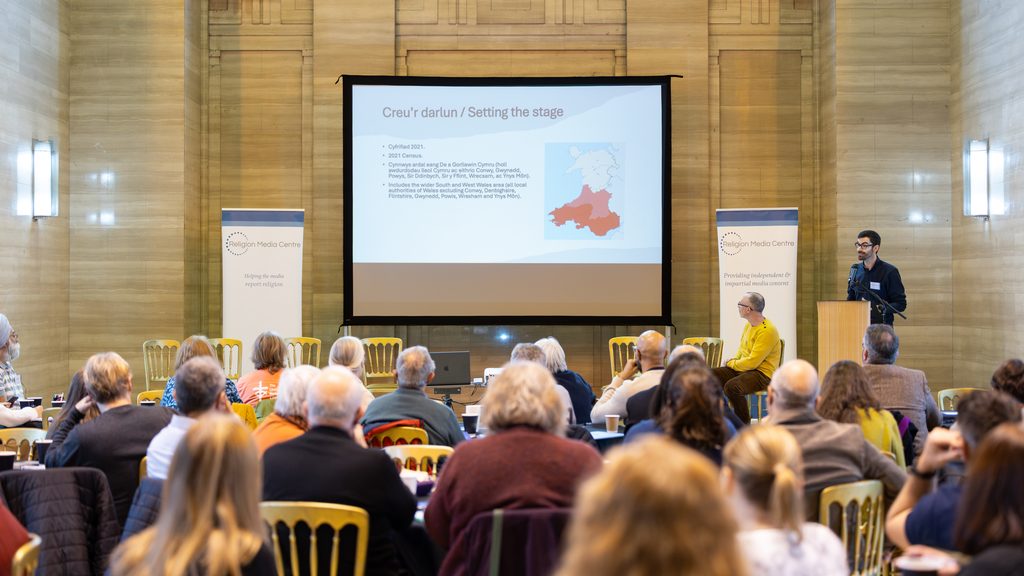
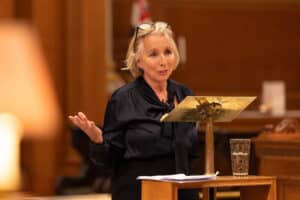
Dr Gareth Evans-Jones, from Bangor University, led a presentation on the religious landscape of Wales, based on data from the 2021 Census and looking in particular at fourteen local authorities in the south and west of the nation.
Overall, 48.4 per cent of residents identified as having no religion, while 41.3 per cent identified as Christian. A total of 2.7 per cent identified as Muslim, and all main world religion traditions are represented in small numbers.
The figures for non-religion accounted for more than half the population in some areas, with Caerphilly recording the highest, at 56.7 per cent.
Dr Evans-Jones said: “This is a striking contemporary picture, especially for an area with such a prominent religious and nonconformist heritage. The census does not explain the relationship between that heritage and how people identify today.”
Christianity has a stronger presence in Pembrokeshire, Monmouthshire and Carmarthenshire at about 48 per cent.
Muslims make up 9 per cent of the population in Cardiff, followed by Newport with 7 per cent and Swansea at 3 per cent. Ninety per cent of the Muslim population live in these three areas.
He said Wales had always been a multicultural and multifaith country — for centuries. And there were multiple other religions that people identify with in the region, including Pagans, Spiritualists, Wiccans and Druids.
Implications of the decline in religion
Professor Huw Williams, who teaches philosophy at Cardiff University, said the 2021 Census revealed a significant category of non-religion.
In a secular culture where religion was privatised and kept out of political and social discourse, he asked how we were to engage with the deepest question of human nature and society unless the language of religion remained central to that discourse. Issues included the nature of the human soul, or artificial intelligence.
He said there were risks stemming from the absence — or perhaps the lack — of the values and ideas that had historically been part of the public discourse.
“If we want to look at where we have come from — and perhaps consider where we are heading — it is impossible to do so without acknowledging the importance of faith, and specifically the Christian element within our history,” he said. “If you go back to the origins of the Britons, they were a Christian people from the very beginning.”
Despite the shift towards secular paths, he said, the concepts central to political and social discourse in Wales were rooted in religion, embedded in everyday language. Theological debates over the centuries and philosophical discussions had created the broader picture against which the public discourse had unfolded. Therefore, society must be aware of and make space for religious discussions.
“I think it’s worth asking: what are the implications of the decline of religion — specifically institutional religion — within the context of our politics? Historically, one would have to say that there has been a very close link between the ethos of socialism and religion — Christianity, in particular.
“From the perspective of ethos — a Christian ethos, or a broader religious ethos — what are the implications for our ability to live together, and to do so in a way that demonstrates kindness towards one another?
“The flip side of the coin, of course, is the question: can religion sometimes pull us in the opposite direction, creating problems and discord?”
Professor Williams ended with a question: “Can we have a politics that really responds to our purposes and our needs if it doesn’t relate to the deepest needs of the soul?”
The diversity of religion in Wales
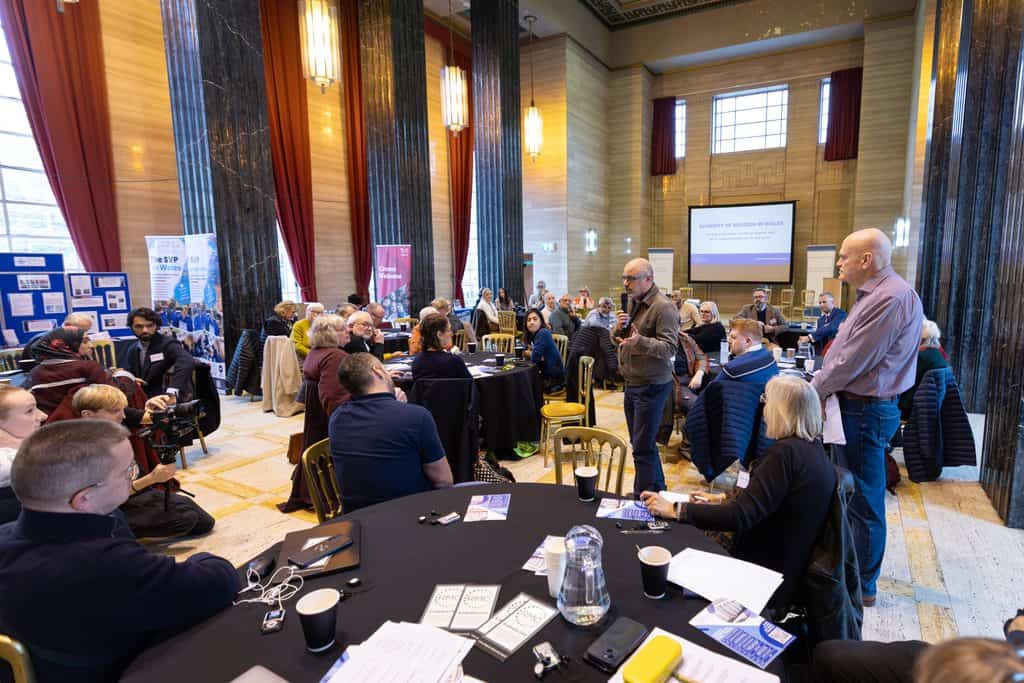
The conference floor then opened for people from faith traditions to tell their stories of their activities and beliefs and their place in society. Here is a selection:
- Neil Richardson, from the Welsh Jewish Cultural Centre in Merthyr Tydfil, explained the project to restore the 19th-century synagogue into a cultural centre presenting the heritage of the Jewish community in Wales — political, social, economic, and industrial — offering activities for the public and resources for schools. Part of the building will also be a community space for local people.
- Zac Lyndon Jones, who runs the Community Foundation at Cardiff City Football Club, said “faith in football is live out there”, both locally and worldwide. The foundation builds a connection with people of faith in the community, and those with none, creating a sense of connection and purpose, especially for young people.
- Nathan Harding, of St Vincent’s Ely Bridge Centre, runs community centres with programmes particularly for men struggling with addiction and substance misuse and a lack of self-esteem and identity “which is massive in this generation”, but also for women fleeing domestic abuse. Part of the programme can involve teaching people to box — a skill he famously tried to teach to a visiting bishop, to no great effect apparently.
- Dr Abdul-Azim Ahmed, deputy director of the Centre for the Study of Islam in the UK at Cardiff University, and secretary-general of the Muslim Council of Wales, introduced Muslims working in the grass roots of community life. Amina Bushra, from the Islamic Society at Cardiff University, spoke about the difficulty navigating negative representations of Muslim women in the media.
- Vishvapani Blomfield, from the Cardiff Buddhist Centre, said there are retreat centres nestled away across Wales, and a strong mindfulness tradition, which you could call a secularised version of the practice that comes form Buddhism.
- Gareth Simpson from the National Churches Trust, spoke of the structural and existence problem for non-conformist chapels, with many lost to closure, conversion to homes, dilapidation or transformed for commercial use. He is trying to engage churches in a broader approach to income generation as the sharing of spaces with the community becomes important.
- Sian Rees, leader of the Bible Society in Wales, told the story of the global presence of the Society, which began in the 19th century after Mary Jones walked from her farm to a minister in Bala, in order to buy a Bible. It now offers courses in Biblical literacy, including in prisons, and runs a pilgrimage route, responding to renewed spiritual curiosity in society.
- Iestyn Davies, policy officer of Cytûn, Churches Together in Wales, was concerned to find out how to create compelling media content, especially from small organisations.
- Amarjite Singh, from the TUC, is from the oldest Sikh community in Wales, in Swansea, and said his work on diversity includes representation of race and religion in the workplace.
- Corinne Hainsworth, of the Bahá’í community in Cardiff, told of classes for young people and children, where common spiritual principles such as trust and honesty, are explored.
- Dr Amer Hamid from Swansea, a founding and council member of the British Islamic Medical Association, said faith is not fashionable but people need to talk to the media to explain how faith dsupports people, for examplemin Covid or in bereavement, but also in good times too.
- Kate McColgan, chair of the Interfaith Council of Wales, explained that their work involves bringing people of faith together to build a more harmonious society.
Tips for telling stories online
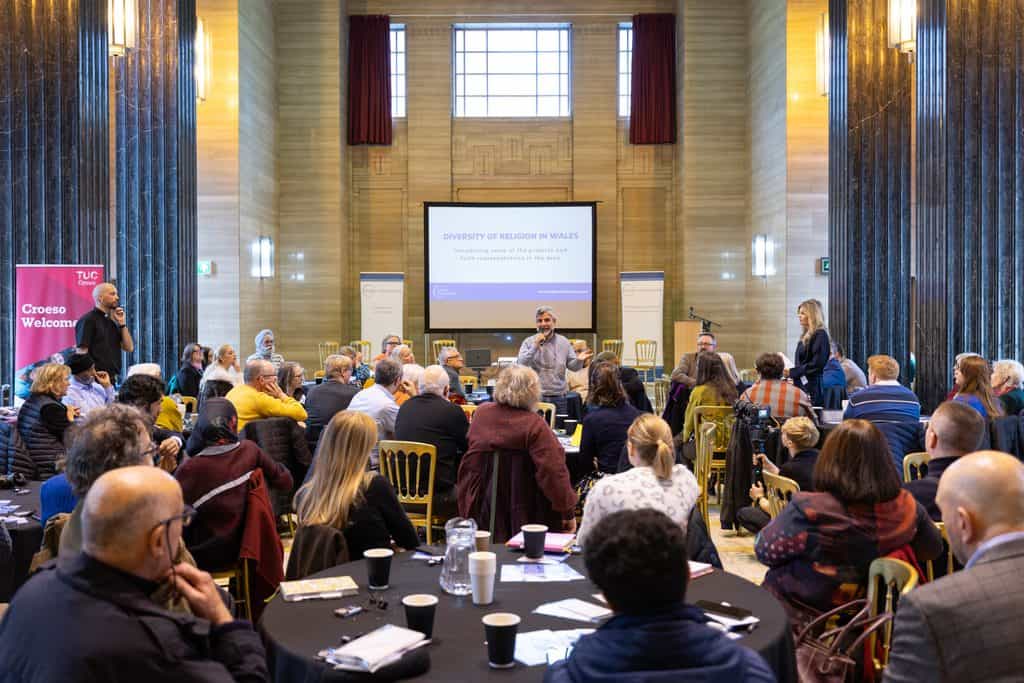
All our presenters took part in this session, giving tips to the audience on how to tell stories online.
Leo Devine, formerly a senior editor in the BBC across nations and regions, now teaches journalism, and using the example of cutting carrots, he showed how a formula of filming shots – close up, mid and wide – enhances film making for social media short films.
The Rev Glyn Wise was once famous for being on Big Brother and knows about being a media personality. Now ordained in the Church in Wales, he’s carried on with his own TikTok channel which has 191,000 followers. If the disciples were around today, he said, they’d be using social media.
Emma Meese was an early adopter of social media at the BBC and went on to found the Independent Community News Network, and the Centre for Community Journalism. She offers training on social media skills and explained this was about grabbing people’s attention.
She advised people to make sure they knew their audience and target their content to them. Content creators should think of themselves as editors, providing content that is interesting and entertaining to their audience.
There was discussion on whether to remain on Twitter / X , how to create content that teases longer form articles or films, ensuring captions are used, and how to handle anger and hate simply because the content is about religion.
Rachel Howells, from the NUJ, told of the training courses funded by the Welsh government, which are offered to anyone involved in communications in Wales, teaching social media and communication skills.
Journalism by subscription
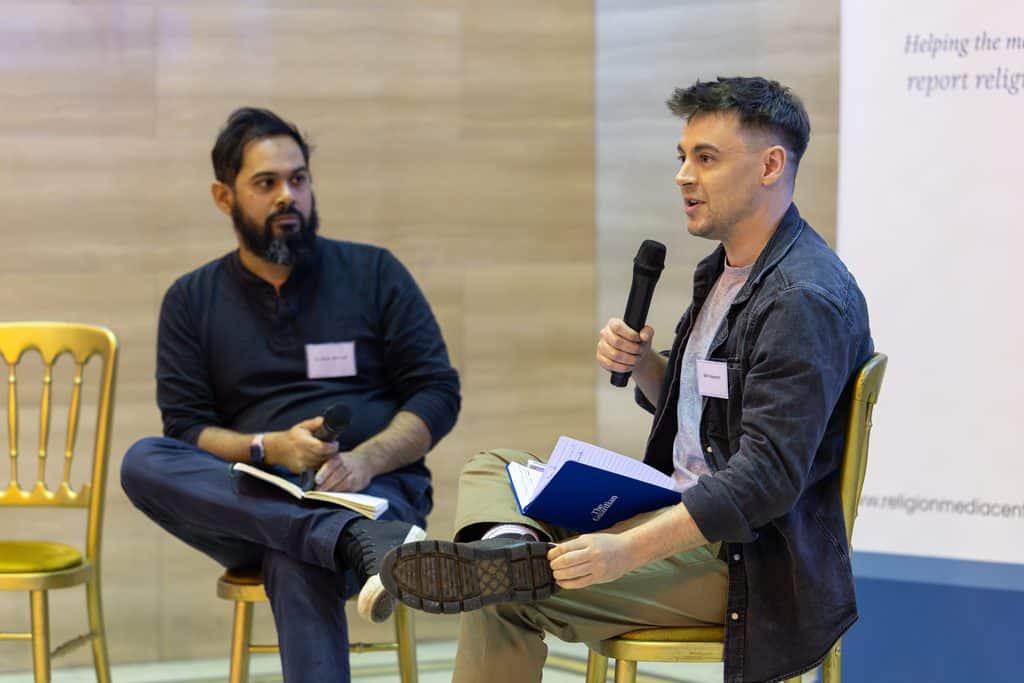
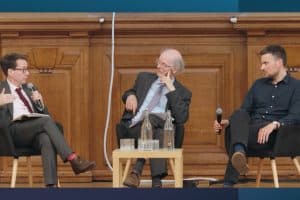
Will Hayward is an investigative journalist in his mid 30s, who writes and publishes his own journalism on Substack, paid for by reader subscriptions. He was interviewed by Dr Azim Ahmed about his work and the new form of journalism he represents.
His independent newsletter, The Will Hayward Newsletter, covers Welsh politics, public services, government decisions and their impact on everyday life. He has also recently co-founded the Cymru News Network, developing locally based independent news services across Wales, beginning with Proper Cardiff News.
He spoke of the rapid change in the media landscape which means that this form of journalism didn’t exist even five years ago. But it has taken off. He now has 17,000 subscribers, multiple staff, an office in Newport and a podcast for a younger audience.
He said the fundamentals of what makes a good story is the same as ever, but how people pay for it is changing: “It’s an exciting, if somewhat terrifying time”.
He believes that in a society when everyone is in silos and working alone behind screens, religious organisations and the media have overlapping roles.
This is about “bringing people together and sharing things”, he said. “There’s a decline of religion, decline of local media, decline of the pub. These are all the places where people spoke to each other. So I think there are overlapping aims which ultimately come at things from different angles, but hopefully have the same goal”.
His advice to the audience was to build personal relationships with particular journalists and news organisations and foster ongoing communication.
The Media Panel – how does the media reflect religion in Wales
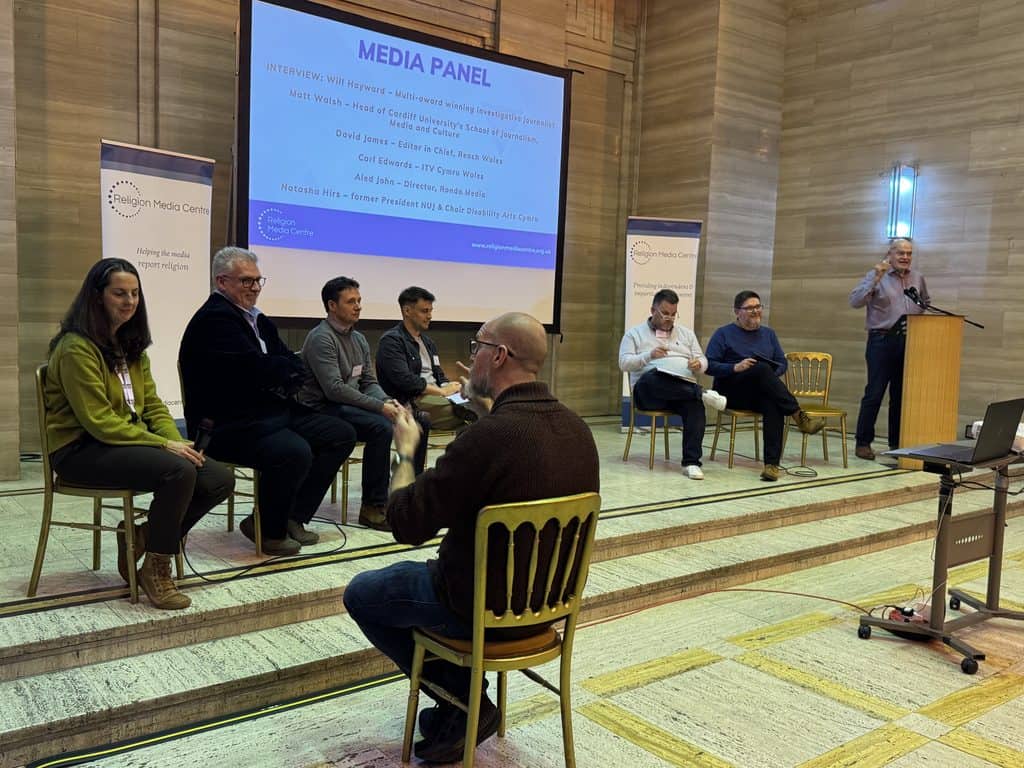
We were fortunate to have media professionals at the top of their game, answering questions from the audience and discussing the way religion is reported.
David James, Editor in Chief of Reach, the news publishing group, which publishes Wales Online and The Western Mail, brought a sense of reality into the debate.
When asked to explain what he does, he said: “I’m never sure quite how honest to be when you ask me the question of what I do. Honestly, we’re trying to survive. We’re trying to build a new future for ourselves online. 20 years ago, our newspaper titles had a huge reach in Wales. Today we’re shrinking, and there’s no hiding from that. We’ve been very successful in building an audience online. The challenge now is to diversify that, reach people in different ways, and build a financially sustainable future for our newsrooms and all the good work that our staff do.”
He had an interesting reflection on what religious journalism is: “Trying to write about Muslims for non-Muslims, is not, I think, necessarily, the best way to do journalism. We write about health issues for people who are affected by what’s happening in hospitals, in GP surgeries. And we need to write about faith issues in a way that the communities will value and appreciate and want to support.”
He said it was less an issue of covering faith and more about covering communities, writing for people about the issues that affect them.
Matt Walsh, head of Cardiff University’s School of Journalism, Media and Culture, was asked what he felt about the observation that faith literacy among journalists and the reporting of faith issues is not good.
“I think I think there’s a lot of truth in that. I think news organisations themselves are struggling to cover faith in an effective way. There are fewer specialists working in the faith sector than there used to be. There are still pockets of good practice, but for the most part, it’s a more difficult area for people because the specialism is not there.
“The number of people who have faith who are coming into the journalism schools is much smaller than perhaps it was, so it is increasingly difficult to find a kind of substantial amount of information for students coming through about how to cover faith in a way which is detailed, informed, sympathetic, and which has currency for people of faith.
“We’re finding that more and more faith is covered through calendar events – it’s Christmas, it’s Easter, it’s Diwali, it’s Eid – rather than through issues as such.”
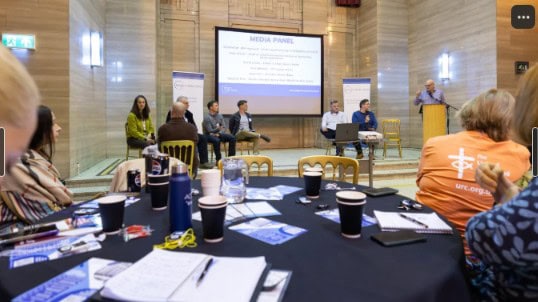
Carl Edwards, of ITV Cymru Wales, said the covering of festivals alone could be seen as a tokenistic approach to increasing diversity in content. But he said journalists were working harder now to reflect communities. At ITV, there is a Diversity, Equality and Inclusion group, where members of different faith groups come together to share ideas and comment on programmes.
“So we’ve had news coverage about people living in Wales who we’re not just covering because they’re Sikh, but they’re reflecting a Sikh community and the cost of living impact on that particular community, for example. And we do in depth reports too – a good example being a programme about racism. I hope we have got better at not just going for the kind of tokenistic approach, but really trying hard to bring people in, connect with them, and build trust.”
Natasha Hirst, former President of the NUJ and chair of Disability Arts Cymru, agreed, saying her freelance reporting role is about finding contributors at the grassroots, giving their perspective on a story. On some issues, it was really important to have a depth of understanding to report nuance and that is a real challenge for journalists.
Aled John, Director of Rondo Media which produces the Welsh-language equivalent of Songs of Praise “Dechrau Canu, Dechrau Canmol” (Start Singing, Start Praising), for S4C, was keen to point out that the Welsh version was in fact first and the English copied the format, both of which have survived for 65 years. He has a different take on including festivals, explaining that on that very day, his company was filming a programme for Diwali. He said: “We are trying to turn stories around that are relevant to communities. Stories that belong in Wales and are Welsh stories. And I think that’s important for us to be able to show and respect other faiths in Wales, while still looking at the Christian world as predominantly our main faith”.
The audience asked why it was so difficult to contact journalists, and heard that each has thousands of emails every day. The editors acknowledged that some stories were missed, which was a reason for people to establish personal links with journalists to get the story through.
The journalists defended robust questioning of politicians, not to trip people up but to find the truth. They described threats to their safety and hate on social media, with Natasha saying there’s a misunderstanding of the role of the journalist – they are there to serve the public.
One audience member, the Rev Sarah Jones, spoke of being hounded by the press when it became known that she had undergone a gender change. “The press are not our friends” she said, and she suggested that if a journalist approached a member of the public for news, that person should first ask “What do you want to get out of this?”
What happens next – improving religious literacy in the future
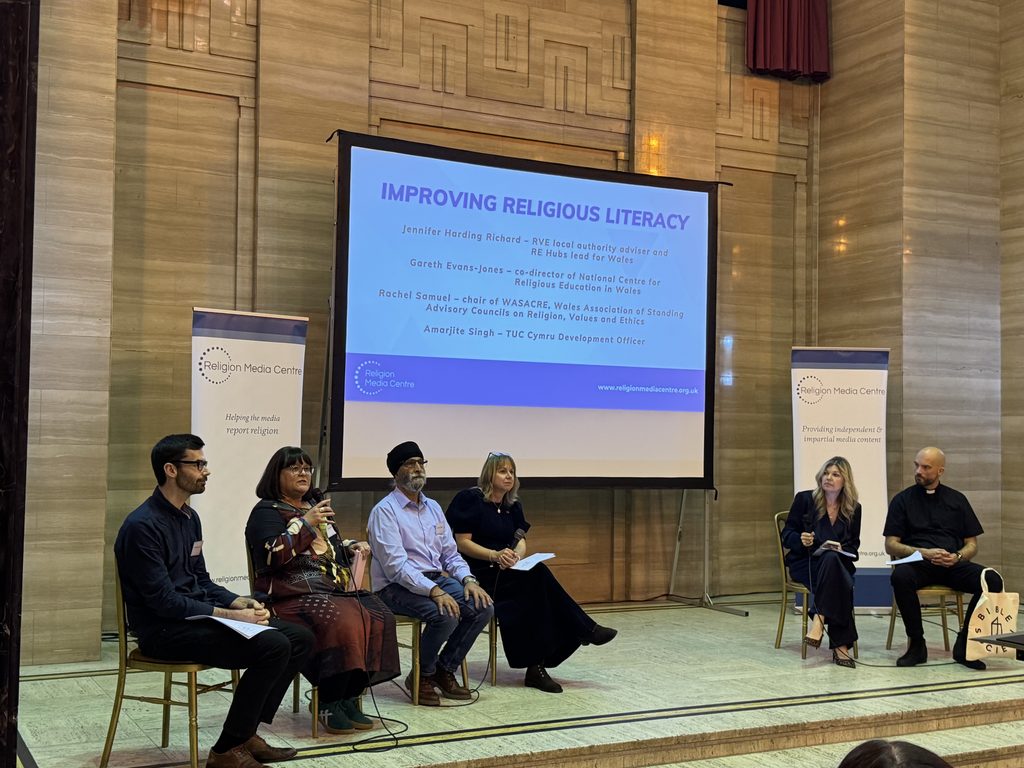
The day ended with a wider discussion on religious literacy in society. The conference had heard earlier of the lack of religious literacy among the media, but this discussion suggested this is a society wide issue, and it was important to address it in order to improve social cohesion.
Jennifer Harding Richards, an education adviser on Religion, Vaues and Ethics, said religious literacy and race literacy go hand in hand and RVE contributes to supporting learners to become literate: “If we want our pupils to have an understanding of society and we want them to be able to navigate their way through what is a very complex world, very diverse world, very different to certainly the world that I was growing up in, then racial and religious literacy are absolutely crucial to that”.
And Rachel Samuel, chair of WASACRE, Wales Association of Standing Advisory Councils on Religion, Values and Ethics, suggested that in addressing the problem of racism in society, RVE can open a lens to different perspectives on why people are different, helping children have a more open approach on life.
But there are problems in the delivery of RVE in schools. There is a shortage of qualified teachers and a need for support for non-specialist teachers to meet the legal requirements of teaching the subject. There is also a lack of clarity about the time that must be dedicated to the subject within the humanities curriculum.
Dr Gareth Evans-Jones said this was an issue for senior leaders in schools when they create timetables and the priority they give to the subject. He is co-director of the National Centre for Religious Education in Wales, which has recently reported on the challenges. They found that despite the subject being mandatory, some schools were not providing RVE in certain year groups.
He said: “There needs to be greater definition of what mandatory looks like, and if anything, maybe it does require time allocation because maybe that’s the way to ensure that the subject is actually given the equity and the fair play it deserves”.