Pope Leo’s ‘big party’ homecoming in Peru
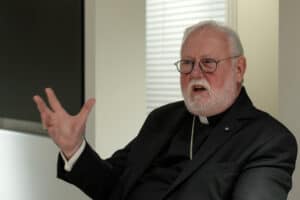
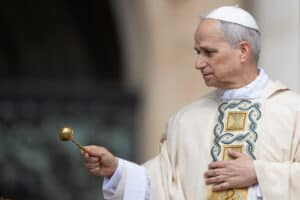
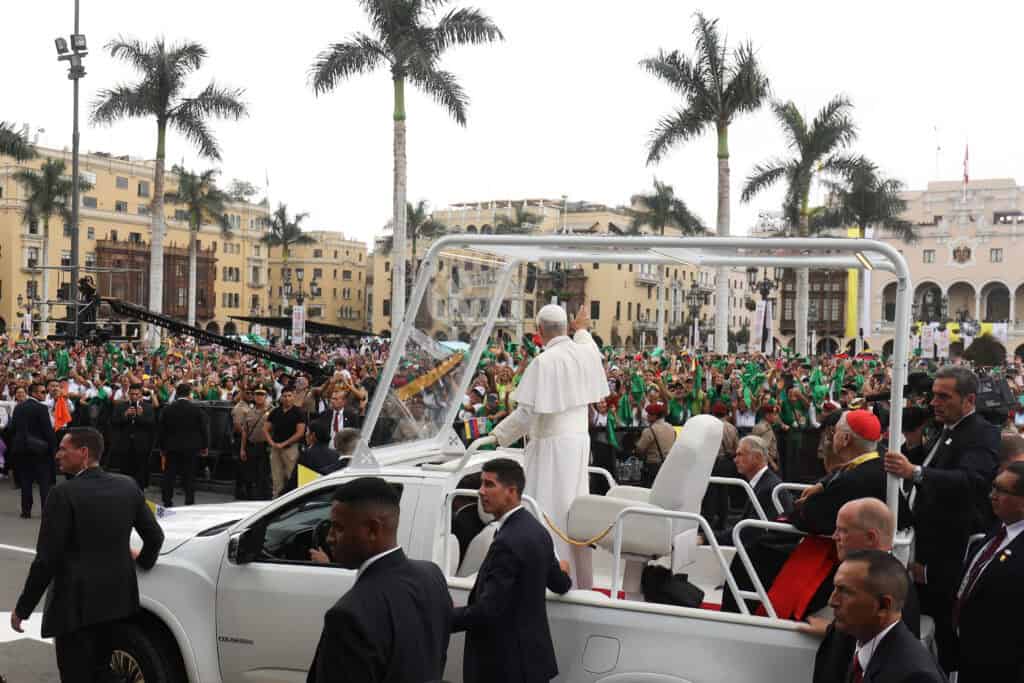
Pope Leo is in Peru for the final leg of his visit to South America, returning to a country where he lived for 20 years. Yesterday in Lima, he met Peruvian bishops at the Archbishop’s Palace and the cathedral, praising the church for embracing synodality, involving the whole church in mission. He also met privately six survivors of abuse, and said bishops must respond with truth and justice. In Lima’s Plaza de Armas, he sang along with national songs and spoke warmly of being home. In his speech, he condemned “machismo” and violence against women, highlighted the need for work–life balance in families and society. Later, 60,000 people greeted him in a vigil at the stadium with an estimated 300,000 outside. The Guardian quotes a theologian in Lima saying: “This visit is like a big party. Peruvians want to celebrate their first ever pope.” Today he returns to Chiclayo, a place which he regards as home and where he became a bishop and obtained Peruvian citizenship.
Bishop calls for action on climate change to be accelerated
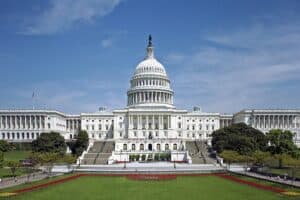
Bishop John Arnold, Bishop of Salford and lead bishop for the environment for the Catholic Bishops’ Conference of England and Wales, has called on the government to do everything possible “to unite countries behind effective action to address climate change”. Speaking as UN’s meeting on climate change, COP31, began in Antalya, Türkiye, he said: “action should be accelerated, and richer countries should provide support for poorer nations who suffer most from climate change but contributed least to historical emissions”. He said international tensions and conflict creates carbon emissions and makes cooperation more difficult. Extreme weather with droughts, wildfires and other disasters are “stark warnings of a future in which the conditions that sustain life and enable creation to flourish are increasingly under threat”.
Million-signature petition against Christian persecution delivered to No 10
A petition signed by more than one million people from around the world, was handed into Number Ten Downing Street yesterday, calling for greater protection for Christian communities in sub-Saharan Africa. It was co-ordinated by Open Doors, an evangelical Christian organisation, in partnership with the Association of Evangelicals in Africa and other Christian organisations. The petition is part of Open Doors’ Arise Africa campaign raising awareness of violence against Christians in sub-Saharan Africa. It says that on average, 12 Christians are killed for their faith every day in sub-Saharan Africa and violence against Christians is more widespread than in any other region of the world. Open Doors is asking the UK Government to improve religious literacy among diplomatic and humanitarian staff, and work to strengthen security and early-warning systems. The delegation delivering the petition included a Nigerian woman who fled with her five children, after watching Boko Haram militants kill her husband when he identified himself as a Christian.
Newport interfaith declaration draws on Chartist history to promote unity
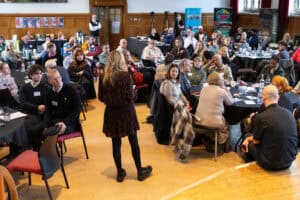
An interfaith gathering in Newport, Wales, has agreed a declaration promoting understanding, respect and reconciliation, drawing inspiration from the city’s Chartist history. The Newport Declaration is based on the People’s Charter of 1838, which set out demands for political and democratic reform and helped inspire the Chartist movement, whose march on Newport in 1839 ended in a violent clash. The declaration makes six commitments, including listening to others, respecting differences, rejecting hatred and prejudice, and building bridges between communities. Organiser the Rev Andrew Lightbown, ecumenical and inter faith officer for the Church in Wales in Monmouth diocese, said it reflected Newport’s history of championing human dignity and equality. The declaration also includes a pledge to ‘build a Newport where nobody is merely heard but listened to, nobody is merely tolerated but respected, nobody is regarded as the other but encountered as a fellow human being and a neighbour.’
Church backed conference in Jamaica explores slavery and reparations
Theologians, academics and people working on reparations have gathered in Montego Bay, Jamaica, for a four-day conference (12–15 November) exploring the legacy of colonialism and the possibility of forgiveness. Participants will examine the economic, psychological and social damage caused by the transatlantic slave trade, and share experiences of reparations and other programmes aimed at addressing its lasting effects. The conference is hosted by the Centre for Reparations of the University of the West Indies in collaboration with the diocese of Jamaica and the Anglican mission agency USPG. It follows the recent Commonwealth Heads of Government Meeting in Antigua, where Prime Minister Andy Burnham said he was open to the possibility of a formal British apology for the transatlantic slave trade. In his speech to Commonwealth leaders, the King said his heart was filled with “horror” and “profound sorrow” at the trade, acknowledging that it “still casts a shadow over Caribbean islands and other countries”.
Last Hyphen newsletter published, as Muslim news website closes
The Muslim news website Hyphen has published its final newsletter as it prepares to close, bringing to an end a four-year project launched in 2022 to give readers a broader picture of Muslim life in Britain and Europe. Its editor, Burhan Wazir, said the goal was to give a 360 degree view of Muslim life in the UK and Europe: “Throughout, it has been hugely gratifying to see Muslims from all backgrounds represented in their own voices as complex individuals at a time when many are still depicted in the media as outsiders or unwilling to integrate”. He reflects on an extensive portfolio of journalism spanning culture, politics, personal stories and investigations, including coverage of social housing, health inequalities and Islamophobia. In years to come, he said, Hyphen will “continue to be seen as having made a real difference in how media organisations report on Muslims”.
Former Methodist president denies sexual offences
The former president of the Methodist conference, the Rev Steven Wild, has denied touching women sexually, as he gave evidence in his defence at Truro Crown court. Mr Wild, aged 71, from St Ives, faces 10 counts of sexual assault and one of indecent assault involving five women between 2004 and 2019. He denies all 11 charges. He was cross-examined about alleged incidents involving several women over a number of years. He accepted hugging one of the women, but denied allegations of kissing, inappropriate touching or sexual behaviour. He described himself as tactile and enthusiastic, and told the court he did not touch other people in a sexual way. Mr Wild was President of the Methodist Conference in 2015–16 and chaired the Cornwall and Isles of Scilly Methodist District from 2008 to 2022. The trial began on 4 November and is expected to last three weeks. Cornish Times report here. Falmouth Packet report here.
Golders Green Rabbi Aaron Halpern, guilty of sexual assault
A Golders Green rabbi has been found guilty of two counts of sexual assault following a trial at Harrow Crown Court. Aaron Halpern, 68, also known as Rabbi Chaim Halpern, denied assaulting a woman who visited him for religious guidance in June 2022. Prosecutors said he touched her thigh, breasts and groin over her clothing during a private meeting in his study above a synagogue. Halpern denied sexually assaulting her but acknowledged hugging her. The Met Police say the investigation began in November 2022 after allegations broadcast on Israeli television were brought to the attention of Met officers. He will be sentenced on 12 January 2027.