By Catherine Pepinster
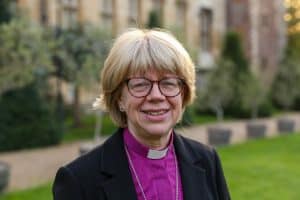
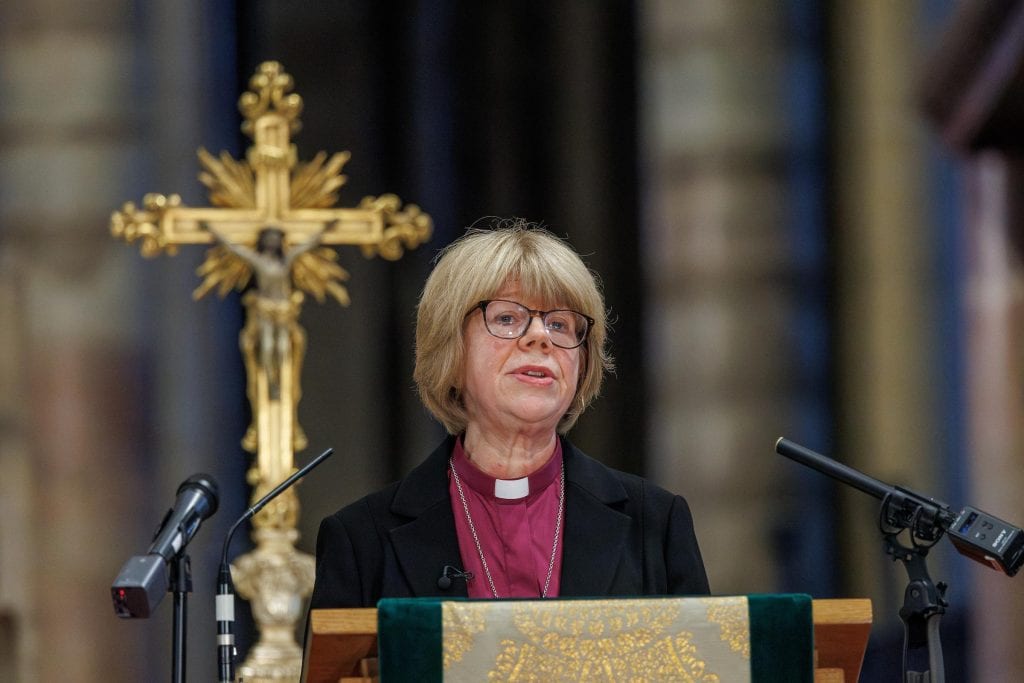
Dame Sarah Mullally’s installation as Archbishop of Canterbury on Wednesday might never happened without the work of an important, but little-known, organisation in the Church of England.
It is 32 years since women were first ordained to the priesthood and 11 years since they were first appointed bishops — and this is clearly the most significant episcopal appointment of all.
The Leading Women organisation mentored many women — including Dame Sarah — to take up leadership roles in the Anglican church. Its aim was to ensure that once they could become bishops, women would not be overlooked because they lacked the leadership skills needed to be taken seriously as candidates for the episcopacy.
In 2006, the CofE’s General Synod began the process for women to join the episcopate, but it was not until 2014 that the legislation was passed. Among those who were concerned about ensuring that women were ready for leadership — from pastoral relationships with the laity and the clergy, to managing historic buildings, to coping with budgets — were June Osborne, then Dean of Salisbury, Lucy Winkett, precentor at St Paul’s Cathedral, Keith Lamdin, principal of Sarum College, Salisbury, and Jane Shaw, dean of divinity at New College, Oxford. Together they launched a year-long mentoring programme, Leading Women.
The first sessions ran between 2010 and 2011 with 22 participants, with sessions not only on being a bishop but also advice on becoming an archdeacon, a residentiary canon and a cathedral dean.
There were practical sessions but also conversations about ambition, conflict, Christlike leadership and advice from women bishops already serving in others parts of the Anglican Communion, including the United States. Andrew Atherstone, in his biography of Dame Sarah, recalls that one Lambeth Palace insider gave vital insight into the process of selecting bishops — Caroline Boddington, the archbishops’ appointments secretary.
Jane Shaw, now a professor of the history of religion at Oxford, recalled: “We wanted to help women develop skills, so we had sessions on leadership, including the theology of leadership, but also dealing with money and managing change, but we also wanted women to understand what their gifts were and what transferable skills they had from work experience.”
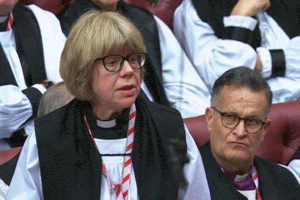
Somebody who undoubtedly had transferable skills was Dame Sarah, who was part of the second cohort of women on a Leading Women programme in 2012-13. By then she was a team rector in Sutton, in the outer London suburbs, leading three parishes.
When it came to preparing women for church leadership, it was recognised that not only should there be a focus on developing women’s confidence but also a need to help them deal with attitudes of men prevalent at the time in the Church of England.
Christina Rees, who had been involved in campaigning for women’s ministry for many years and was spokeswoman for the Movement for the Ordination of Women, recalled: “What people don’t understand is the impact of hundreds of years of patriarchy [in the Church of England] and male entitlement and microaggressions. They can make women feel that there is something wrong with them, contributing to imposter syndrome.
“Helping women to be confident particularly in the role of bishop or dean is really important when they are faced with the weight of history,” she said. “Leading Women was absolutely right to identify that even senior women still need to have a group that would support them.”
Two months after the Leading Women course that Dame Sarah attended, a vacancy arose for a canon treasurer at Salisbury Cathedral and Osborne encouraged Mullally to apply. It was her first step into a church leadership role, followed shortly after by being appointed Bishop of Crediton in 2015, and then the highly important role of Bishop of London in 2018.
According to Professor Shaw, helping women to understand what their roles might be in the church went even further for the Leading Women mentoring programme than thinking about leadership skills.
“It was also a question of vocation, about discernment of their vocation, and giving them the space to do that,” she said.
Mr Atherstone recalls that the success of the Leading Women project can be seen in the achievements of Dame Sarah’s cohort. It produced one cathedral dean, six archdeacons and three other bishops: Sarah Bullock, Bishop of Salisbury, Anne Hollinghurst, formerly Bishop of Aston and now principal of the theological college, the Queen’s Foundation, and Ruth Worsley, Interim Bishop of Liverpool.
Many people still do not recognise female bishops or even female priests. The Church of England still supplies “flying bishops” to ordain priests when a parish does not want a woman to do so.
Women have also indicated that despite the reforms allowing them to be priests and bishops, there is still evidence of sexism in the Church of England. Bishop Worsley has spoken of how difficult it is to still be heard in the church. In September 2024 she told the General Synod about the need for changes to the episcopal appointments process, suggesting that the set-up of the Crown Nominations Commission was proving to be unfair to women.
Referring to the experience of women in Afghanistan whose hard-won freedoms had been reversed by the Taliban’s return to power, she said: “It has caused people to recognise that women’s voices should be able to be heard beyond the walls of their own home. We don’t even allow for those voices to be heard within the walls of our church.”
Then in February 2025, as Bishop of London, Dame Sarah addressed the synod about appointments to senior roles, saying: “’I would love to trust people to do the right thing but the truth is that women continue to be underrepresented. I would love to encourage women, which I do all the time, but there continues to be institutional barriers, we continue to experience microaggressions.”
She then broke down in tears, continuing after retaining her composure, while she was applauded loudly and given a standing ovation, mostly from women. She was appointed Archbishop of Canterbury eight months later.
Despite rising to the top of the church, the challenges will no doubt continue regarding Dame Sarah’s gender. A taste of them will come on Wednesday when several primates from the worldwide Anglican Communion will stay away from her installation, in part due to their objection to what they perceive as her liberal views on human sexuality and in part due to their opposition to female leadership.
At the time of the announcement of her appointment, the conservative Global Anglican Future Conference (Gafcon) announced: “Though there are some who will welcome the decision to appoint Bishop Mullally as the first female Archbishop of Canterbury, the majority of the Anglican Communion still believes that the Bible requires a male-only episcopacy. Therefore, her appointment will make it impossible for the Archbishop of Canterbury to serve as a focus of unity within the communion.”
With visits abroad to parts of the Anglican Communion no doubt in her in-tray, the lessons learnt about Christlike leadership during the Leading Women programme may well prove indispensable.