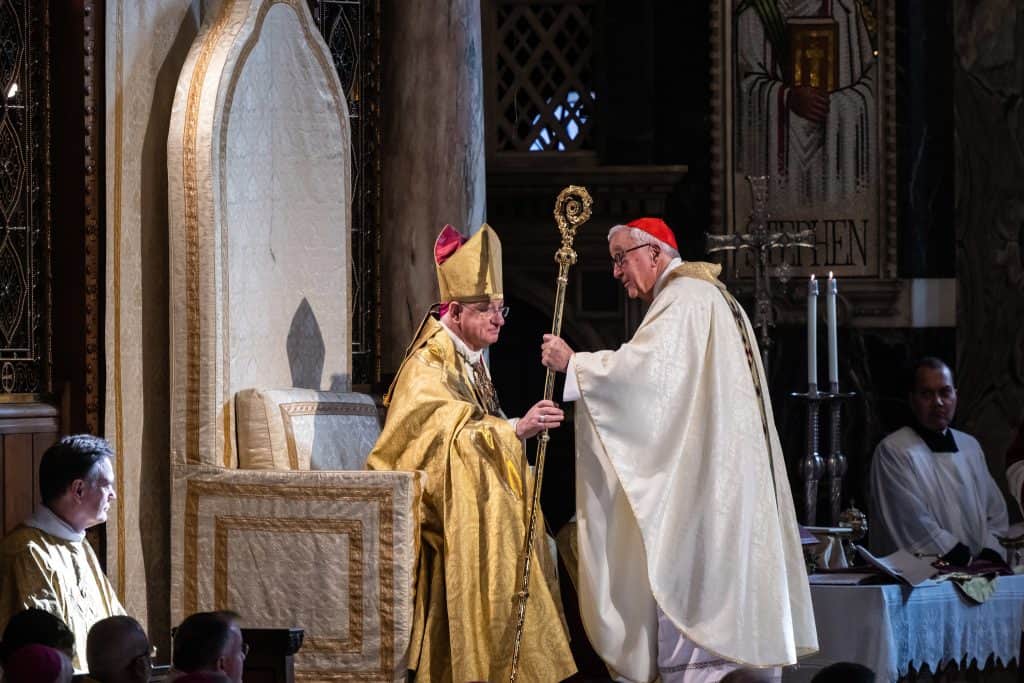
New Catholic Archbishop of Westminster urges church to “speak into the public square”
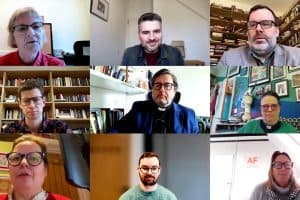
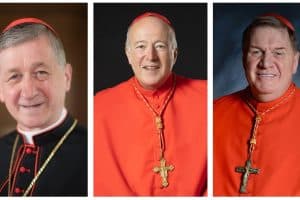
The new Archbishop of Westminster, Richard Moth, was installed at Westminster Cathedral on Saturday, with a message to speak out into the public square, “shining the light” of Christian faith on “the need for all peoples to live in peace, the value and dignity of every person, the right to life at every stage, the protection of the vulnerable, the plight of the refugee and the dispossessed, and the protection of our common home”. In his homily, he said this is evangelistic work, and the flame of faith must be fanned and lived out in service of others. But this is adversely affected by failures of the church, and he was aware of every occasion on which the church had failed and the most vulnerable had been abused. He said: “Such failure calls for listening to and learning from those who have suffered so grievously” and a continuing commitment to ensure communities are safe. In several interviews this weekend, he noted that many more young people had come into church, and more adults had been confirmed, in his last diocese of Arundel and Brighton, but he said evangelisation takes time and the fullness of time will show the depth of the “quiet revival”.
Watch the Archbishop’s Interview with Roger Bolton, where he speaks about the challenges facing the church, his concerns and vision – on our YouTube channel here >>
Installation followed by appeal for church unity
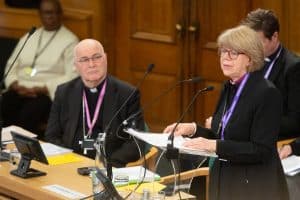
The Mass of Installation drew on a rite going back to the 15th century, in a ceremony with gold vestments, a fanfare and choral music, with a packed congregation. Following the installation, his predecessor, Cardinal Vincent Nichols, who retired aged 80, handed him the Westminster crozier, symbol of his office as bishop. Clergy and officials from the Westminster diocese greeted him, followed by an ecumenical delegation from Churches Together in England, which he will serve as co-president, alongside the new Archbishop of Canterbury, Sarah Mullally. She gave a formal greeting saying: “In a world marked by division and uncertainty, the call to unity flows from the heart of the Gospel itself. Our traditions are not weakened by friendship. They are deepened when we walk together in charity, honesty and truth”. She paid tribute to his reputation for “faithful pastoral care, a commitment to justice and a deep concern for the dignity of every person”.
Board of Deputies ‘deep concern’ at lifting of Palestine Action ban
The Board of Deputies and the Jewish Leadership Council have released a statement expressing deep concern at the lifting of the ban on Palestine Action as a terror group. It said the impact of Palestine Action’s activities on Jewish communal life had been “significant and deeply unsettling” causing fear and disruption. It welcomed the response of the Home Secretary to fight the judgement in the court of appeal. Meanwhile, Quakers in Britain welcomed the lifting of the Palestine Action ban saying dozens of Quakers have been arrested and charged under the ban for holding placards in support of Palestine Action. It said: “Peaceful, nonviolent action must not be treated as terrorism, even indirectly”.
Fifteen faith leaders in Wales sign statement against assisted dying bill
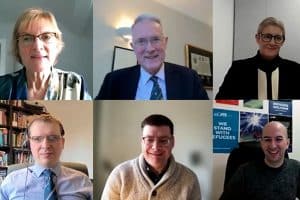
Fifteen faith leaders in Wales have issued astatement expressing their opposition to the Government’s proposed assisted suicide legislation, urging the Senedd to withhold legislative consent to the Terminally Ill Adults (End of Life) Bill, when it comes before the Senedd on 24 February. In their statement, leaders from Christian, Jewish, Muslim, Sikh and Hindu communities in Wales called for the promotion of excellent palliative care, including support for the hospice movement. They said Members of the Senedd should promote policies which care for the vulnerable and uphold the value of life until its natural end. The bill is currently going through the Lords with multiple amendments and may run out of time and fall. Labour Senedd backbencher Alun Davies told the BBC that because the bill is not yet complete, Senedd would be voting in a fog and should vote at the last possible moment. BBC Wales story here
Scientist questions whether point of death is an instant moment
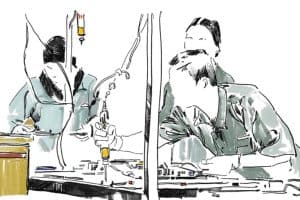
A paper delivered to the American Association for the Advancement of Science, argues that the point of death may not be a sudden switching off of consciousness, but a “gradual, interruptible process” taking place over minutes or hours. The Times reports that Anna Fowler, from Arizona State University, analysed neuroelectric activity at the threshold of death and found the brain can retain some degree of consciousness after a patient has been declared dead, suggesting doctors should re-evaluate resuscitation efforts and the point at which they begin to remove organs for donation. She said further research is needed. Story by Kaya Burgess in The Times here
Church of England to tackle classism after working-class clergy speak out
Working class clergy in the Church of England have lifted the lid on classism, snobbery and “effortless superiority” which made them feel they didn’t belong. In a series of candid speeches at the general synod on Friday, members discussed their experiences as working class members of the established church, in a debate prompted by Fr Alex Frost, from Burnley, who once managed a £9 million a year Argos store before ordination. There was the supposition that candidates seeking ordination who left school at 18 or 16, lacked intelligence without a degree. Workplace skills like maintaining machinery were disregarded. Tattoos, hoodies and regional accents were looked down on. Instant coffee was routinely dismissed in favour of filter, and even canapes offered at receptions, pointed to a cultural disconnect. In meetings, one candidate was asked to take elocution lessons and another’s straight talking was resisted: “We don’t know what you’re going to say next”. The raw honesty led the general synod to vote unanimously for a national strategy for working-class vocations and ministry, creating courses so people on shift patterns can take part, ensuring equality of opportunity and changing the culture so the CofE includes everyone.
£400,000 choir project aims to get children singing in church again
Children are being encouraged to join church choirs in a £400,000 “Choir Project”, aimed at renewing interest in sacred church music. The CofE says 57 per cent of local church choirs have no children, in contrast to the number of cathedral choirs which reached a record high of 207 in 2024. The project, run by the church and the Royal School of Church Music, will support more than 200 churches across England to establish or renew choirs for children and young people, drawing on research which suggests they are more likely to remain active in faith communities when they are given meaningful roles. In parallel, the Cathedral Music Trust is leading a campaign to give English Evensong World Heritage status, to ensure its survival.
The Imam and the Rabbi promoting understanding in Manchester
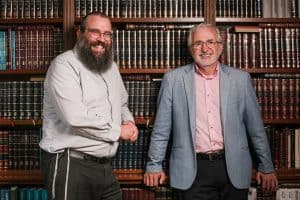
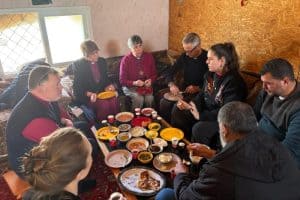
“We’re great mates,” said Rabbi David Lewis of his relationship with Imam Nasser Kurdy. Living in Manchester, their “first date” was at an iftar in a synagogue, and they have fostered a deep friendship since then, sharing thoughts at joint school speaking engagements and on their podcast The Rabbi, the Imam and the Power of Dialogue. Their conversation ranges from the impact of social media to the terrorist attacks on Heaton Park synagogue in Manchester and at Bondi Beach in Australia. They model to a young audience how, despite their many disagreements, they have “managed to stay friends while war rages thousands of miles away”. Lianne Kolirin met them and reports here.