‘Quiet Revival’ challenged over polling and AI bot concerns
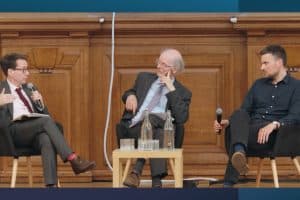
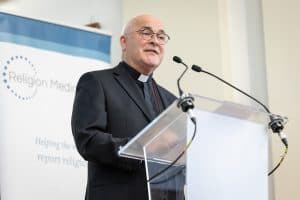
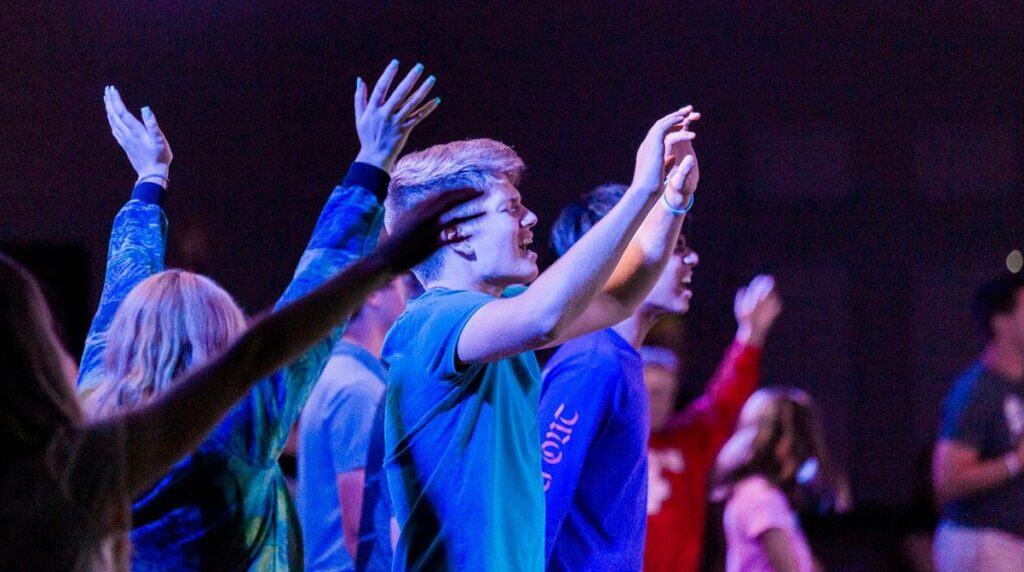
Data provided by YouGov for the Bible Society, which underpinned claims of a “Quiet Revival” in church attendance, came under scrutiny from social scientists last night. At a meeting held by the Policy Institute at King’s College London and Humanists UK, Dr Conrad Hackett of Pew Research Centre, questioned the reliability of opt-in surveys which tended to show high levels of religiosity. He said these attract “bogus respondents” – people falsely claiming they are young, making little effort to answer truthfully or taking part only to be paid. And he named Artificial Intelligence as an existential threat, with bots able to avoid detection. Pollsters at the meeting said this was the biggest challenge in the industry. Dr Hackett recommended journalists should look for rigorous data to validate survey results. The “Quiet Revival” report suggested a 56 per cent rise in churchgoing Christians between 2018 and 2024, including an increase from four to 16 per cent among young men. This runs counter to random selection polling showing continuing decline in Christian affiliation and practice. Political polling commentator, Prof Sir John Curtice, was in the audience and pointed out that the Quiet Revival findings on Christian identity matched British Social Attitudes data, but on the question of attendance, if he had received a report with such unexpected results, he would ask if anything had gone wrong. He suggested the Bible Society should be challenged to commission the survey again to see if the result is replicated. The Bible Society was unable to field a spokesperson to attend the event but issued a statement saying: “The Quiet Revival report is based on a high quality YouGov survey which uses a tried and trusted methodology. There’s no reason to think that opt in surveys are inherently unreliable”. It has set out its rebuttal to criticism here
CofE conference: ‘Where are we seeing growth?’
The Church Times is holding a one day conference at St John’s church, Waterloo, tomorrow (Saturday) with the title: “Springtime for the Church of England: where are we seeing growth?”. Church of England statistics have shown a steady growth since Covid, but the number of regular worshippers is still not back up to the levels before the pandemic. However, congregations are growing modestly every year – the worshipping community in 2024 was 0.6 per cent higher than in 2023. The conference will discuss whether the Church of England is seeing a share of the dramatic revival suggested in the Quiet Revival report. The Church Times says it has brought together speakers from across the church to share stories of local growth, with the aim of offering encouragement, practical advice, and a shared sense of mission. They include Dr Rob Barward-Symmons, Senior Research and Impact Manager at the Bible Society, who is taking part in a Q and A with Dr Ken Eames, Senior Statistical Researcher, Church of England Data Services team.
Archbishop of York cleared of misconduct in David Tudor case
The Archbishop of York, Stephen Cottrell, has been cleared of misconduct over his handling of the case of Rev David Tudor, a priest who became an area dean and remained in ministry despite a history of sex abuse. Tudor was renewed as Dean in 2013 and 2018, and made an honorary canon in 2015, while Stephen Cottrell was Bishop of Chelmsford. It was not until 2024 that Tudor was removed from ministry. The president of tribunals, Stephen Males, concluded that some mistakes were made in the handling of Tudor’s case, but the threshold for misconduct was not met. In response to the findings, the Archbishop said: “We all have much to learn from this case. There are some things I wish I had done differently.”
Vatican says violence in Minnesota is ‘unacceptable’
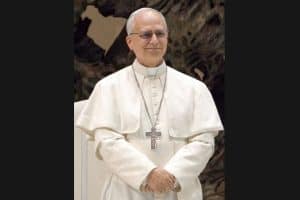
The Vatican’s Secretary of Stato, Pietro Parolin, has described the violence in Minnesota as “unacceptable”. Clergy from all denominations have taken part in protests, supported immigrants and spoken out against the activities of Immigration and Customs Enforcement agents. Speaking to journalists, Cardinal Parolin said: “The position of the Holy See is always to avoid any kind of violence, obviously, and therefore we cannot accept episodes of this kind. That is our position, as you know. Difficulties, problems, and contradictions must be resolved in other ways”. He also described Trump’s “Board of Peace” as having “problematic aspects”.
MPs call out rising antisemitism in Holocaust Memorial Day debate
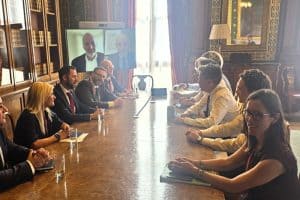
MPs have held their annual debate on Holocaust Memorial Day, calling out rising antisemitism and declaring their support for the Jewish community in Britain. Labour MP Peter Prinsley opened by saying: “I am a Jewish MP for Bury St Edmunds and Stowmarket, and the very first Jewish MP for the town that was the first to expel its Jews in 1190 following the slaughter of 53 Jewish citizens”. He reflected on the Holocaust starting with “a normalisation of division, prejudice and hatred, building on the oldest hatred of all”. He warned MPs not to imagine that it could never happen again and said he hoped that the national Holocaust memorial would be built while Holocaust survivors were alive. The debate was closed by the Faith Minister, Miatta Fahnbulleh, who said: “We all have a responsibility to tackle the antisemitism and the rise of hate and division in our communities, and that we must use our empathy, compassion and respect to bridge and hold our communities together”.
Pressure to provide burial plots for British Muslims
Growing pressure to provide Muslim burial grounds, where people can be buried according to Islamic law, is reported on in Hyphen Online. In Bedford, 800 people have bought plots in a new ground next to the existing cemetery, but in many towns and cities, applications to find a suitable areas can take years, and can give rise to local complaints. The problem is becoming acute as the older generation pass away and with new grounds too expensive or planning applications blocked, many cemeteries assign only a small part of land for Muslim burials. The article is here
Churches issue statement in support of Greenland
A group of churches in northern Europe has issued a statement condemning Donald Trump’s threats on Greenland. The “Porvoo Communion”, which includes Anglican and Lutheran churches in Europe that recognise one another’s bishops, clergy and sacraments, takes its name from Porvoo Cathedral in Finland, where the Declaration was signed in 1996. Members include Geenland, the Church of England, the Church in Wales, the Scottish Episcopal church, and Lutheran churches in the Nordic and Baltic countries, such as Sweden, Norway, Finland, Denmark, Iceland, Estonia and Lithuania. The statement supports the right of Greenlanders to decide their own future and reads: “We feel compelled by our bonds of shared faith, hope and love to support our sisters and brothers, through our prayerful communion in Christ Jesus, in the power of the Spirit”.
Iona community and JPIT announce new partnership
The Iona Community and the Joint Public Issues Team of the Baptist, Methodist and United Reformed Churches, have announced a partnership to collaborate, share expertise, build community and deepen relationships. It follows a pilot period of more collaborative working, which has included JPIT’s team leader delivering the Iona Community lecture in 2024, and the involvement of resource workers from the Iona Community’s Wild Goose Resource Group in JPIT’s recent national conference. Members of JPIT will be leading a programme week on Politics, Power and Protest in Iona Abbey in October 2026.