Unsettling times for the tiny Jewish community in Ireland
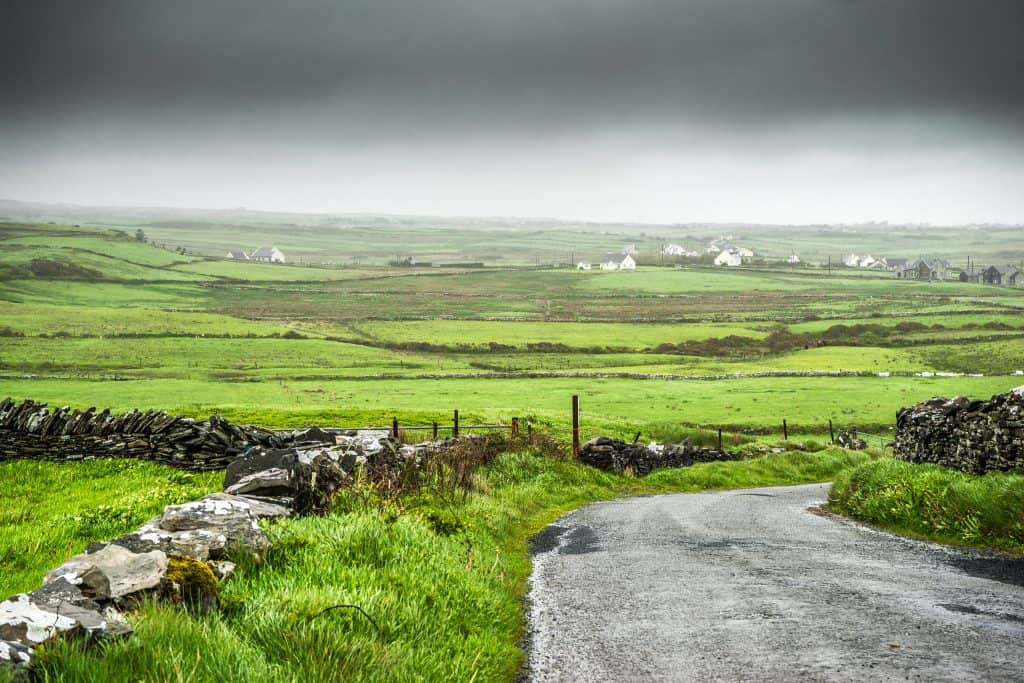
Lianne Kolirin reports on the Jewish community in Ireland, only around 2,300 strong according to the census, but experiencing “rapid and troubling” incidents of rising antisemitism and “feeling more fragile than it should do”. The article reports how Irish nationalism and Zionism were often recognised as parallel movements shaped by resistance to British rule, but after the Six Day War of 1967, Irish thinking shifted towards the Palestinian cause. Since 7 October 2023, antisemitic incidents have been rising and Israel shut its Dublin embassy. The Irish government met members of the Jewish community last year and pledged to do more to counter the “scourge of antisemitism”, saying the Jewish community are an integral part of Irish society. Lianne’s article is here.
Northern Ireland review of Religious Education underway
The Education Minister in Northern Ireland, Paul Givan, has announced a review of the Religious Education curriculum following a Supreme Court decision that the current one is “unlawful”. The package also includes the introduction of formal inspection of RE across all schools. There are no plans to change the arrangements for collective worship which will continue, but new guidance has been published on the right of withdrawal from both worship and RE. The review will involve engagement with churches, teachers, school leaders, parents and young people. Mr Givan pledged: “Given our historical, cultural and legal foundations, it is right that Christianity continues to provide the core focus for RE in Northern Ireland.” He anticipates bringing forward new regulations in autumn 2026, with the new syllabus implemented from September 2027. Announcement here
Plaid leader pledges to protect Muslims in Wales from the far right
Hyphen Online has interviewed the Plaid Cymru leader Rhun ap Iorwerth, whose party is in the lead in polls in Wales, leading up to Senedd elections in May. He said he wanted Muslim communities to be “at the heart” of a Plaid-led government and he would take “every possible step” to protect Welsh Muslims from the rise of the far right. The 2021 census indicated there are around 67,000 Muslims in Wales, representing 2.15 per cent of the population. He said his pitch is around a Wales for all: “To me, this is about building Wales as a community of communities”, and his party would focus on prosperity and public services, particularly education, health and care. Hyphen article is here
Evangelical leader resigns as honorary canon in protest at same sex prayers of blessing
The Rev John Dunnett, national director of the Church of England Evangelical Council, and chair of the Chelmsford Diocesan Evangelical Network, has resigned as an Honorary Canon in response to the use of the Prayers of Love and Faith at Chelmsford cathedral. The prayers for blessing same sex couples, were first used there on 16 November 2025, after which Mr Dunnett and 150 others wrote to express “sadness and profound concern at the decision” saying it had “alienated many of us who hold to the historic and biblical Anglican doctrine”. His resignation comes a week before the general synod of the Church of England continues its debate on the issue, which has deeply divided the church.
RMC briefing: Sarah Mullally taking the helm of a divided church
Today (Wednesday 4 February) at 1300 the Religion Media Centre is organising a briefing looking ahead to the next few years in the life of the Church of England, as incoming Archbishop Canterbury, Sarah Mullally, tackles a daunting in-tray and a deeply divided church. How will those divisions surface at the Church of England’s parliament, the General Synod, when it meets in London next week? Guests include Tim Wyatt, Dr Andrew Atherstone, Francis Martin, Rev Alex Frost, Rev Dr Charlie Bell, Rev Chantal Noppen, Sam Wilson, Ros Clarke and Susie Leafe. Get the zoom link from [email protected]
£600,000 to support mental health and financial needs of Church of England clergy
The Archbishops’ Council, the Church of England’s executive body, is awarding £600,000 to two charities supporting clergy with mental health and financial needs. £500,000 will go to the Clergy Support Trust paying everyday costs such as for energy, unexpected car repairs, and school-related costs for clergy children. £100,000 will go to St Luke’s for Clergy Wellbeing, for psychological and preventive care. Last June, the Church of England announced a 10.7 per cent rise in clergy stipends, which comes into effect in April. A Church of England survey two years ago found that more than a third of clergy had signs of clinical depression and more than half had anxiety about their finances.
Appeal to save Exeter Cathedral School
Parents of pupils at Exeter Cathedral School have launched an emergency appeal to raise £650,000 to save it from closure. The school dates back 850 years and has 149 pupils, 40 of whom are choristers. But last month, it suddenly announced it had to close due to “unavoidable financial pressures” and shocked parents were told they had to find alternative schools. Now they are raising money to keep the school going for the next two years, while they set up a long-term business plan. Their deadline is the end of April and within a couple of days they have already raised £15,000.
Lords warn abortion decriminalisation regards foetus as property
The House of Lords has debated Clause 191 of the Crime and Policing Bill, which would decriminalise abortion for women acting in relation to their own pregnancy, even up to full term, marking the most significant change to abortion law since 1967. Several peers, led by Baroness Monckton, called for the clause’s removal, warning that, “the viable unborn child would have the moral status of property” and that the law could enable unsafe “back-street” abortions. The Bishop of Lincoln, Stephen Conway, said women seeking late-term abortions should be protected by better police procedures, not criminal law. The amendment to change the bill was withdrawn and the bill will continue its passage through the Lords, where further amendments may be put.
Pope joins bishops in Cuba warning of violence and despair from oil blockades
Catholic bishops in Cuba have warned that fuel blockades could trigger social chaos and violence, hitting the poorest and most vulnerable hardest. They issued a message to “all Cubans of good will”, especially politicians, amid rising tensions after President Trump ordered sanctions on countries supplying oil to Cuba, leading to a shortage of supply. In a statement read in all parishes and shared with the aid organisation Aid to the Church in Need, the bishops said conditions had worsened, with distress and despair growing in a country already facing inflation, poverty and food shortages. Pope Leo XIV echoed their appeal, saying he was deeply concerned about rising tensions between the United States and Cuba, and called for “sincere and effective dialogue” to prevent violence and further suffering.
Clergy gather in Ohio church to support Haiti immigrants at risk of deportation
Dozens of church leaders gathered in Ohio on the day when Haiti immigrants expected their protected status against deportation would end and ICE officers would move in. In fact, a court in Columbia blocked the Trump administration plan to end Temporary Protected Status for Haitians, while it continues to hear the case against its implementation. Episcopalian bishop Kristin Uffelman White, alongside leaders from other churches, called for “justice, compassion, and for lawmakers to understand the relational and economic impacts that would come with the forced removal and deportation of our Haitian neighbors.”
Quiet calm words to banish an evil presence
Kaya Burgess, in The Times, has spoken to two Church of England clergy who offer a “deliverance ministry”, which in the past may have been called exorcism. He reports that each diocese has a team of up to seven people trained in deliverance who can respond to anxious calls from members of the public who fear an evil presence. The demands are said to be rare, and the ritual is not theatrical, but includes quiet prayer “where a priest prays with a troubled person, usually after consultation with a psychiatrist and safeguarding experts”. The article followed an account of an exorcism in a hospice, but this turns out to have been simply a blessing to reassure staff. Report here