44 degrees for the Hajj pilgrimage in Mecca
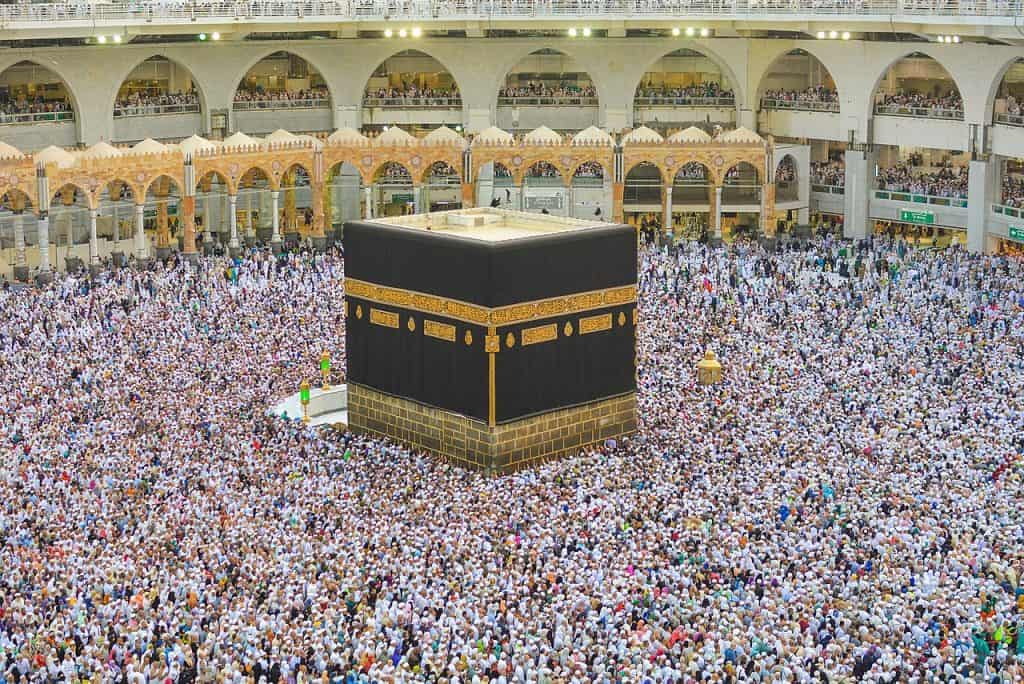
Around two million Muslims have gathered in Mecca for the annual Hajj pilgrimage this week, in temperatures reaching 44 degrees. Yesterday was the Day of Arafah, the spiritual climax of Hajj, when pilgrims gathered on Mount Arafat for prayer and reflection, commemorating the Prophet Muhammad’s farewell sermon. The pilgrimage concludes with Eid ul-Adha, the Festival of Sacrifice, which remembers Abraham’s willingness to sacrifice his son in obedience to God. The festival began last night and continues today. Factsheet on Eid ul-Adha is here. Saudi authorities introduced extensive heat-protection measures after extreme temperatures during recent pilgrimages, including the deaths of more than 1,300 pilgrims in 2024, many due to extreme heat of 50 degrees. The protection includes high-pressure misting fans and cooling stations, thousands of cold-water dispensers, giant fans and air-conditioned rest areas, expanded medical clinics, emergency cooling facilities, and public health campaigns urging pilgrims to use umbrellas and avoid prolonged sun exposure. There are large numbers of medical staff, ambulances, drones and crowd-monitoring systems. The Hajj is one of the five pillars of Islam, obligatory at least once in a lifetime for all Muslims who are physically and financially able to perform it. Al Jazeera reports that 30,000 Iranians have attended the Hajj, a third of the usual number due to the war.
Anti-Hindu Hate Monitor project launched online in Britain
An Anti-Hindu Hate Monitor project has been launched by an organisation based in London, to “address existing gaps in the recording and understanding of anti-Hindu hate by gathering data and providing evidence of its nature and scale”. The Future of Faith desk at the International Centre For Sustainability (ICFS) says the project builds on its earlier report that hate crime against Hindus in Britain is poorly defined, inconsistently recorded and absent from public conversation. Its online reporting platform asks victims to fill in details of hate crimes, online and in person, providing data which can create effective policy. The ICFS is a charity based in the city of London, which says it is an independent research and advisory organisation “dedicated to fostering a deeper alliance between the UK, the USA, India and other global stakeholders”.
Man arrested in connection with Heaton Park synagogue attack
Greater Manchester Police say a man has been arrested in Salford by detectives investigating the terrorist attack at the Heaton Park Hebrew Congregation Synagogue last October, when two Jewish men died and three others were seriously injured. In a statement, they say that yesterday evening (Tuesday), “officers from Counter Terrorism Policing North West, alongside Greater Manchester Police, executed a warrant at an address on St James’ Road, Higher Broughton. A 49-year-old man has been arrested on suspicion of failing to disclose information regarding terrorist activity, contrary to S38B of the Terrorism Act 2000. He has been taken into custody for questioning… This brings the total number of people arrested in connection with the investigation to eight”. Full statement is here.
Muslims are turning to Christians for help in war torn Lebanon
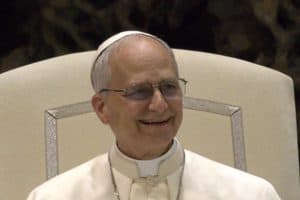
Archbishop Hanna Rahme, in Lebanon, says Christians as well as Muslims are being affected by the war between Israel and Hezbollah. Speaking to the charity Aid to the Church in Need, he said a Christian village was bombed in southern Lebanon this week, but he had also seen that Muslims forced to move out of their homes were turning to Christians for help. He said at first many Christians found it hard to believe that the Shia, who they saw as responsible for the war, were coming to them for help. Shia Muslims were worried about how Christians would receive them. But after being welcomed and helped, there had been a change of outlook, challenging traditional beliefs which had led to suspicion between the communities in the past. The archbishop told ACN: “The war has made many people realise that the Church’s charism is to call for peace and coexistence, even when other voices may promote violence. It is a completely different outlook, and when the situation stabilises, I hope that many will take the step, despite the risk of losing their job or their families, because people are noticing this contrast.”
Ahmadiyya Muslim leader warns world is heading towards catastrophic conflict
The leader of the Ahmadiyya Muslim Community, His Holiness Hazrat Mirza Masroor Ahmad, has cautioned that humanity is heading towards a catastrophic global conflict which could “far eclipse the horrors of the previous two world wars.” He was addressing diplomats, academics, faith leaders and politicians at the National Peace Symposium, held at the group’s headquarters in Tilford, Surrey earlier this month. He said the world was sleepwalking into a Third World War and accused world leaders of hypocrisy, double standards and failing future generations through inaction. The Ahmadiyya movement follows Mirza Ghulam Ahmad, whom adherents regard as the promised Messiah. It is not recognised by mainstream Islam and there is widespread persecution of its members.
Slow pilgrimage tourist routes to Rome promoted by Italian government
The Italian government is promoting five pilgrimage routes to Rome in the “Antichi Cammini d’Italia” (Ancient Paths of Italy) project. This is an Italian government-backed initiative, funded by the EU, to promote historic pilgrimage and walking routes as part of a broader push for sustainable and “slow” tourism. Three routes – the Via Francigena, the Via Romea Germanica and the Romea Strata converge in in Lazio region south of Rome. The Via Francigena starts by Lake Bolsena in Tuscany and its route is based on the travel diary of Sigeric, Archbishop of Canterbury, from 990 AD. The Via Romea Germanica starts at the Brenner Pass in the mountains. And the Romea Strata runs from central-eastern and Baltic Europe, across seven states, to Rome.
St Bride’s church gleaming after project to clean the stonework
St Bride’s, the journalists’ church in Fleet Street London, says work is almost complete on the £1.5 million project to repair and clean the roof and external stonework. The restoration has been supported by the National Heritage Lottery Fund, the City Churches Grants Committee and legacies from church members, and the work was been carried out by Paye Stonework and Restoration. Grade 1 listed, St Bride’s was designed by Sir Christopher Wren in 1672, gutted by fire in the London Blitz, and reconstructed in the 1950s. But its history goes beyond that. There are believed to have been seven church buildings on the site and its association with St Bride (St Brigid of Kildare) may date back to the sixth century.