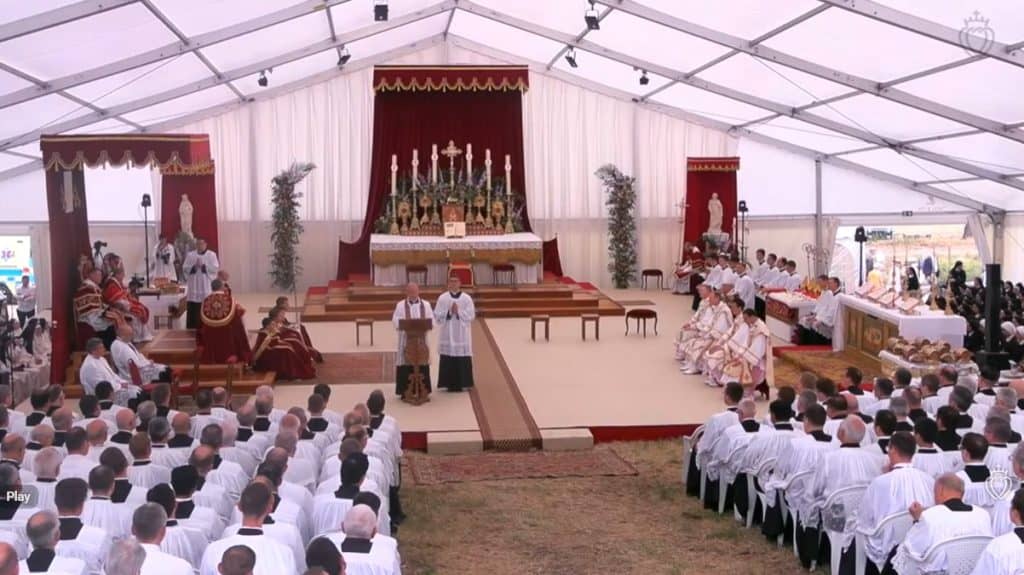
Conservative Catholic group consecrates four bishops in defiance of the Pope
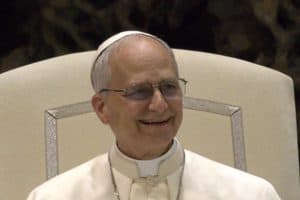
The conservative, traditionalist Society of Saint Pius X has gone ahead with the consecration of four bishops, despite not having authority from the Pope. The Vatican has described the consecrations as a “schismatic act”. The Society’s Bishop Alfonso de Galarreta, placed his hands on the heads of the four new bishops, the traditional laying-on of hands in episcopal consecration. But now all the men face automatic excommunication. The group was founded by Archbishop Marcel Lefebvre in France in 1970, in opposition to changes of Vatican Two, and continues to use the Tridentine Mass. The consecrations went ahead despite appeals from Pope Leo. Cardinal Victor Manuel Fernández, Cardinal-Prefect of the Dicastery for the Doctrine of the Faith, told the Catholic Herald that he is confident dialogue with the Society of Saint Pius X will “be possible” in the future, even though “we’ll need time”.
AI can do so much for us, but ‘human wisdom will always win‘
Artificial intelligence is fast, it’s number-crunching, information-analysing and seductive. It transforms much of what humanity does — but ultimately it is no alternative to the wisdom that humans can bring to their thinking. That was the conclusion of a round table discussion on AI at the Religion Media Centre Festival on Monday. While most of the panel could see significant benefits to AI in solving problems and completing tasks quickly, they also saw drawbacks. AI, they believed, is not so much good, but conditionally good. Faith organisations have started to focus on AI and its impact on the human condition, most recently with Pope Leo’s encyclical or teaching document on AI, warning that it must serve humanity, not concentrate power even more in the hands of the few. Days later, his warning was endorsed by the Archbishop of Canterbury, Sarah Mullally, in the House of Lords. Read Catherine Pepinster’s report here.
Life of Jesus Christ explored in BBC series
A four part series on the life of Jesus Christ, with new historical research, archaeological discoveries, and expert testimony, has been commissioned by the BBC. It will show the land he inhabited and the political, social, religious and cultural forces that shaped his life. Commentators from Christian, Jewish and Muslim faiths will contribute. The series was commissioned by Jack Bootle, head of specialist factual at the BBC, alongside Daisy Scalchi, head of religion and ethics, BBC TV. The BBC made The Story of Jesus in 2011 and Son of God a decade prior. This series will air in 2027.
Methodist Church ‘moves away’ from net zero target by 2030
The Methodist Conference is moving away from its target of becoming net zero by 2030. In a report to the conference in Telford, Dr Hamish Leese, Director of Environmental Engagement at the Methodist Church, said churches have tried hard to make changes such as reducing energy consumption, using renewable sources, adding solar panels or heat pumps. But the target was aspirational and the Methodist church has not had the capacity to achieve the target – it will not be a net zero church by 2030. He said: “To retain a target we know we are unable to achieve would undermine our credibility on this incredibly important issue and would open us to accusations of ‘greenwashing’.” Climate change remains an issue of mission, discipleship and justice, and he said it is critical to maintain momentum, inspiration and a sense of urgency.
Bishops advised not to speak of ‘Christian Nationalism’
The Church Times reports that CofE bishops have been advised not to use the term “Christian Nationalism when teaching or speaking on behalf of the church. Canon Luke Bretherton, Regius Professor of Moral and Pastoral Theology at Oxford, told them that the term had “no theological significance whatsoever” and would “misinform and mis-form the faithful”. His comments are in papers to be discussed at the General Synod on 11 July. Full story is here.
Vatican ‘deeply concerned’ at humanitarian situation in Gaza and occupied territories
The Holy See’s Mission at the United Nations has expressed deep concern over the humanitarian situation in the occupied Palestinian territories, particularly in Gaza, where it says civilians continue to endure violence, displacement and severe hardship. Addressing a United Nations committee, representatives reaffirmed the Vatican’s financial support for UNWRA, describing the agency as an “essential lifeline” for millions of Palestinian refugees and urging the international community to ensure its work can continue unhindered. They condemned the killing of UNRWA personnel and attacks on the agency’s premises, and called for the protection of humanitarian workers and infrastructure, saying that acts against them “exacerbate the suffering of those already living in precarious conditions and constitute a grave violation of international humanitarian law”.
First Hindu temple proposed for Portsmouth on former pub site
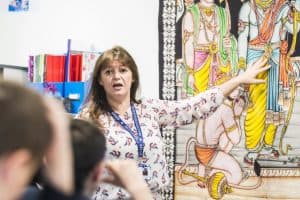
The Portsmouth News reports that a public consultation is underway to build the first Hindu temple and community centre in the city, on the derelict site of a former pub demolished in a fire. The architects say the community hall would bring vibrancy to the area, “open to all, irrespective of their faith”. Elderly people could gather there, as well as children and young people, being t aught cultural and artistic activities such as music and dance. Meanwhile there is a separate proposal for another Hindu temple in the city, from the Portsmouth Indian Community, which recently held a launch event for its own vision.
300-year-old Guru Granth Sahib manuscript discovered in Scotland
The 300-year-old manuscript of Sri Guru Granth Sahib Ji Maharaj has been put on display at the Central Gurdwara Glasgow, having been discovered in university archives in 2020. A report by the Indian news agency website WION, says it once belonged to Maharaja Kharak Singh of Punjab, the second ruler of the Sikh Empire, and is believed to have been taken from his archives when the British captured the Dullewalla fort in Punjab in 1848. Afterwards, the manuscript was handed over to the University of Edinburgh by Sir John Spencer Login, who also brought the Kohinoor diamond from the Sikh Empire to Queen Victoria. Since being discovered, it has undergone extensive restoration and preservation processes. The Indian Consulate team in Scotland joined Gurudwara representatives from Edinburgh and Glasgow, to oversee it being made available for public view. In a post on X, the Consulate said it was “a meaningful step in preserving and celebrating our shared heritage”.