
British Sikhs ‘utterly condemn’ killing of teenager by a Sikh man using a knife
British Sikh organisations are expressing concern about a potential backlash after the murder of 18 year old student Henry Nowak in Southampton, by a Sikh brandishing a knife which he said was worn for religious reasons. The court heard that the killer, Vickrum Digwa, wore a kirpan, a small dagger, under his clothing, a mandatory Sikh article of faith and allowed under British law. He had a second larger knife which was used in the murder. City Sikhs has utterly condemned the murder and said the actions of one man should not be used to define a whole community. The Sikh Federation said it was a tragic killing which “does not align with the Sikh faith, the Sikh community, or the principles it stands for”, and reminded Sikhs of their responsibility when carrying the kirpan.
Film of Henry Nowak’s last moments and the police response, has horrified all who have seen it. Reform UK leader Nigel Farage said the case should provoke “pure, cold rage”. Yesterday evening, hundreds of protesters gathered outside Southampton police station, addressed by Tommy Robinson.. Then they took to the streets, hurling bins, bottles and rocks at riot police on the street where the murder took place. The Home Secretary, Shabana Mahmoud, condemned the violent protest and the Prime Minister urged calm, saying it was wrong to create division. He repeated the student’s family call that their son’s death should not be used to target any particular group. The Times and Telegraph are reporting that police chiefs have announced a review of controversial NPCC guidance on race and anti-racism, after critics argued it could lead to different treatment based on ethnicity
EWTN news chief becomes president of Vatican communications
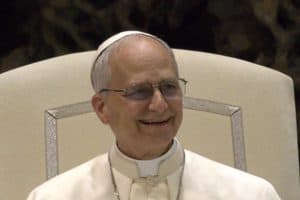
Pope Leo has named the Mexican-American president of the Catholic US media business EWTN News, as the new head of Vatican communications, in charge of its television, radio, online, publishing and newspaper operations. Maria Montserrat Alvarado, aged 54, follows recent Vatican appointments under the former Pope Francis, which elevated women to senior leadership positions. Crux Now reports that the Pope had already made clear that he wanted to re-assess church communications, seeing the media as a tool for evangelisation rather than institutional self-preservation. The EWTN (Eternal Word Television Network) is known for promoting conservative views often aligned with conservative political ideologies, and during Pope Francis’ time, the network featured his English-speaking critics. In 2021, Francis said: “I personally deserve attacks and insults because I am a sinner, but the church does not deserve them. They are the work of the devil.”
Sharing stories is the key to rebuilding social cohesion, conference hears
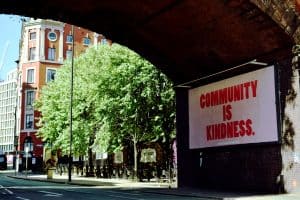
The need for stories to provide a narrative which brings a whole community together, was explored at an event yesterday organised by the US based Fetzer institute, partnering with Theos and the LSE Faith Centre. Dr William Vendley, vice president of world religions and spirituality at the Fetzer Institute, told the meeting that a shared sacred worldview could lead to shared sacred flourishing, where compassion, mercy, love and goodness result. Prof Linda Woodhead suggested that the story holding Britain together for decades was of a plucky nation standing up to and beating Hitler. But its impact has lessened over time and means less to the younger generation. Speakers explored what a shared sacred story would look like in today’s individualistic and fragmented society and suggested it begins with listening to stories from different traditions and cultures, in order to find the shared meaning. Longer article to follow.
Baha’i report: Strong relationships must develop to aid social cohesion
A report from the UK Bahá’í Office of Public Affairs says Britain needs to place values such as trust, honesty, compassion and justice at the centre of economic and social life if it is to build a more cohesive society. The report “Work, Wealth & Wellbeing – A Collective Reimagining of Social Cohesion”, argues that economic growth alone is not enough to create flourishing communities and says stronger relationships between individuals, communities and institutions are essential. It calls for forums at local and national level where people can engage in ongoing dialogue with decision-makers. Its conclusions follow round table discussions in Belfast, Glasgow, Cambridge, Nottingham, London, and Manchester. The report is here
Kemi Badenoch vows to fight for Christian values in society
Kemi Badenoch says she will “fight for” Christian values in society, despite having declared herself to be an “agnostic” having lost her personal belief in God. Speaking to Piers Morgan, she said she is a “cultural Christian”, believing Christian values are important and part of the culture of Britain. She said: “This is a Christian country. I don’t want to see Christianity disappear, and so even though I might not believe in every single thing that is in the Bible, overall I think that Christianity is a force for good, and I will fight for it.” Her grandfather was a Methodist minister and her husband is an observant Catholic.
Muslim medics concerned at NHS regulations on faith and professional conduct
The British Islamic Medical Association (BIMA) has identified concerns about guidance from the General Medical Council related to personal beliefs and medical practice. The GMC has launched a consultation to review the advice, which will shape how clinicians navigate faith, conscience and professional conduct. But BIMA says the guidance could “risk restricting belief, undermining culturally competent care, and disproportionately impacting Muslim healthcare professionals”. They are particularly concerned at ambiguity around “imposing beliefs”; ensuring conscientious objection in practice; restricting when and how beliefs can be discussed; and situations which may compel a clinician to act against deeply held ethical or religious convictions. BIMA is seeking greater clarity and reassurance and is holding a webinar today to discuss regulatory issues.
US Catholic exorcist warms UFO sightings may have demonic origin
A leading Roman Catholic exorcist has warned that many reported UFO sightings may have a demonic rather than extraterrestrial origin. Monsignor Stephen Rossetti, chief exorcist for the Archdiocese of Washington, said demons could disguise themselves as aliens in order to deceive and manipulate people. Speaking on the YouTube channel of the St Michael Center for Spiritual Renewal, Rossetti stressed that belief in life on other planets is theologically neutral. But, drawing on his experience of exorcism ministry, he said spirits can sometimes manifest in the physical realm, often as “shadow men,” orbs of light or even “beast-like creatures.” He urged Christians to avoid occult practices and remain focused on Jesus Christ.