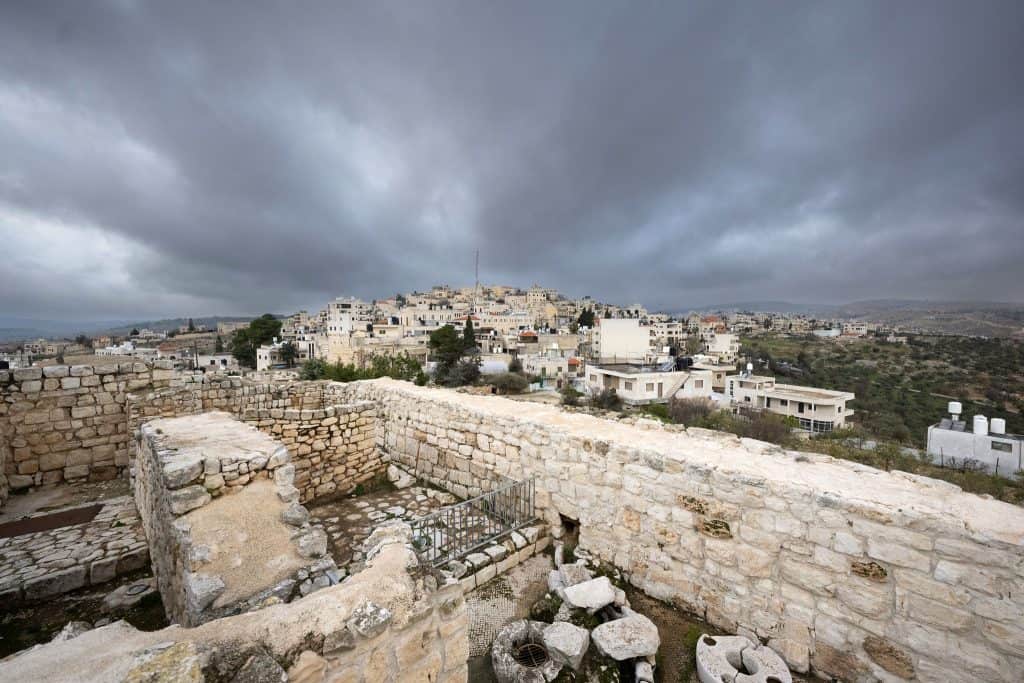
Chief Rabbi criticises Palestinian Christians’ document ahead of Synod debate
The Chief Rabbi Sir Ephraim Mirivis has objected to the “Kairos II” document to be debated at the General Synod on Sunday, which calls the war on Gaza genocide and describes forcible displacement of people as ethnic cleansing. The document from Palestinian Christians and entitled “A Moment of Truth: Faith in a Time of Genocide” is to be debated as part of a motion calling on the government to work towards a lasting peace, the church to review investments and church members to study and support the church in the region. It says the document is the “heartfelt expressions of the lived experience of Palestinian Christians” and calls on the General Synod to “stand in solidarity with them and their fellow Palestinians in non-violent resistance to the ongoing occupation”. The same document was received by the Methodist Conference in Telford last week, renewing a call for justice and an urgent, global Christian response, alongside a review of church investment policy.
The Chief Rabbi says the document contains falsehood “using extreme rhetoric to challenge the very concept of a Jewish state, and to oppose existing peace agreements in the region. “At a time when Christian-Jewish relations require nuance, trust and a willingness to engage with complexity, Kairos II risks undermining decades of careful relationship-building.”
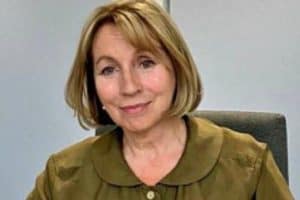
The Archbishop of Canterbury Sarah Mullally visited Palestinian Christians last month, following visits of several other bishops over recent years, and said: “I will use my role as archbishop to seek the peace you desire and the freedom you deserve.” The synod member proposing the motion, the Ven Stewart Fyfe, Archdeacon of West Cumberland, told The Times “he was ‘absolutely’ not asking the church to endorse these descriptions or terms such as genocide and apartheid but wanted the church to understand why some Palestinians hold those views.” Telegraph report here. Jewish Chronicle report here.
Bishop James Jones resigns from Gosport support group after a mild stroke
The Portsmouth News reports that the former Bishop of Liverpool, James Jones, has “reluctantly resigned” on medical grounds from his role as chair of a family support group in Gosport, after experiencing a “Transient Ischaemic Attack”, a mild stroke. The group, the Gosport Family Forum for Operation Magenta, was set up to support families of relatives who died at Gosport War Memorial Hospital between 1987 – 2001. He took on the chair’s role after first chairing a panel which found that hundreds died after “inappropriately high doses of opioids” were administered. In November 2025, Operation Magenta, run by Kent Police, said there would be no further action into the deaths of 101 patients.
The News quotes from the letter the bishop wrote to the families: “It is with the heaviest of hearts that I have today tendered my resignation to the Secretary of State DHSC as an independent adviser with responsibility for chairing the Family Forum. Over the last 12 years it has been an honour to accompany you on your long and burdensome journey to establish the truth of how your loved ones were treated and to seek accountability for their deaths”. Bishop James, aged 77, is recovering well. Portsmouth News report here.
Report says hate and division are a national security threat
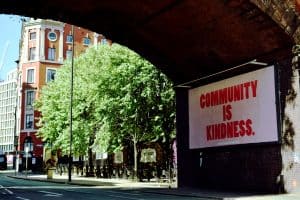
A report into social cohesion and the state of British democracy suggests a widespread view that the social contract between citizen and state has broken down, threatening democracy and posing a “first order national security threat”. The report “Britain Under Strain” is based on a survey of 4,094 adults 2025-2026, focus groups led by More in Common, a specialist survey of 1,300 British Muslim opinion and monitoring of the UK extremism landscape. It found 42 per cent believe Muslims cannot integrate into British society – but 85 per cent of Muslims favour integration. 55 per cent say Britain is losing its identity because of diversity. The report examines persistent antisemitism and anti-Muslim hatred and finds they no longer conform to traditional ideological or demographic patterns, with younger and highly online groups showing “a concerning openness to extremist ideas even in the absence of clearly defined grievances”. The report recommends five steps for change including treating the crisis as a national security issue, more regulation for digital platforms and more collaborative local democracy. Its authors are Sara Khan, former counter-extremism commissioner and now executive director of the new UK Extremism and Democratic Resilience Centre; and Dr Matthew Godwin, formerly with the Tony Blair Institute. The Guardian reports that at the report launch, Sara Khan warned “there was a vanishingly small window in which a new prime minister might act effectively to deal with the division and hate.”
High Court to rule on sale of Hindu Temple to a mosque bid in Peterborough
The Bharat Hindu Samaj temple in Peterborough, which serves around 14,000 Hindus across eastern England, is fighting to stop the sale of its building after the city council chose a rival bid from the Khadijah Mosque. The temple, founded by families expelled from Uganda in 1972, has been based at the former school building, owned by the Council, for 40 years. It believed that its offer to buy the building had been agreed, but last year, Peterborough City Council put the building on the open market and sold it to the Muslim group. The Hindus have launched a judicial review and the High Court will continue hearing the case next week. They argue that the council breached the Equality Act because of the impact on the Hindu community. The council and the mosque reject those claims, saying the process was lawful. The council says it is committed to finding alternative premises if necessary, while temple leaders insist no suitable replacement has been identified. Telegraph story here.
Irish teacher freed from jail in gender pronouns dispute, seeks re-instatement
Enoch Burke, the Irish schoolteacher imprisoned after returning to the grounds of a school which suspended him for refusing to use gender pronouns as required, has been released from prison on the orders of the High Court in Dublin. It follows a “change of circumstances”, after Burke lost his appeal against dismissal for gross misconduct. He had refused to comply with the school’s gender pronoun rules due to his Christian beliefs and has spent 700 days in jail for contempt of court and repeated breaches of court orders. The Irish Times reports that he has now started a legal challenge to overturn the decision upholding his dismissal, and is seeking an order reinstating him to the Department of Education payroll.
Parliamentary Prayer Breakfast picks up political discourse on hope
Around 650 Christian politicians and faith leaders gathered in Westminster Hall for the National Parliamentary Prayer Breakfast on Tuesday, to pray for parliament and the country. The incoming Prime Minister Andy Burnham, brought up a Catholic, has been speaking about bringing hope to people in society. The theme was picked up by two speakers – Clare Williams-Sarpong, founder of “Real Questions” exploring race and faith, and an associate speaker at the Oxford Centre for Christian Apologetics, which split from the RZIM Zacharias Trust; and Tim Farron, Lib Dem MP, who said: “Hope isn’t a party, hope isn’t an ideology, hope isn’t a philosophy. Hope is a person, and his name is Jesus.” The principal partner of the event is the Bible Society and others are mainly evangelical.
Jesus Christ Superstar opens in London to rave reviews
“Jesus Christ Superstar” is back in the West End after 30 years, on at The London Palladium until Saturday 5 September. Playing the lead is Sam Ryder, known for Eurovision 2022, described by Dominic Cavendish, the Telegraph reviewer, as “divine and fabulous”, having an “angelic voice and Jesus-like looks”. The production was first seen at the Open Air theatre, Regent’s Park in 2016, and is directed by Timothy Sheader, with choreography by Drew McOnie. The role of Herod is cast between five players over the run including Boy George and Julian Clary. The show moves on to Theatre Royal Drury Lane from 16 October – 9 January and then on tour in 2027.