Sarah Sands calls for the media to capture renewed interest in religion
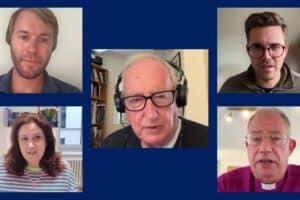
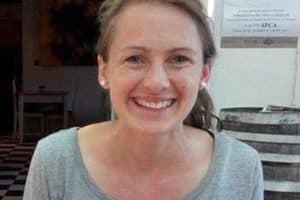
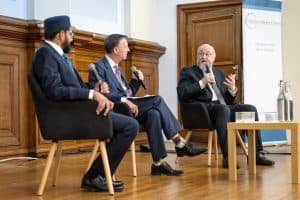
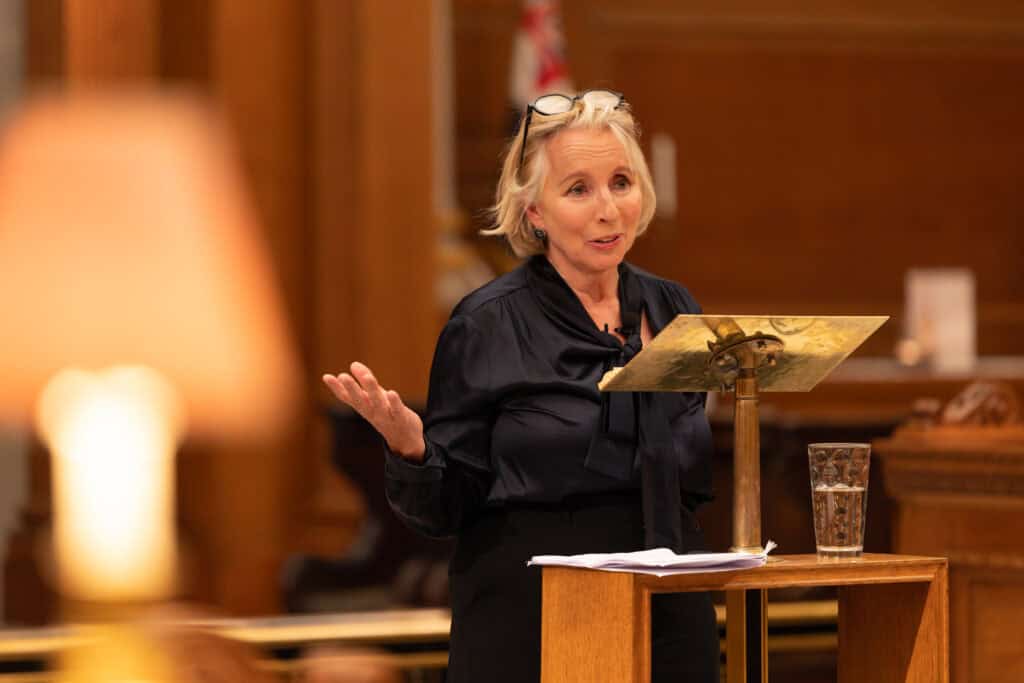
The new CEO of Hymns Ancient and Modern, Sarah Sands, says the media has a responsibility to capture a renewed interest in religion. Delivering the annual lecture of the Religion Media Centre, she said people are genuinely interested, curious and open to religion “in a way that they probably hadn’t been for a generation, and so the media has a responsibility to capture that”. If there were a need for the beauty and mystery of religion, she believes it is now.
Her intention in her new role is to reflect the religious sphere beyond the structure of the church: “We will embrace discussion of nature and art and poetry and pilgrimage – I hope it does lead to the church door”. She spoke of the need to find where the audience is and where their interest lies, “and that’s why I’m particularly interested in pilgrimage, poetry and enchantment because that is bringing in people who are not necessarily traditional churchgoers”. Her three principles since starting her role just six months ago are to raise profile, expand audience, and increase revenues.
She joined the Christian publishing company after a career in news journalism, having edited the Sunday Telegraph, the London Evening Standard and BBC Radio 4’s Today programme. Sadly, she said, there was a lack of knowledge about religion in the media: “If we are to understand human motivation and the sense of what lies beyond us, it’s helpful to know about religion. But sadly, not many journalists do”, giving a list of notable exceptions including Edward Stourton. However, she added that “the press may not deal much in theology, but it knows the value of a photograph of a spire in the mist, a cathedral at sunrise or sunset”.
On her three years as editor of BBC Radio 4’s Today programme, from 2017 – 2020, she compared the BBC to the Church of England, which is portrayed, she said, “as a kind of naive NGO, totally out of its depth in politics, because deep down, the institution still matters. In a way, it reminds me of the BBC, exasperating, loved, unable to defend itself.”
It was a rule, she revealed, that presenters were not allowed to comment on any matter raised in Thought for the Day, saying “it was strictly one-way traffic”. But she felt this was inadequate during COVID, when she believed the policy “began to hit heartless”, with Thought for the Day tackling life and death, and religion offering “a language of sorrow and solace and music that exists exactly for this”.
Later she said “it’s rather marvellous” that Thought for the Day, which she described as a British institution, survives.
In her lecture, she had some criticism of the BBC’s handling of the anniversary of John Henry Newman’s canonisation in 2019. She said the news desk did not talk about his conversion to Catholicism, the beauty and depth of his writings and prayers, or the church movement he inspired., but instead was concerned about whether Newman might have been gay.
In answer to a question, she reflected that in newspapers, journalists can report what sources say, but in radio, words are on the record. And she found that because of this, interviewees became “tremendously practised”. The politicians knew what to say and the presenters knew what they didn’t want to say “and so it wasn’t perhaps as insightful as it might have been, and that could have been why people broke free of the formula in the podcast”.
She said the natural relationship between the news industry and the gospels is “bearing witness” and the right to ask questions must be defended, warning that “the forces against asking questions are closing ranks”. She said journalists encounter danger, hostility and lies, and they die trying to find out the truth.
Addressing the challenging financial climate for the press, where there are no longer the resources “to allow some serious reporting around the country”, she said there is “a thrill to see green shoots”. She gave examples such as the St Alban’s Times flourishing and new audiences emerging with community-based publications under the “Mill” titles and suggested: “Wouldn’t it be cheering to see a wider grassroots, community-led revival, both of church going and of news. We could think of it as the return of the parish.”
Sarah Sands’ address was recorded and is on our YouTube channel here
The transcript of the lecture is here