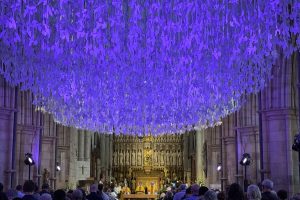
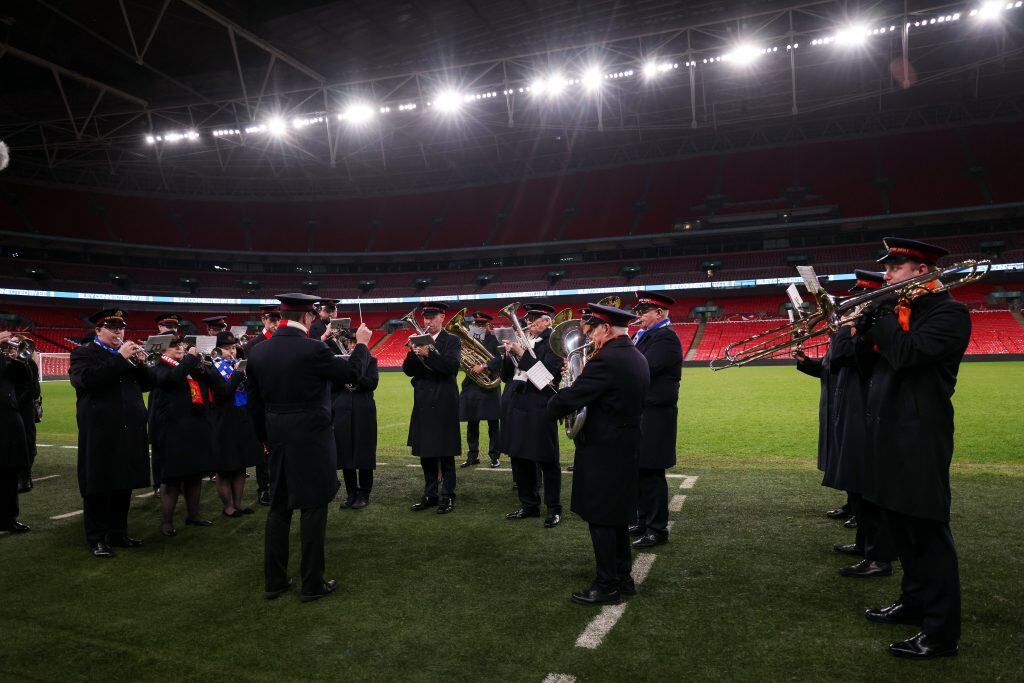
Hundreds of Christian football fans took part in the FA’s Faith and Football Christmas event at Wembley, hearing how faith and football are intertwined and then joining a carol service beside the pitch.
There were stories of Premier League players praying before, during and after matches; Christians involved at grassroots level offering lifelines to young people through taking part in the game; chaplains helping players negotiate the ups and downs of a professional sporting life; and the abiding values that build the game and a life of faith.
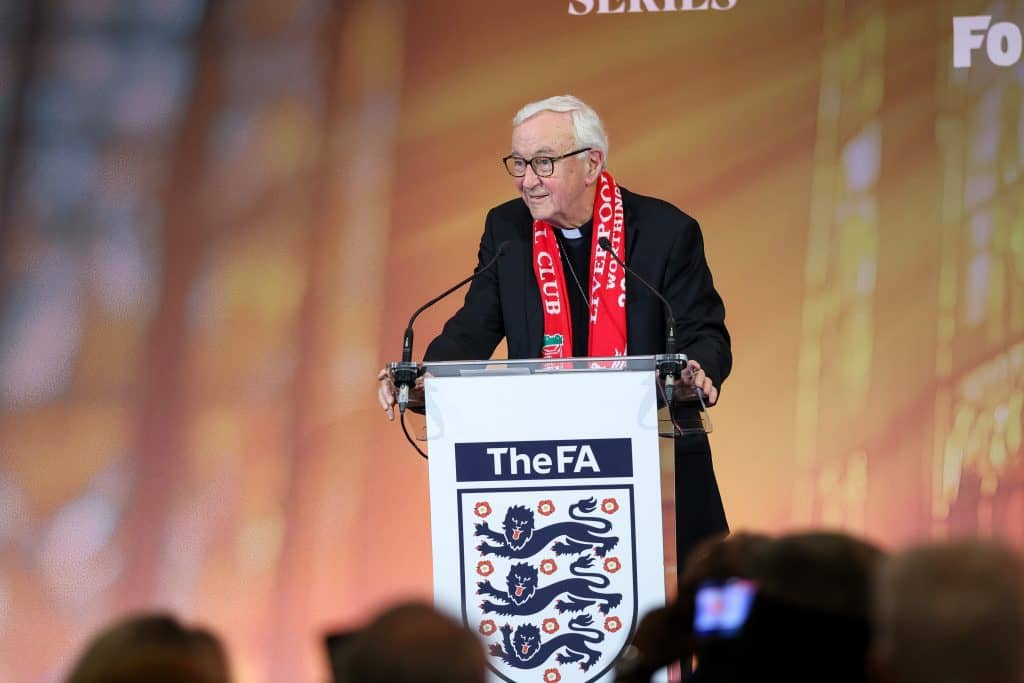
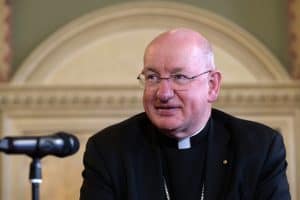
Cardinal Vincent Nichols got the event off to a good start with a take on the similarities between Christian faith and football, with both requiring that people stick with it even when they’re up against it: “Keep us faithful when the going’s good and when the going’s bad”.
This was part of a series where the FA encourages people of faith to celebrate their festivals in the hallowed ground of Wembley, giving the message that football is for everybody.
Dal Darroch, the FA’s head of diversity and inclusion, said Christianity and football had the deepest connection, linked far back in history.
One historian has suggested that many of the country’s clubs emerged from church groups and that a quarter of all clubs that have played in English football over the past five years have a close connection with the church.
Mr Darroch said: “At this time of year, Christmas reminds us that some things are bigger than ourselves. It’s a season built by hope, generosity, and belief, values that sit at the heart of faith. And, interestingly, these are also the values that sit quietly underneath the game that we all love.
“Faith at its simplest, is belief — belief that there’s something you can’t quite see yet. And football is much the same. Every team, every supporter, every young player stepping onto the pitch carries a sense of belief in possibility, in improvement in each other.”
Debbie Hewitt, who chairs the FA, said faith and football complemented each other. “On the pitch we learn discipline, teamwork, and resilience. And in faith, we learn gratitude, humility, and trust in something greater than ourselves. Together, they remind us that while victories fade, character, community, and compassion endure.”
She thanked churches, chaplains, volunteers, coaches and organisations who supported players and their families: “Your work, very often unseen, provides strength, belonging, and guidance that are every bit as important as what happens on match day,” she said.
Ensuring good mental health was a recurring message of the evening, hosted by Simon Thomas, a Sky sports presenter and a prominent Christian.

He talked to Omar Beckles, chair of the Professional Footballers Association, who said it had been a time of hard knocks, a tough process where he played for different teams and worked hard for the next opportunity. He was, however, grateful for this experience.
“It has helped to shape me and mould me to be this robust individual that’s having to deal with 4-0 defeats, but then coming and bouncing back and responding really, really well,” he said.
He spoke about players feeling lost when they retired because their whole identity was around what they did. He believed that “football is what we do, it’s not who we are”. People may let you down, he said, but having a faith gave you peace.
He also warned against people in the game who wanted to add more fixtures for more money into the club, saying they see players just as commodities. But this has a knock-on effect on the players’ relationships with their families.
The presentations then moved to the mental pressures on young players in academies, where 99 per cent fail to make it through to a club signing. Ian Lancaster from Christians in Sport explained its work supporting parents who guide their children through success and disappointment, trying to convey that their identity is not in football, but in a grounded faith.
Gisela Otten, a former Dutch league player, described how football had more lows than highs, but she found strength from talking to a group of women footballers sharing their experiences.
Several organisations that run football clubs for young people spoke next, revealing that one in three 15-year-olds have a mental health condition.
Tristan Lury from Bridge the Gap Football told how he ran clubs for young men aged 18-30 offering a different perspective. It was a question of “how do we create a space where you’re not asked if you want to have a fight in the car park at the end of the game, where you’re getting called every name under the sun, but actually where we care about who you are, we care about your story”.
A Christian organisation, Ambassadors Football, has its own network of church-based clubs, international tours and even a National Christian Cup.
Its director, Martin Bateman, was put on the spot. This was the opportunity for Simon Thomas to suggest that some of the most ill-tempered, violent football has been in Christian tournaments. Martin replied: “If you want to know somebody’s discipleship and their walk, don’t meet them on a Sunday morning at church, see them when they’re fouled from behind on a Wednesday night in Luton somewhere.”
The event took place days after newspaper reports that Arsenal players prayed before matches, creating camaraderie and team spirit that propelled them to their place at the top of the Premier League.
And the next guest on the stage, the former Crystal Palace captain Joel Ward, revealed a similar pattern at his club. He explained that a group of players there attended Bible studies and prayed together before the games, which was an “incredibly powerful” thing, making them feel they were working collectively as a group and able to lean on one another for support. They won the FA Cup.

He was clear about the impact of the prayer when it came to the club’s FA cup win: “We all knew it wasn’t because of us individuals, it was collectively because we chose to put God at the centre and to put God before anything else. It kicked off early in the season when we started praying together before games and doing Bible studies, and when we were away on a pre-season or when we were away mid-season, getting together and having a time of praise and worship and just acknowledging God and having God and present with us. It was an incredible journey, especially last year.
There is a new generation of young footballers who display their faith, with signs on the pitch and posts on social media. Arsenal has “The Bible Brothers”, who read the Bible and pray before games, while Crystal Palace’s prayer group has a spin off , “BallersinGod” Instagram account, with players who aim to “impact the beautiful game for Jesus” and “glorify God on the pitch”.
“If I’m honest, there were more people praying than there were left in the changing room in terms of first team players, especially throughout last season. It wasn’t just Christians within the group, it was also the Muslim guys who would have their teachers come in and pray at the training ground.
“Throughout my career, with the highs and the lows, my faith has given me an anchor, something bigger than myself to hold on to. And I think that, collectively as a group, we’re able to lean on one another, we’re able to pray for each other.”
He said it wasn’t just prayer before and after the match: “I don’t think it ever stops. I’ve caught myself many a time while I’m on the pitch, just asking God to help me either get through it or to continue.”
Crystal Palace has an active club community organisation, Palace for Life, which uses the power of football and the club to improve lives and build stronger communities, focusing on young people from under-supported groups. At the club, young people can find help with job searches or mental health, and it is building a wider community of belonging, where all faiths join together.
One of its patrons is the Baptist minister the Rev Steve Chalke, who is working Crystal Palace on the elite academy. The Oasis Trust, which he founded and runs 58 schools, is providing education for all the young players, building character.
The current project is to build a school in south London teaching the whole curriculum through the lens of football, for example using sports journalism or sports data to learn wider skills. The idea has caught on and he is now talking to Tranmere Rovers and Everton to set up similar ventures there.
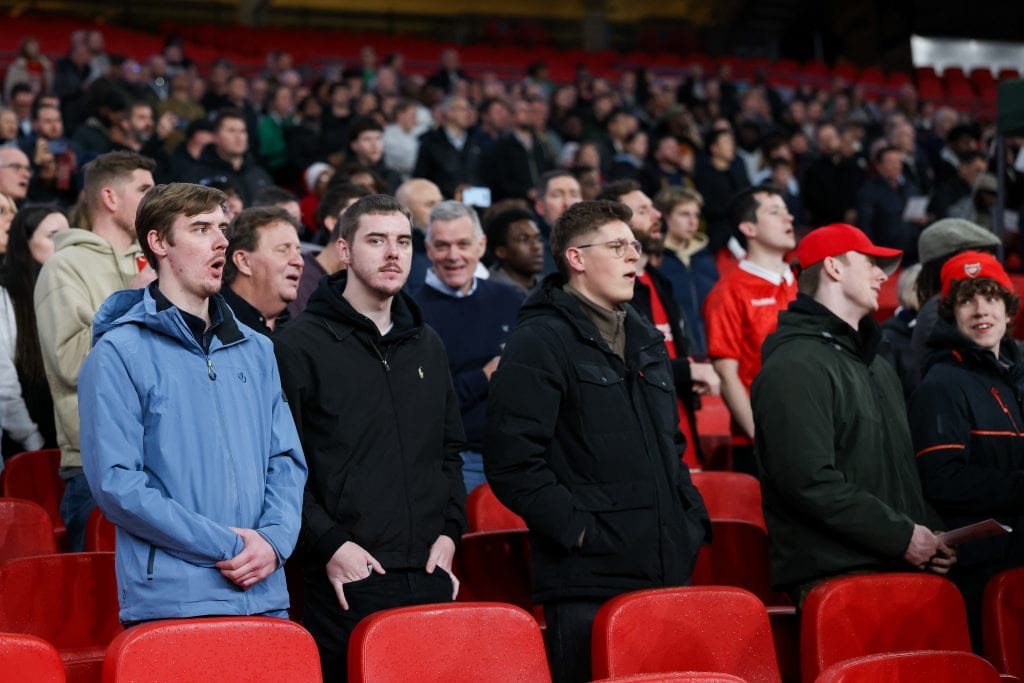
This was the second Christian event to be held at Wembley at Christmas and the day ended with a carol service on the pitch.
The Salvation Army band and the London Adventist Chorale led the carol singing, the Bishop of Lancaster, Jill Duff, led the service and the Rev Alan Comfort, formerly a player with Leyton Orient, QPR, Cambridge and Middlesborough, led the prayers.