By Catherine Pepinster
The UK is to get its first bishop for an Eastern Catholic church from Kerala, India, which is growing in this country — and his post is largely due to NHS recruitment.
Health authorities across the UK have been directly recruiting nurses, doctors and other healthcare workers from Kerala, a largely Christian region in southwest India, and this has led to an increase in membership of the Syro-Malankara Church, an ancient Christian community, here in the UK.
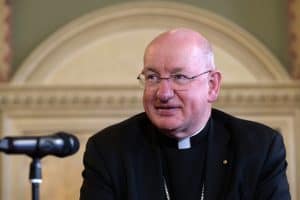
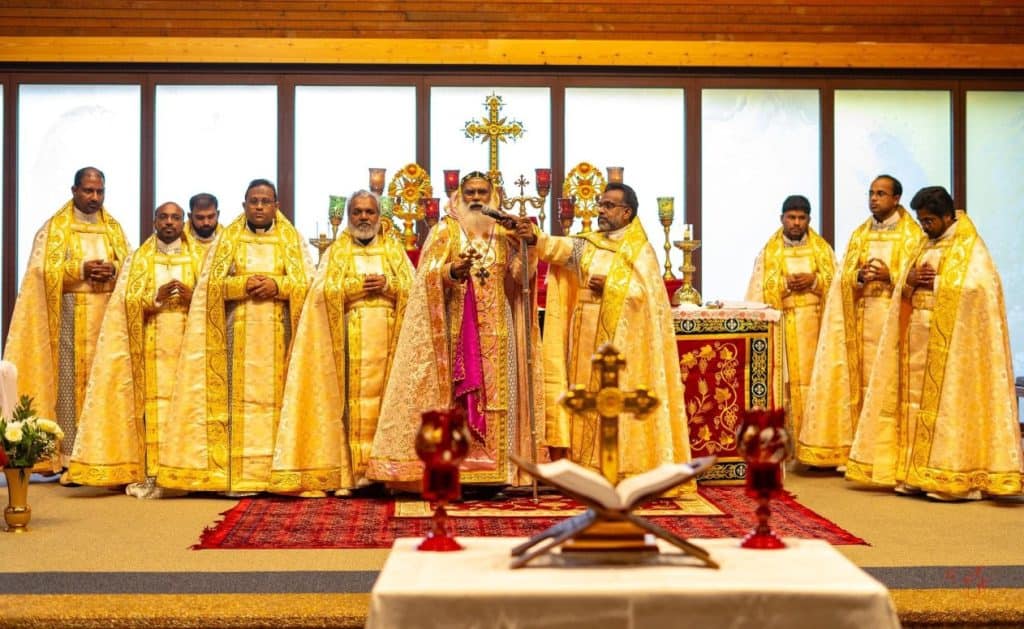
On Friday, members of the Syro-Malankara Church will come together in Coventry for a conference and to celebrate the appointment of their new bishop, Kuriakose Mar Osthathios, making the church here and in Europe an apostolic mission.
Dr Osthathios, who was already the church’s parish co-ordinator, was installed as a bishop in India on 22 November, and will also be the church’s apostolic visitor for Europe.
The Syro-Malankara Catholic Church owes its origins to the mission to India of Jesus’s apostle, St Thomas. It has existed quietly in the UK for some time. Archbishop Baselios Cleemis, the worldwide leader of the church, accompanied by 10 bishops, will attend the celebrations of the new bishop’s appointment, as well as hosting an inter-religious conference. It will be the first time the church leaders have met in the UK.
The Coventry meeting marks a conscious shift to make the church community more visible in Britain. Lijoy Varughese, the programme co-ordinator, said: “We want to reach out, to be more engaged with other faiths, to do more charitable work.”
The Syro-Malankara Church now has 23 missions across the UK, with masses said in Roman Catholic churches, which serve about 300 families. “The majority have come here because of the NHS,” Mr Varughese said.
The church has been in full communion with the Roman Catholic Church since 1930 but is self-governing. It uses the West Syriac rite of liturgy, with the mass said in Syriac — an Aramaic dialect — although some priests from northern India say it in Hindi, and there is interest now in it being said in English in Britain.
A Syro-Malankara mass tends to be longer than a conventional mass, while the Good Friday liturgy can last up to eight hours. The priest leads the people at the service by facing the altar, as happens in the old Catholic rite. Women cover their hair during worship. Advent is taken as seriously as Lent, with fasting from meat, so the celebrations this week will be meat-free. There is also a strong emphasis on regular confession.
“We are very serious about our faith,” Mr Varughese said, “and in particular about children born into the tradition, and their formation and learning the catechism.”
Another Eastern Catholic Church with members in the UK is the Syro-Malabar Church, which is one of two eparchies (ecclesiastical territories) that belong to the Catholic Bishops’ Conference of England and Wales. It uses the East Syriac rite and has theological differences with the Syro-Malankara Church regarding the nature of Jesus.
According to the Syro-Malabar Eparchy of Great Britain, there are about 8,000 families in Britain, served by four parishes, 47 missions and another 30 proposed missions. Like the Syro-Malankara Church, its numbers have grown because of migration from Kerala, driven by the National Health Service.
In recent years the NHS has moved from using recruitment agencies to targeting Kerala directly to find staff. Last year the Welsh government signed a memorandum with the Kerala government and hired 300 healthcare staff, taking up positions across Welsh health boards. Since 2020, Barnsley Hospital has hired 100 nurses from Kerala. Humber and North Yorkshire Integrated Care Board has recruited a similar number and has developed relationships with nursing schools, including Father Muller Nursing and Medical College, a Catholic foundation.
John Adam Fox, chairman of Fellowship and Aid to Christians of the East, and an expert in Eastern Christianity, said Britain was benefiting from the schools and universities founded by Catholic missions. “Their medical education is second to none,” he added.
The Syro-Malankara events this week include a conference of interfaith dialogue, The Role of Indian Churches and Religious Organisations in the UK Community, which will bring together Muslim, Hindu, Sikh, Anglican and Roman Catholic voices alongside MPs, the mayor of Coventry and councillors. It will examine the contribution of people of faith to social cohesion, marginalisation, and shared responsibility in contemporary Britain — including in the NHS.
According to one NHS expert: “This drive to recruit from Kerala, like the recruitment of Filipino nurses some years ago, is beginning to be felt in the NHS. It’s not just numbers; there’s a lot more compassion.”