Jewish leaders meet Foreign Secretary to discuss concerns on policy
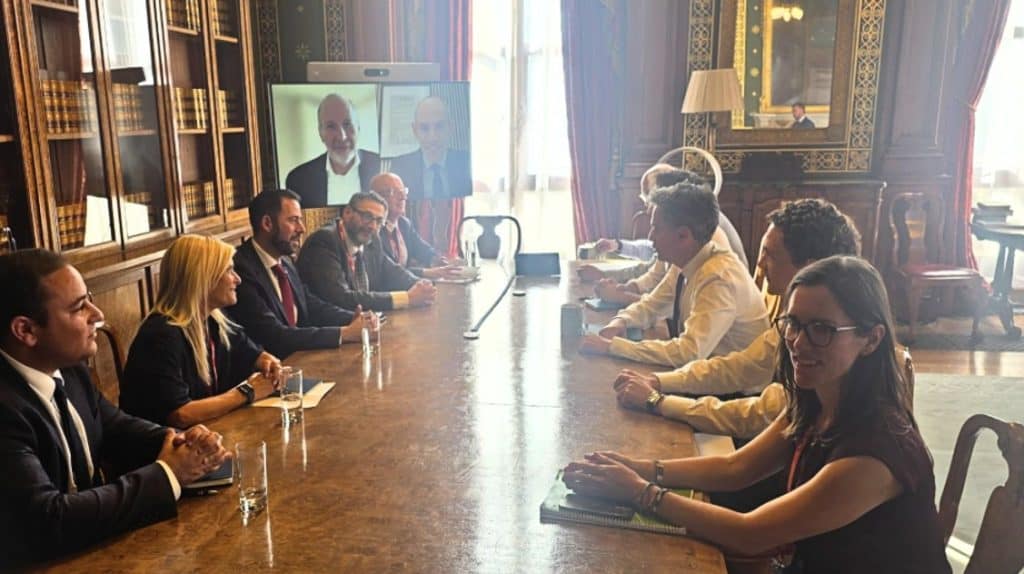
The Board of Deputies of British Jews and the Jewish Leadership Council met the Foreign Secretary, Ed Miliband, yesterday, to discuss concerns on foreign policy matters which impact the safety of the Jewish community and community relations in Britain. Topics included “UK-Israel relations, de-legitimisation of Israel, ongoing efforts for peace in the region, antisemitism, and the global threat posed by Iran and the Muslim Brotherhood”. The meeting was led by Phil Rosenberg, President of the Board of Deputies, and Keith Black, Chair of the Jewish Leadership Council. Following their own meeting with Miliband, Progressive Judaism co-leads Rabbi Charley Baginsky and Rabbi Josh Levy said: “There was a strong sense of a government thinking carefully about how to be both brave and clear: absolutely committed to a thriving, safe and secure Israel, while also recognising that the current situation in the West Bank and the wider status quo cannot simply continue.” They believed there was “a real sense of a longer-term commitment to maintaining the conversation, including when the issues are difficult or there are areas of disagreement”. Jewish News reports an understanding that Miliband approached the Office of Chief Rabbi Ephraim Mirvis separately to arrange a meeting.
Priest in Taybeh warns Palestinian Christians feel forgotten
The Latin parish priest of Christ the Redeemer church in the Palestinian village of Taybeh, has said Palestinian Christians feel forgotten over settler violence. In an interview for Vatican News, Father Bashar Fawadleh called on the international community to take action and urged the global Church to offer prayers and support. He said: “We feel forgotten, and we feel entirely alone…International presence and pressure are vital right now. We need concrete protection for civilians and genuine political will to bring an end to this violence. We need help to sustain our lives here and to continue bearing witness to Jesus Christ and his disciples. Preserving the Christian presence here in Taybeh is a shared responsibility. Given everything that is happening, some residents are reaching a breaking point where they want to leave their land and abandon everything”. Interview is transcribed here.
Richard Dawkins marks 50 years of ‘The Selfish Gene‘
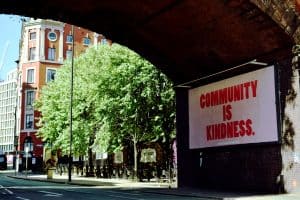
Renowned atheist and evolutionary biologist Richard Dawkins is promoting a 50th-anniversary edition of his influential book The Selfish Gene, first published in 1976. Dawkins argues that genes, rather than individual organisms, are the driving force of evolution, describing humans as “lumbering robots” programmed to preserve their genes. He rejects the idea that this means people are destined to behave selfishly, saying genes can produce altruism as well as selfishness. Now 85, Dawkins remains an outspoken atheist and says he is “absolutely sure” he will not have a deathbed conversion. In an interview for The Telegraph, he describes himself as a “cultural Anglican”, enjoys churches, music and stained glass, and believes morality can be based on kindness and the “Golden Rule”, where people are kind to each other and help the sick and unfortunate.
Kensington Palace exhibition of the ‘Last Princesses of Punjab’
The birth of Sophia Duleep Singh, daughter of the last ruler of the Sikh Empire and goddaughter of Queen Victoria, is being marked at a Kensington Palace exhibition this year, 150 years after her birth. Her father, Maharaja Duleep Singh, became Maharaja aged five after the death of his father. The British annexed Punjab in 1849, when Duleep Singh was ten, and he was separated from his mother and brought to Britain five years later, where he was educated under British supervision and eventually married Bamba Müller, settling with their family at Elveden Hall in Suffolk. Sophia was born in London in 1876. After her father left his family in 1886 and her mother died the following year, she was taken into the care of guardians and later given a grace-and-favour home at Hampton Court Palace. A visit to India in 1907 helped deepen her opposition to British rule. She became a prominent suffragette, campaigning for women’s right to vote and supporting Indian causes. Her sisters Bamba and Catherine also developed their own forms of political and social activism. The Kensington Palace exhibition, The Last Princesses of Punjab, tells the story of Sophia and her sisters, their mother Bamba Müller, grandmother Maharani Jind Kaur and godmother Queen Victoria.
Reform UK rules out pact with Restore Britain after co-founder accused of antisemitism
Reform UK has ruled out any political agreement with the Restore Britain party, unless it expels co-founder Charlie Downes, who is accused of antisemitism over a social media post. Nigel Farage had posted a film of a speech about his leadership with the quote: “I can’t be bullied. I can’t be bought. I’ve stood for the same principles for many decades.” Downes then replied with a picture of Farage speaking at a Reform Jewish Alliance meeting, with critics saying this implied that Jewish supporters had bought or influenced Farage. But Restore Britain has refused to sack Downes, with its leader, Rupert Lowe, saying that he would not put “a young Christian man out of work”. More here
Bishop reminds protesters that Thetford has proud history of welcoming strangers
The Suffragan Bishop of Thetford, Ian Bishop, has called for the proud history of Thetford to be rediscovered, after three days of violence in the town directed against asylum seekers. He said: “Thetford has a proud history of welcoming strangers and the diversity of the town today reflects a long story of integration. My prayer is that this can be re-discovered and celebrated to build a strong society of support and cohesion”. During the disturbances, protesters attempted to storm asylum seekers’ homes and a number of arrests were made. Thetford is in Norfolk near the former RAF Barnham, a possible location for asylum seekers to be accommodated.
Turin Shroud exhibition touring Britain
A church in Bristol is to host a Turin Shroud exhibition of a life size replica of the cloth believed to be the burial shroud used to wrap the body of Jesus after the crucifixion. The exhibition is being organised by the British Society for the Turin Shroud and takes place between 2-12 September at St Gregory the Great Church in Horfield. The exhibition has been travelling across the country during the past months and has featured in venues including Blackburn Cathedral, St John’s Catholic Church, Bath, and WeBelieve – a four-day Catholic festival in Birmingham. The Shroud of Turin has been subject to debate for centuries, with supporters arguing it is genuine based on forensic and scientific studies, while sceptics maintain the evidence suggests a medieval origin. The exhibition includes displays of information and a talk.