CofE General Synod votes in favour of document on Palestinian Christians
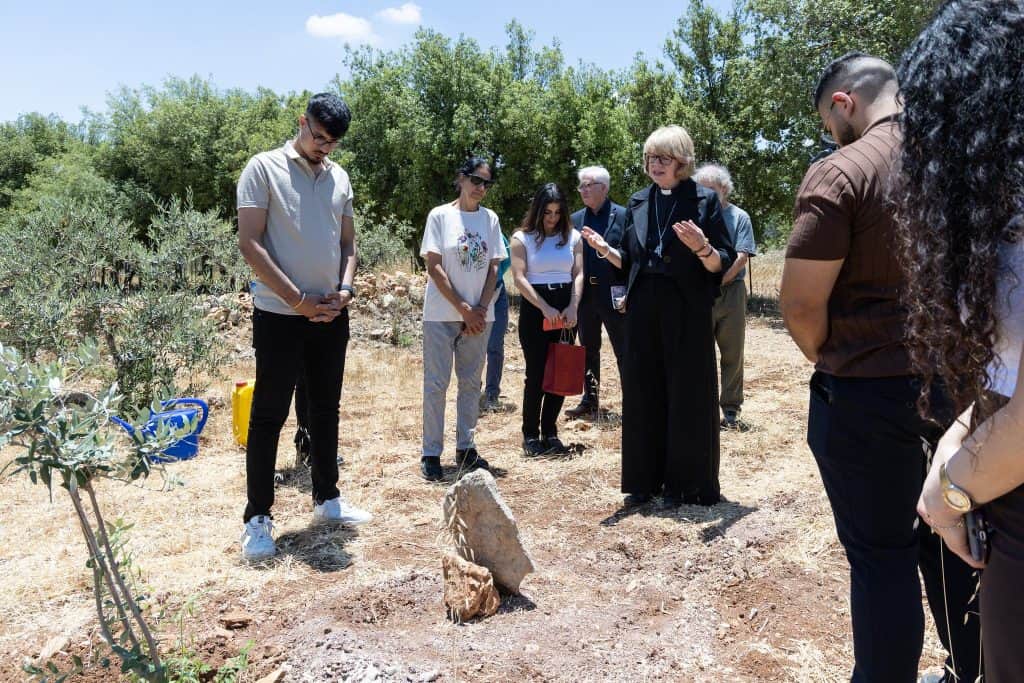
The CofE’s parliament, the general synod, concluded its debate on the “Kairos II document” from Palestinian Christians, first thing yesterday morning – the discussion having run out of time the previous evening. After strong and emotional contributions, the general synod approved the motion to “hear” the voices of Christians in the Holy Land, who wrote in the document of their “cry from the heart” in a “time of genocide, ethnic cleansing and forced displacement unfolding before the eyes of the world”. The motion calls on the church to affirm the dignity and equal worth of all peoples in the region; reject antisemitism, anti-Muslim hostility and all forms of prejudice; hear and engage with the testimony of Palestinian Christians through the Kairos documents; encourage deeper theological reflection and understanding across the church; and review ethical investment policy. The vote was carried by suubstantial majorities:
Bishops: for 25; against 0; abstentions 5
Clergy: for 115; against 20; abstentions 30
Laity: for 113; against 27; abstentions 35
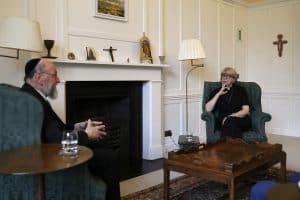
The decision has been criticised by the Chief Rabbi Sir Ephraim Mirvis, who posted a statement on Twitter / X: “It is shameful that the Church of England General Synod has recommended engagement with Kairos II. This is a document full of falsehood, which openly rejects dialogue, uses extreme rhetoric to challenge the very existence of Israel and objects to existing peace agreements in the region. Though it poses as a route to understanding, Kairos II in fact functions as an egregious barrier to it, reducing one of the world’s most complex conflicts to a single, warped narrative, which can only harm the cause of peace. This is a sad day for Jewish-Christian relations”
The Board of Deputies issued a document to synod members before the vote, warning of “the negative impact of the Church engaging with the Kairos II document for British Jews and Jewish-Christian relations”. Afterwards, the board’s president, Phil Rosenberg, said “the falsehoods and distortions of Kairos II, including its erasure of Jewish identity and experience, is a prescription for more division and not the answer to conflict in the Middle East”.
The Rev Giles Fraser, writing in the Jewish Chronicle, said the debate was a disgrace and referred to his “old friend” the former Chief Rabbi Lord Jonathan Sacks, who used to say “that the value of the Church of England was that it could hold the ring for minority religions in this country. It has now forfeited that right.”
Secrecy of confessional to be discussed by CofE bishops this autumn
The confessional, which obliges priests to keep secret the words told to them in confidence by people confessing their sins, is to be discussed by the bishops this autumn. The Bishop of Tewksbury, Robert Springett, who is the Church of England’s new lead safeguarding bishop, told the general synod that bishops will consider the rules, conscious that survivors of abuse see the secrecy around the confessional as “fatally undermining our credibility in our commitment to mandatory reporting.. and the sincerity of our commitment to safeguarding itself”. He has concluded that “our commitment to mandatory reporting must take precedent” and he expects that the bishops’ meeting will lead to clarity of process and a formal response to the issue.
Protests on conversion therapy at pre breakfast fringe meeting
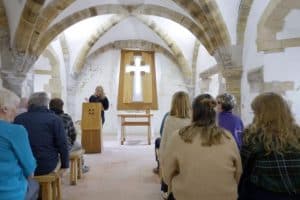
The Church Times sent a reporter to find the early morning pre breakfast fringe meeting at the general synod, organised by the conservative group Christian Concern in support of gay conversion practices. One of the speakers was Matthew Grech, who was gay until he converted to Christianity and is now married to Holly. Eighty members of synod protested about the meeting in advance, but the reporter witnessed only a handful of protesters banging on the windows outside the meeting room. Back in the synod debating chamber, the deep divisions over same sex relationships were on display again in a motion seeking support for the view that “there are no fundamental objections to being in a committed, faithful, intimate same-sex relationship, and that such a relationship can be entirely compatible with Christian discipleship.” Clergy and laity were in favour but the bishops voted against by 14 to 11, amid concern it opened up old wounds, and so the motion fell.
Other news
Counter terrorism police arrest twelve after threats against Suffolk Islamic festival
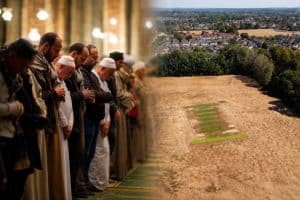
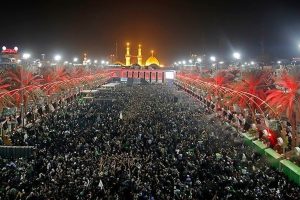
Twelve people have been arrested over an alleged right-wing terror threat to the Islamic Ijtima festival held at Shrubland Hall in Barham, Suffolk, last weekend. Police closed the event down early on Sunday because of the threat received. An Ijtima is a large religious gathering where people pray, listen to sermons and reflect on Islamic teaching. It is organised by Tablighi Jamaat, a Sunni Islamic revival movement founded in India. Around 10,000 people took part in the festival, with tents and marquees erected in the grounds. The BBC reports that police closed the event slightly earlier than planned on Sunday after receiving threats of a credible risk of disorder from individuals intending to travel to the area. Yesterday counter terrorism police confirmed the investigation was “right-wing terrorism related”. Eight men were arrested and detained under section 41 of the Terrorism Act 2000 and remain in custody. Three other men were arrested on suspicion of conspiracy to murder and a woman was arrested on suspicion of assisting an offender. Of those, one person has since been released on bail, while the other three remain in custody. Arrests were made in Surrey, Greater Manchester, Essex, south-east London, east London and Ipswich.
Spectator accused of systemic biased coverage of Muslims and Islam
The Centre for Media Monitoring is publishing a report today saying there is a “sustained and systemic pattern of biased coverage of Muslims and Islam in The Spectator”. This is based on AI analysis of 3,733 articles published between January 2018 and December 2025, which rated 57.4 per cent of all relevant articles as biased or very biased over the eight-year period, with only a small minority found to be balanced, with fair representation. There were five categories tested including association with negative behaviour, misrepresentation, generalisations about Muslims as a group, lack of prominent Muslim voices and sensational headlines. The report is to be outlined in detail at an event this evening. The Spectator has not yet responded.
Global leaders meet at Pope’s summer palace for assembly on AI and Nuclear War
This week, at the Pope’s summer palace of Castel Gandolfo, 30 Nobel laureates, former heads of state, and 20 of the world’s leading AI experts are meeting for the Global Nobel Laureates Assembly on Artificial Intelligence and Nuclear War. They are expected to discuss international security, the governance of emerging technologies, disarmament and the development of an economy oriented towards peace. Their concerns follow the Pope’s recent encyclical Magnifica Humanitas, on the call to “disarm” AI by ensuring it remains under human control rather than profit or shape military power or become dominant. The hope is that the meeting will result in a Rome declaration for disarming peace in an age of artificial intelligence, nuclear and autonomous weapons. The Vatican statement says “at the heart of the discussions will be the search for a new global paradigm capable of combining innovation, responsibility and ethics.. The Declaration aims to establish principles and guidelines for the governance of artificial intelligence, promoting a vision of international security founded on cooperation, human dignity, integral human development and peace among peoples.”